
Meaning Of Vanessa In The Bible

So, I was sitting here the other day, nursing a latte that was definitely trying to judge my life choices, and the topic of names came up. Specifically, the name Vanessa. My friend, bless her heart, was convinced it was a super-ancient, biblical name, like, right up there with Sarah and Abraham. And I just… I choked on my foam art. Vanessa? In the Bible? Girl, please.
Now, I’m no biblical scholar. I’m more of a "skimmed the Cliff's Notes before Sunday school" kind of gal. But I knew, deep down in my caffeinated soul, that Vanessa wasn't exactly hanging out with Noah on the Ark. Spoiler alert: I was right. Prepare to have your mind blown (or mildly amused, at least).
Vanessa: Not Exactly a Biblical Superstar
Here's the deal: the name Vanessa isn't in the Bible. Nope. Not even in the Apocrypha. It's not hiding between the lines of Leviticus or whispering secrets in the Psalms. It's simply… absent. Vanished. Like my motivation to go to the gym on a Monday. Gone.
Must Read
So, where did this seemingly elegant and vaguely exotic name come from? Buckle up, because this is where it gets interesting. It’s a bit of a literary origin story, so put on your bookish glasses.
The name Vanessa was actually invented by the Irish author Jonathan Swift. Yes, that Jonathan Swift, the guy who wrote Gulliver's Travels. You know, the one with the tiny people and the giant horses? He was quite the namer, apparently. In 1726, he penned a poem called "Cadenus and Vanessa." Vanessa was a pet name he created based on his close friend and student, Esther Vanhomrigh. He took "Van" from Vanhomrigh's last name and added "Essa," a common pet suffix.
So, basically, Vanessa is a literary mashup, a Frankenstein's monster of a name if you will (though much prettier, and less likely to chase villagers with torches).
But Wait, There’s a Twist! (Sort Of)
Now, before you start writing angry letters to my editor (please don't, I'm sensitive), let's address the spirit of the question. While the name Vanessa itself isn't biblical, you could argue that the qualities associated with it – like grace, strength, and beauty (okay, I’m reaching here, but work with me) – are definitely present in many biblical women.
Think about Esther, for instance. She was brave, beautiful, and saved her people from certain doom. Or Ruth, who showed incredible loyalty and kindness. They didn’t get their name mashups from a famous author, but they had qualities that a modern-day Vanessa might admire.

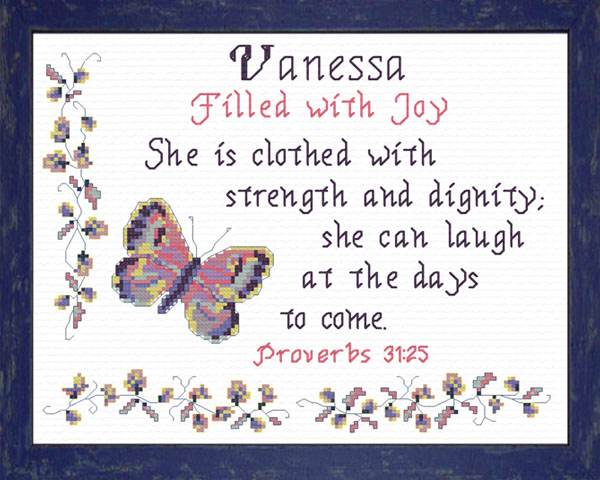
You could also argue that the meaning people ascribe to the name Vanessa connects to broader biblical themes. Some interpretations suggest "butterfly," symbolizing transformation and new life. And you know what the Bible’s full of? Transformation! From caterpillars to… well, you get the idea. It’s about spiritual rebirth and personal growth. Okay, I'm stretching that butterfly analogy pretty thin now, I admit.
Plus, let's be honest, if Jonathan Swift had been around in biblical times, he totally would have been naming all the minor characters. Imagine: "And then came Bartholomew the Benevolent, and Vanessa the Vivacious, and… Bob."

So, What's the Verdict?
The bottom line? Vanessa isn't a biblical name in the literal sense. You won't find it listed next to Deborah or Miriam. But that doesn't make it any less beautiful, meaningful, or… well, just a really nice name. Its origin is literary, its associations can be positive, and honestly, who am I to argue with Jonathan Swift? The guy knew a thing or two about creating memorable characters, even if they're just names.
So, next time someone asks you if Vanessa is in the Bible, you can confidently say, "Technically, no. But it's inspired by a pretty awesome story (and a slightly eccentric Irish author), and isn't that almost as good?" Then, wink knowingly, sip your latte, and feel superior. You've earned it.
And remember, even if your name isn't in the Bible, you can still be a biblical-level awesome person. Just try not to flood the world or turn anyone into a pillar of salt. Small goals, people, small goals.
![Biblical Meaning Vanessa [Explained!]](https://biblicalchronology.com/wp-content/uploads/2024/02/exploring_the_name_vanessa-jpg.webp)