
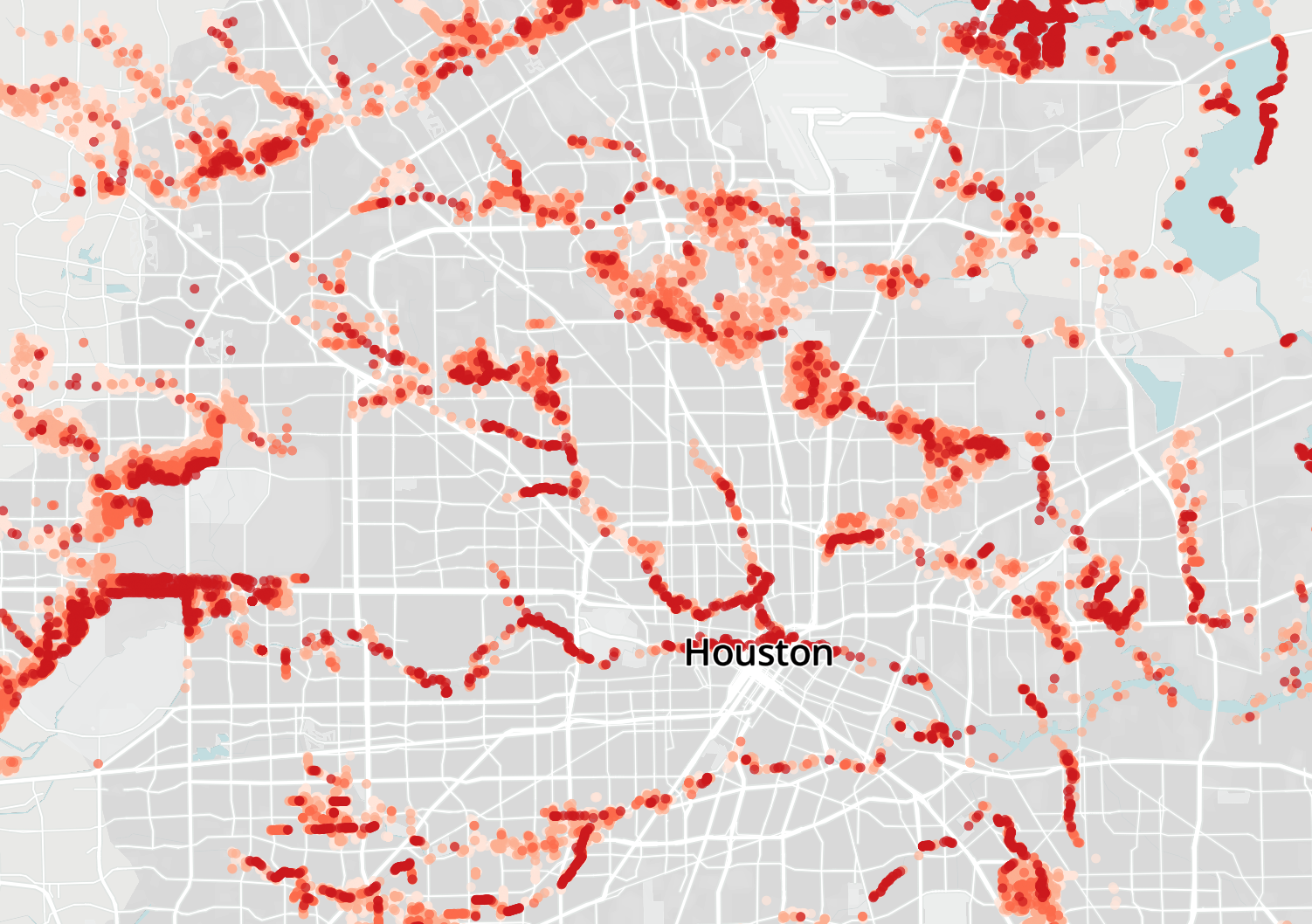
Map Of Houston Flooding From Hurricane Harvey

Okay, so picture this: me, glued to my phone, refreshing Twitter like it’s dispensing actual oxygen. Hurricane Harvey was happening, and all I could think about was my poor grandma's house near Brays Bayou. She’s got this prized collection of porcelain cats (don’t ask), and the thought of them bobbing around in floodwater? Mortifying! That’s when I went on a mad hunt for… well, any info that wasn’t just panicked screaming. I needed a map, stat.
And that’s how I dove headfirst into the fascinating – and frankly terrifying – world of Harvey flood maps. Seriously, it’s one thing to hear "historic flooding," it's a whole other ballgame to see it visualized. Like, woah.
What Did the Harvey Flood Maps Actually Show?
Basically, these maps were attempts to document and, later, understand the extent of the flooding caused by Hurricane Harvey. Different organizations created them – FEMA, various news outlets, even citizen scientists got in on the action! (Go Houston!). Some were based on real-time water level data, others on post-flood surveys.
Must Read
But the consistent theme? A LOT of water, everywhere. I mean, we knew it rained a biblical amount, but the maps really drove home the sheer scale of it. Remember those photos of highways turned into rivers? The maps showed exactly which highways, and just how widespread that was. They weren't pretty, that's for sure!
Think about it: color-coded zones showing areas under different depths of water. Areas where entire neighborhoods were submerged. Places you swore never flooded, suddenly looking like the freakin' Bayou. It was intense, to say the least.

Why Were These Maps So Important?
Alright, so these maps weren't just morbid curiosities (though, let's be honest, there was a little rubbernecking going on). They were crucial for a bunch of reasons:
- Rescue Efforts: First and foremost, knowing which areas were hardest hit helped direct rescue teams to where they were needed most. Think about it – those maps weren't just abstract pictures, they were guiding first responders to people trapped in their homes. Serious stuff.
- Damage Assessment: After the waters receded (eventually!), the maps helped assess the extent of the damage. This was vital for insurance claims, disaster relief efforts, and figuring out how to rebuild. Imagine trying to get help without proof of how badly your home was damaged!
- Future Planning: Perhaps most importantly, the flood maps served as a wake-up call (a very, very wet wake-up call). They highlighted the areas most vulnerable to flooding and informed future development plans, infrastructure improvements, and mitigation strategies. We're talking about potentially saving lives and homes next time!
Basically, these maps turned a chaotic situation into something a little more… manageable. They gave us data, which led to action. That's a win in my book. (Even if it came at the cost of seeing my grandma’s street looking like a canal.)
Where Can You Find These Maps Today?
Okay, so while a lot of the initial, super-urgent Harvey flood maps are probably buried deep in the internet archives, you can still find relevant information and updated flood risk assessments on the FEMA website. They've got interactive maps, resources for homeowners, and all sorts of nerdy (but important!) data.
Also, check out the Harris County Flood Control District’s website. They maintain updated flood maps and have tons of info on flood control projects in the area. It might not be the exact same map you saw back in 2017, but it'll give you a good idea of flood risk in your area. (And maybe convince you to buy flood insurance… just sayin’.)

The Takeaway?
Hurricane Harvey was a brutal reminder of the power of nature and the importance of preparedness. The flood maps, while initially terrifying to look at, were ultimately essential tools for rescue, recovery, and future planning. So, next time you hear about flood maps, don’t just glaze over. Understand that they represent more than just lines on a page – they represent real people, real homes, and the ongoing effort to protect our community.
And in case you're wondering, Grandma’s porcelain cats survived. Miraculously. Thanks, higher ground!
