
Lowest Common Multiple Of 7 And 3
Hey, you! Yeah, you, scrolling through the internet. Fancy a little math chat? Don't run away! It's way easier than trying to assemble IKEA furniture, I promise.
Today’s topic: The Least Common Multiple (LCM) of 7 and 3. Sounds intimidating, right? Like something a robot would calculate. But trust me, it's simpler than making toast. (Unless you burn the toast, then maybe it's a slight challenge).
What's the LCM Anyway?
Okay, so imagine you’re throwing a party (a hypothetical party, of course… unless…?). And you need to buy both 7-packs of soda and 3-packs of juice. You want to buy the smallest amount of each so you have the same number of drinks of each type. That's the LCM in action!
Must Read
Basically, the LCM is the smallest number that both 7 and 3 can divide into evenly. No leftovers. No awkward remainders. Just clean, divisible goodness. Think of it as finding the perfect meeting point for these two numbers.
Why do we even care about this weird LCM thing? Well, it's super useful when you're dealing with fractions (ugh, remember fractions?). It helps you find common denominators, making adding and subtracting fractions way less painful. Like, significantly less painful.
Finding the LCM: The Easy Way
Alright, let's find this elusive LCM. There are a few ways to do it, but I'm all about the easy route. Who has time for complicated formulas? Not me! And probably not you either, right?
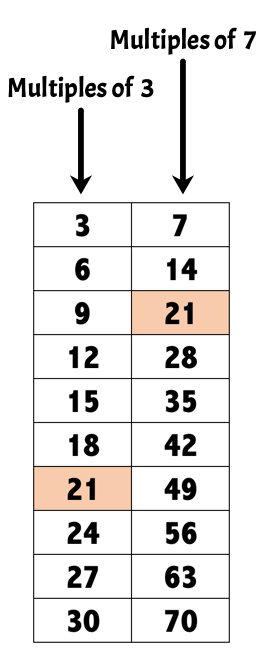
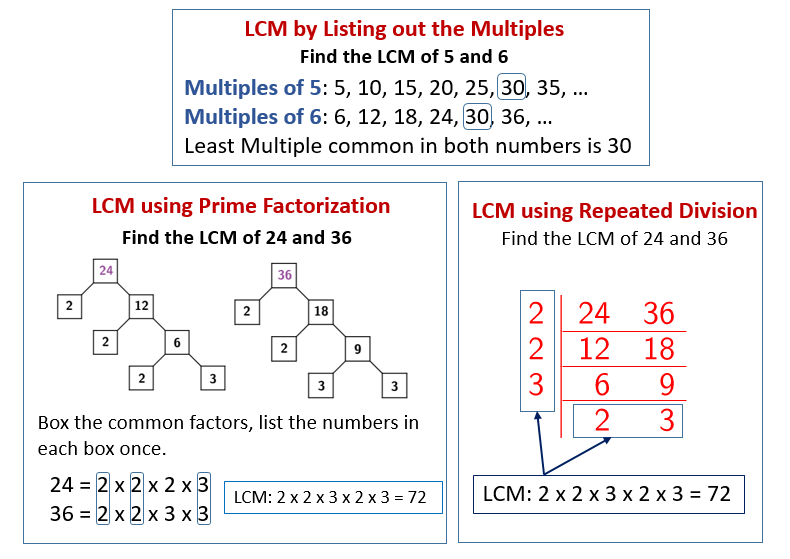
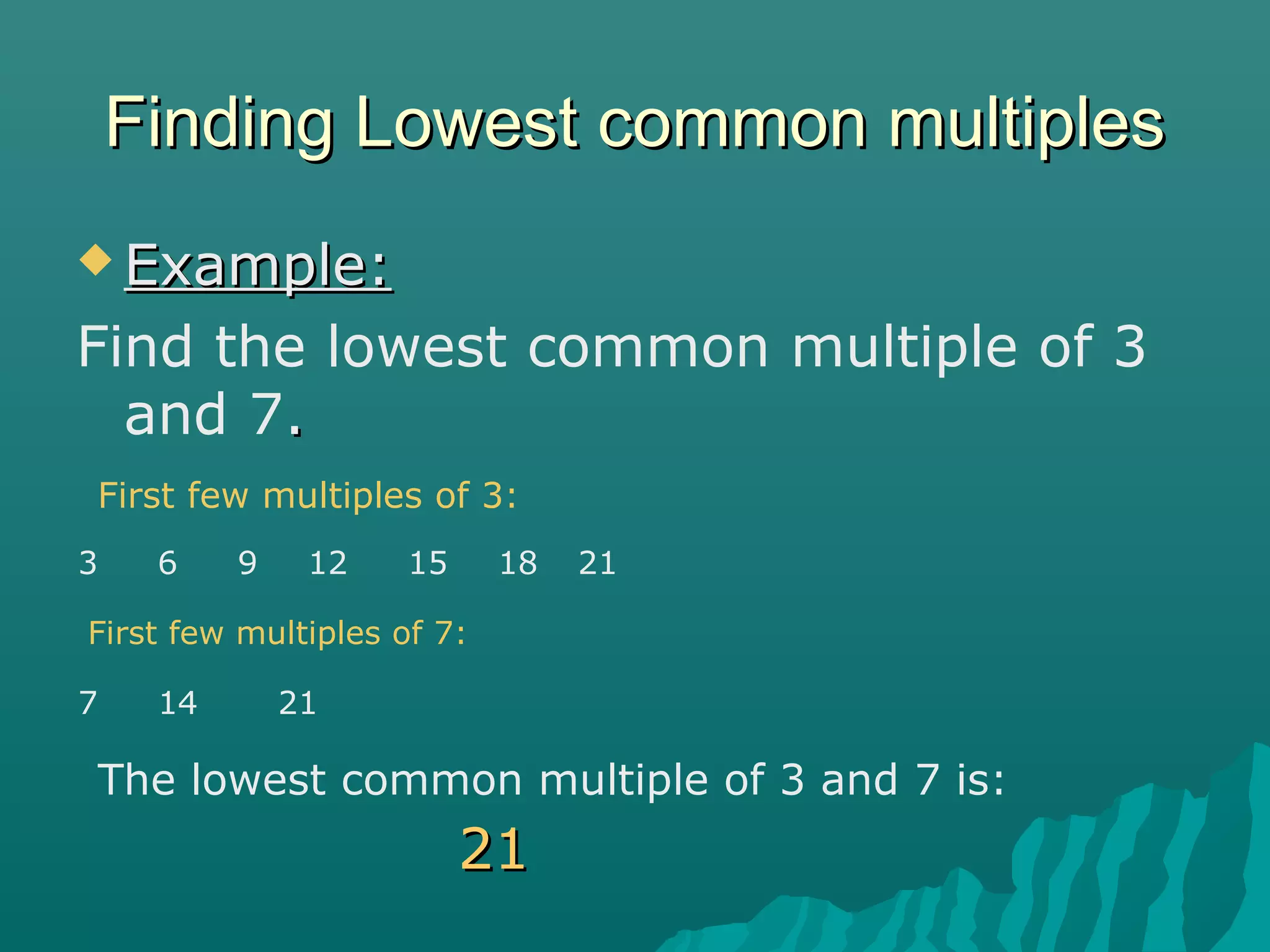
The simplest method? Listing the multiples. Seriously, that's it. We just write out the multiples of 7 and 3 until we find one they have in common.
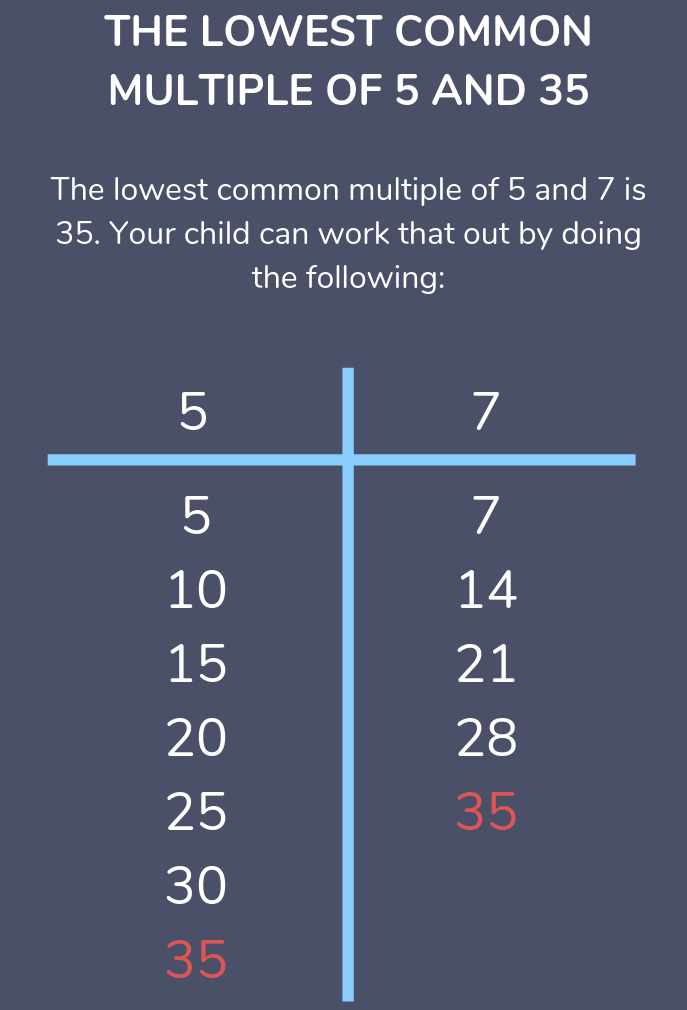
Multiples of 7: 7, 14, 21, 28, 35...
Multiples of 3: 3, 6, 9, 12, 15, 18, 21, 24...
Did you spot it? BAM! 21 is the magic number! Both 7 and 3 go into 21 without any remainder drama. So, LCM(7, 3) = 21.
See? Told you it was easier than assembling IKEA furniture. (Still having nightmares about that bookshelf…)
Prime Factorization: For the Math Nerds (and Advanced Party Planners)
Okay, okay, some of you are probably thinking, "But what if the numbers are huge?" Good point! Listing multiples for, say, 72 and 48 could take all afternoon. (And who wants to spend their afternoon doing that? Definitely not me!)

That's where prime factorization comes in. We break down each number into its prime factors – those numbers that are only divisible by 1 and themselves (like 2, 3, 5, 7, 11…).
7 is already a prime number. Score! (Easy peasy lemon squeezy.)
3 is also a prime number. Double score! (This is almost too easy.)
So, 7 = 7 and 3 = 3.
Now, here's the tricky bit (just kidding, it's not that tricky). To find the LCM, we take the highest power of each prime factor that appears in either number.
We have 71 and 31. Therefore, the LCM is 71 * 31 = 7 * 3 = 21. Ta-da!
It might seem like overkill for such small numbers, but trust me, this method is a lifesaver when dealing with big, scary numbers. Think of it as having a secret weapon in your mathematical arsenal.
LCM vs. GCF: A Quick Pit Stop
While we're at it, let's quickly mention the GCF, or Greatest Common Factor. It's kind of like the LCM's opposite twin. The GCF is the largest number that divides evenly into both 7 and 3.
In this case, since 7 and 3 are both prime, their GCF is 1. They share nothing in common except for the number 1. Think of it as their super awkward shared friend.
Wrapping Up: LCM Master!
So, there you have it! The Least Common Multiple of 7 and 3 is 21. You are now officially an LCM expert (or at least someone who knows a little something about it). Go forth and impress your friends with your newfound mathematical prowess! (Or, you know, just use it to solve fraction problems. Whatever floats your boat.)
Remember, math doesn't have to be scary. It can be fun, engaging, and even… dare I say… enjoyable? (Okay, maybe "enjoyable" is a stretch, but hopefully, it's at least a little less intimidating now.)
Now go forth and calculate! And maybe treat yourself to some toast. You've earned it!
Oh, and about that party? Make sure you have enough drinks for everyone! You wouldn't want anyone to be thirsty. Unless you secretly want them to be thirsty… but I digress.
Until next time, happy calculating!