
Level 2 Charger Cost Per Hour

Hey there, curious minds! Ever found yourself wondering about the nitty-gritty of charging an electric car? Specifically, what’s the deal with a Level 2 charger cost per hour? It sounds like a straightforward question, right? Like, you plug in, the clock ticks, and boom, you get a bill. But hold on to your charging cables, because it’s a little more nuanced and, frankly, a lot more interesting than that!
Imagine you’re brewing a perfect cup of coffee. You pay for the coffee beans, right? Not for the amount of time the water drips through the filter. Charging an EV is kind of like that. You’re paying for the energy your car consumes, not simply for how long it sits connected.
So, What Exactly is a Level 2 Charger?
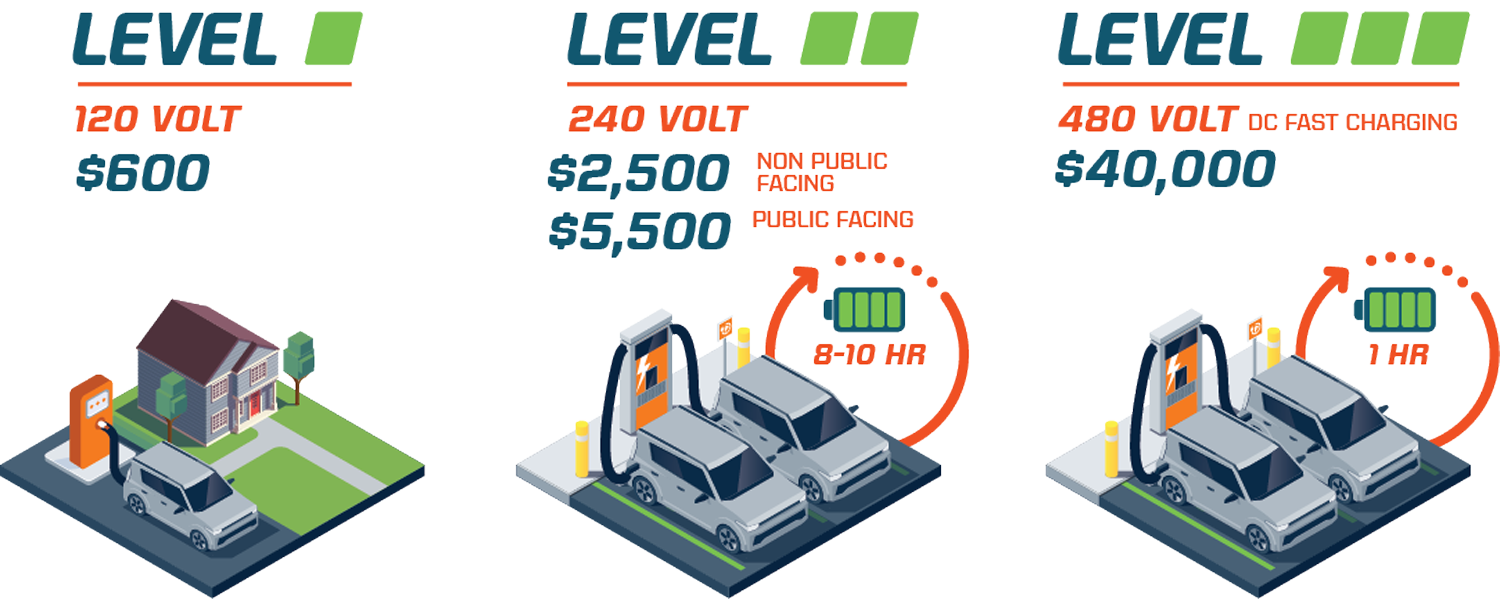
Before we dive into the dollars and cents (or lack thereof, per hour), let's quickly recap what a Level 2 charger even is. Think of it as the happy medium of EV charging. It's faster than the standard wall outlet (Level 1, which is like trickling water into a bucket) and it's what most people install at home or find at workplaces and public spots. It typically uses a 240-volt connection – similar to your clothes dryer – and can add a good 20-30 miles of range per hour. Pretty neat, huh? It’s the sweet spot for everyday convenience.
Must Read
Why "Cost Per Hour" is a Bit of a Misnomer
Okay, let's get to the heart of the matter. The idea of "cost per hour" for Level 2 charging, while intuitive, isn't actually how it works. Why not? Because the car isn't always gulping down electricity at the exact same rate, and more importantly, electricity isn't sold by the hour. It's sold by the kilowatt-hour (kWh).
Think of a kWh as a unit of energy, much like a gallon of gas. When you fill up your gas tank, you pay per gallon, not per minute you stand at the pump. Similarly, with an EV, you're paying for each kilowatt-hour that gets transferred from the grid into your car’s battery.

The Real Players in Your Charging Bill: The kWh and Your Electricity Rate
So, if it’s not per hour, what does determine the cost? Primarily, two things:
- Your local electricity rate (how much your utility charges per kWh).
- How many kWh your car actually pulls from the charger.
Your electricity rate is the big one. It varies wildly depending on where you live. In some states, electricity might be a bargain at $0.10 per kWh. In others, it could be $0.30 or even more! This is why two people could charge their EVs for the exact same amount of time and pay vastly different amounts. It's like buying a pizza – the price depends on the shop, not just how long it takes you to eat it!
Beyond the Basics: Other Influencers on Your "Effective Hourly Rate"
While electricity rate and kWh consumed are the main event, a few other factors can subtly influence what your charging feels like per hour:

Time-of-Use (TOU) Rates
Many utility companies offer Time-of-Use (TOU) plans. This means electricity costs less during off-peak hours (like late at night) and more during peak hours (when everyone is using AC). If you charge your EV using a smart Level 2 charger that lets you schedule charging for those super cheap overnight hours, your "effective cost per hour" will be significantly lower than if you blindly plug in during dinner rush. This is where being smart can really pay off!
Charger Power Output
Level 2 chargers aren't all created equal. Some might deliver 6 kW (kilowatts) of power, while others might push 11 kW. A higher kilowatt rating means more kWh are delivered per hour. So, if you're paying $0.15/kWh:

- A 6 kW charger will cost you about $0.90 per hour ($0.15 * 6 kWh).
- An 11 kW charger will cost you about $1.65 per hour ($0.15 * 11 kWh).
See how the "cost per hour" changes, even though the cost per kWh remains the same? It's simply because more energy is being delivered in that hour! This is similar to how a more powerful garden hose fills a bucket faster – you still pay for the water, but the bucket is full quicker.
Battery Efficiency & State of Charge
Cars aren't 100% efficient at receiving power, and the rate at which they charge can slow down as the battery gets fuller (especially after 80%). This means that an hour of charging when your battery is nearly empty might deliver more kWh than an hour of charging when it’s almost full. These are minor nuances, but they contribute to why a simple "cost per hour" just doesn't quite fit.
The Takeaway: It’s All About the kWh, Baby!
So, instead of asking "What's the Level 2 charger cost per hour?", the more accurate and helpful question is, "How much does a kilowatt-hour of electricity cost me at home (or at this public station)?"
Once you know your electricity rate per kWh (check your utility bill!), you can do a quick mental math calculation. If your car adds, say, 7 kWh of energy in an hour from your Level 2 charger, and your electricity costs $0.15 per kWh, then that hour of charging essentially "cost" you around $1.05 ($0.15 x 7 kWh). Not bad for adding a good chunk of range, right?
Why This Is Actually Pretty Cool
Understanding this isn't just about saving a few bucks; it's about empowerment. It shows you the true flexibility of EV ownership. By charging at home, especially during off-peak hours, you gain incredible control over your "fueling" costs. It often makes driving an EV significantly cheaper per mile than a gasoline car, giving you more predictability and often a lighter wallet at the end of the month.
So next time you plug in your EV, remember you’re not just watching a clock; you’re managing energy, leveraging smart grids, and tapping into a more sustainable way to get around. And that, my friends, is pretty awesome!