
Lead Is A Metal Or Nonmetal
Ah, lead. Just the name itself conjures up images, doesn't it? Perhaps an old fishing weight, a dusty pipe, or maybe even those little soldiers from childhood. But have you ever stopped to truly ponder this most peculiar element?
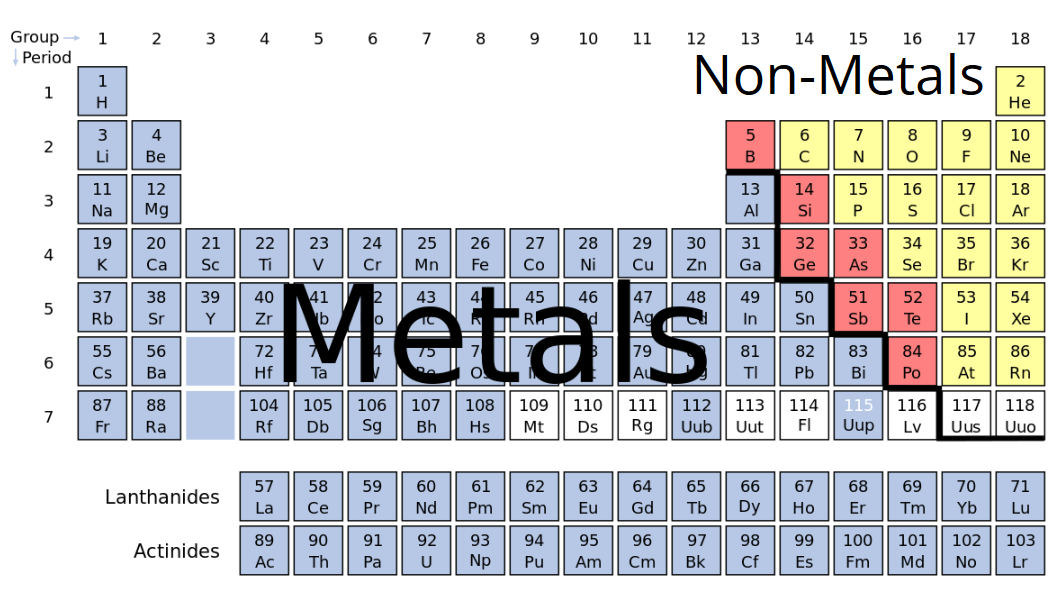
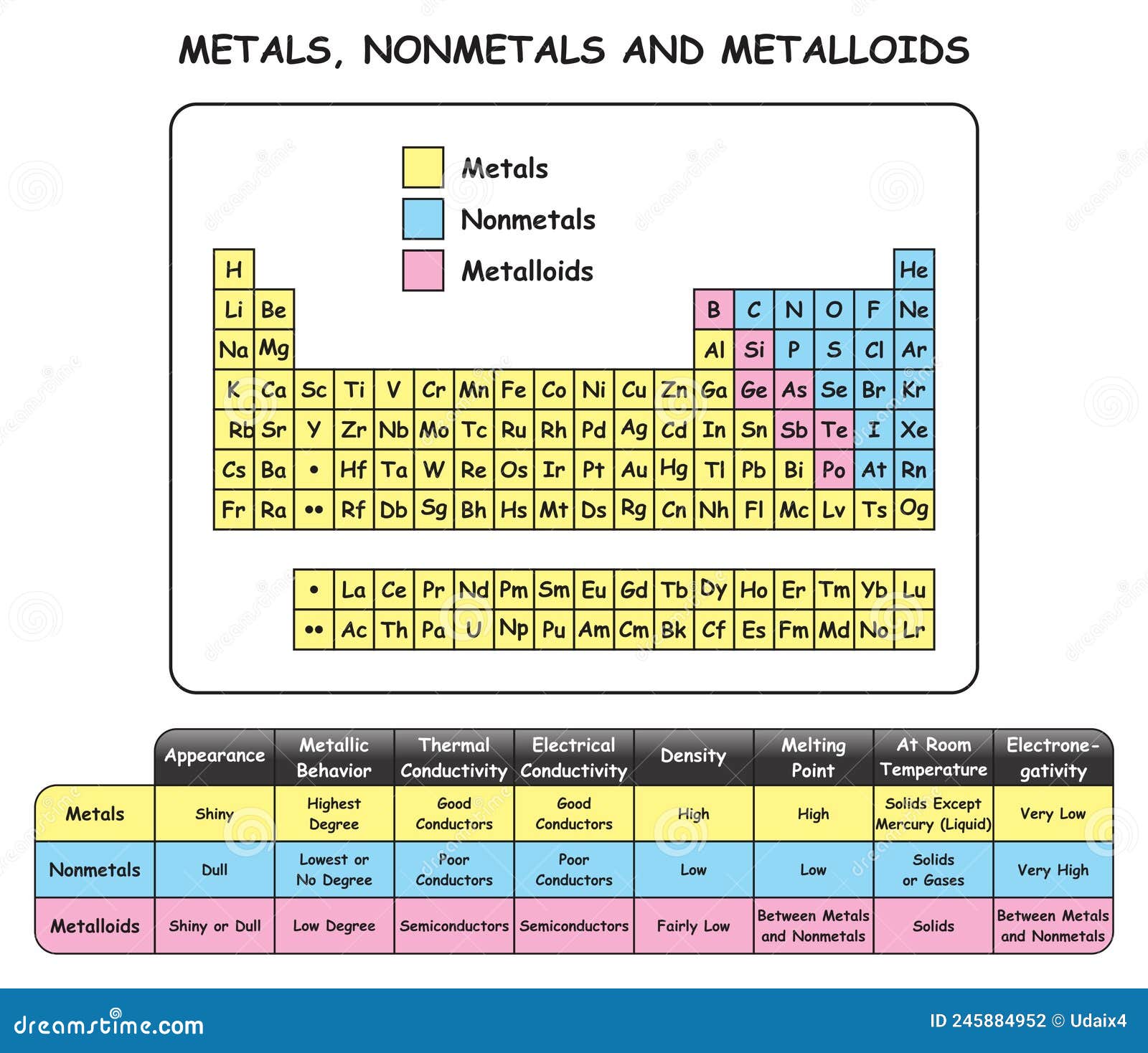
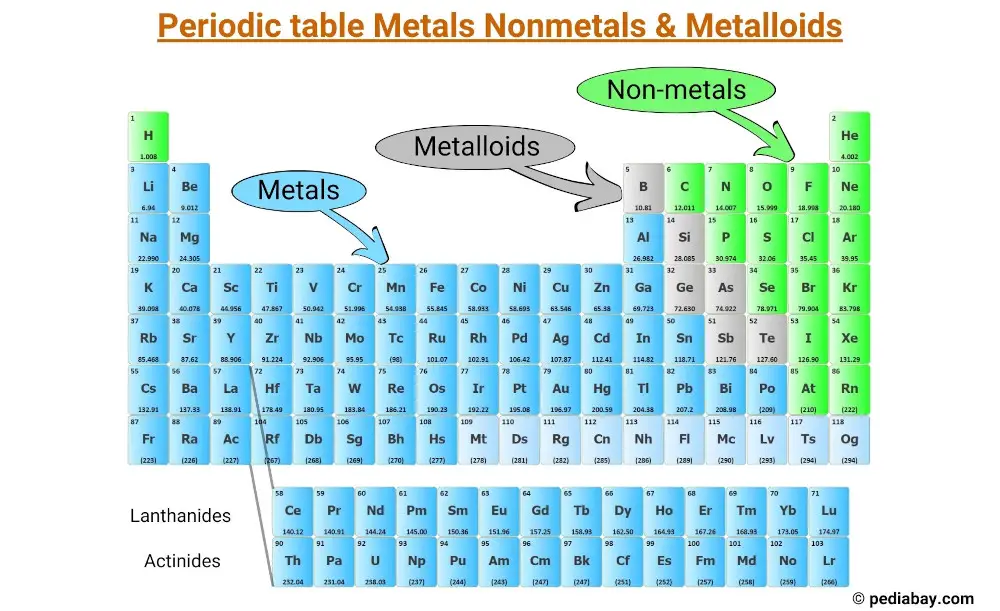
We're often told, quite definitively, that lead is a metal. It’s in all the textbooks, isn't it? The periodic table confidently places it amongst the metals. But what if, just for a moment, we decided to question the established order?
What if we dared to entertain a slightly scandalous, perhaps even unpopular opinion? Let's take a lighthearted, playful look at lead and see if it truly deserves its metallic badge of honor. Prepare to have your assumptions, gently, amusingly, challenged.
Must Read
The Metal Club: Where Does Lead Really Fit In?
Imagine the "metal club." You've got your dazzling gold, shining bright and always the life of the party. There's silver, sleek and sophisticated, conducting electricity with effortless grace. And then, of course, mighty iron, strong and dependable, building the very backbone of our world.
These are the rockstars of the metallic realm. They clink, they shine, they conduct, they often feel substantial yet elegant. They have that undeniable "metal energy." Now, where does our friend lead fit into this glamorous picture?
When you picture a metal, what's the first thing that comes to mind? Likely a beautiful luster, right? That reflective, mirror-like quality that makes jewelry sparkle and car bumpers gleam. Think about aluminum foil, practically blinding in the sunlight.
Now, hold a piece of lead. Go on, imagine it. What do you see? Often, it’s a rather dull, grayish, almost forgotten appearance. It doesn't exactly scream "shine!" or "glamour!" Does it?
Sure, if you cut it open, you might see a brief flash of brightness. But give it five minutes, and it's back to its usual modest, unassuming self. It’s like the shy kid at the school dance, briefly trying to shine, then quickly retreating to the shadows.

Is that truly the hallmark of a proud, self-respecting metal? Or is it perhaps a hint of something else entirely? Maybe an imposter in a metal's clothing?
Conductivity: A Metal's Superpower, or Lead's Mild Talent?
Metals are famous for being excellent conductors. They whisk heat and electricity away with incredible speed. Think about copper wires, channeling power across continents. Or a hot pan, transferring heat from burner to sizzling steak in moments.
Lead? Well, it conducts, yes. It's not an insulator like plastic or wood. But it's hardly in the same league as the star athletes of the conductivity world. It's more like a participant trophy winner, rather than an Olympic champion.
It gets the job done, eventually, but without any real enthusiasm or flair. It’s like watching someone slowly push a shopping cart, rather than a race car zipping around a track. Does that sound like a prime characteristic of a bona fide metal to you?
Then there's the sound. Drop a coin, a spoon, or even a small wrench. You get that satisfying metallic clink or ring, don't you? It's a sound that resonates, that tells you something solid and sturdy just made contact.
Now, drop a piece of lead. Go ahead, imagine that satisfying thud. It's not a ring, it's not a clink. It’s a quiet, heavy, unceremonious sound. Almost as if it’s saying, "Oh, I'm here. Don't mind me. Just... thudding."
A true metal announces its presence with a certain auditory panache. Lead, on the other hand, opts for the understated, almost apologetic entrance. It barely makes a sound, which, frankly, feels a lot less "metal" and a lot more "mystery object that fell."
The Soft Side: Is Lead Too Cuddly for the Metal Club?
One of lead's most defining characteristics is its incredible softness. You can scratch it with your fingernail! You can bend it with minimal effort! It’s so pliable, it almost feels like clay or a very dense Play-Doh rather than a tough, unyielding metal.
Now, think of steel. Think of titanium. These are metals that embody strength, resilience, and industrial might. They stand up to pressure, resisting deformation with admirable tenacity. They build bridges and armor and skyscrapers.
Lead, bless its soft little heart, seems almost... squishy. It's like the gentle giant who looks imposing but is secretly a big softie. Is this extreme malleability a sign of a metal at its peak, or a characteristic that pushes it towards a different category?
Perhaps it's less like a sturdy metal and more like a very heavy, slightly toxic, non-metal impostor trying its best to fit in.
Let's talk about its uses. What do we primarily use lead for? Fishing weights, dive weights, ballast for ships. Things that need to be heavy and stay put. Batteries, where its chemical properties are key. Shielding from radiation, where its density is crucial.
These aren't exactly the glamorous roles we associate with metals. We don't build majestic statues out of lead (they'd sag!). We don't make gleaming jewelry (it'd get scratched instantly and probably be a health hazard!). We don't forge mighty tools from it (they’d just bend).
Instead, lead often takes on the more humble, background roles. It's the unsung hero, the silent workhorse, often hidden away where its dullness and softness won't detract from the flashier elements. Does this sound like a proud metal, or more like something else entirely?
The Verdict (A Playful One, Of Course)
So, after this highly scientific and utterly serious investigation (wink, wink), where do we land? Is lead a metal or a nonmetal?
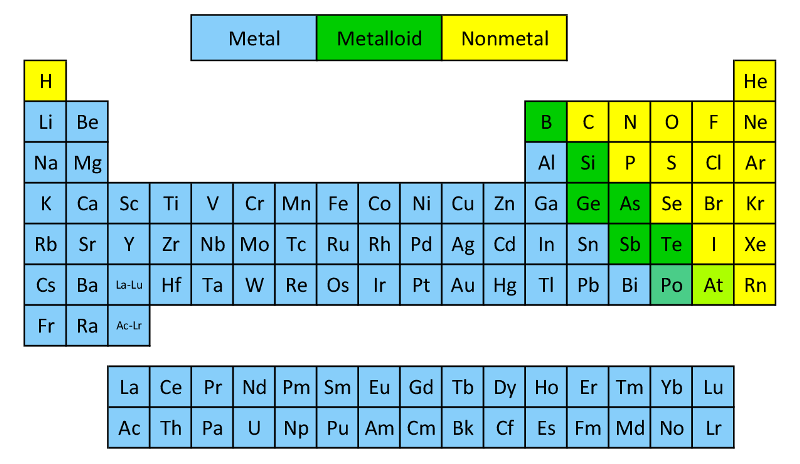
Technically, chemically, scientifically, it’s classified as a metal. A heavy metal, to be precise. And we wouldn't want to upset the serious scientists, would we? Their periodic tables are very important!
But in the court of public opinion, in the grand arena of feel and vibe and general impression? We propose a playful re-evaluation. Lead just doesn't quite fit the typical "metal" mold, does it?
It lacks the sparkle, the ring, the unwavering strength, and the energetic conductivity that we instinctively associate with its metallic brethren. It's too soft, too dull, too quiet, too... thuddy.
Perhaps lead is the ultimate undercover element. It lives amongst the metals, plays by some of their rules, but deep down, it carries the quiet, unassuming, and slightly peculiar traits of a nonmetal. It’s the shy, introverted friend in a group of boisterous extroverts.
So, the next time you encounter a piece of lead, give it a knowing nod. Recognize its unique, almost rebellious spirit. It might be called a metal, but in our hearts, we know it's marching to the beat of its own, wonderfully thudding, drum.
Maybe it’s time to accept that lead is a metal with an identity crisis. Or, as we like to think, the most charmingly disguised nonmetal that ever was. Agree with us? You know you want to!