
Largest Natural Disaster In Us History

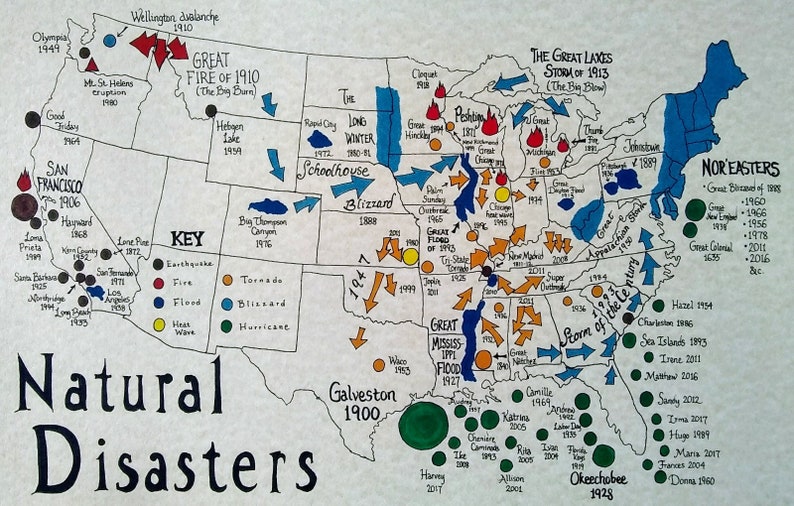
Imagine a bathtub overflowing. Now imagine that bathtub is actually a huge chunk of the United States, and it just keeps filling up! That's a bit like what happened in 1927 with the Great Mississippi River Flood, often called the largest natural disaster in U.S. history.
This wasn't just a big puddle; it was an epic waterlogged saga that covered an area roughly the size of Massachusetts, Connecticut, New Hampshire, and Vermont combined. Talk about a soggy situation!
For months and months, the rain simply wouldn't stop. It poured down, day after day, making the mighty Mississippi swell to unbelievable proportions. It was like nature decided to turn the "on" switch for rain and then couldn't find the "off."
Must Read
Soon, the river's banks couldn't hold back the sheer volume of water anymore. They burst, sending torrents of water rushing across seven different states. Homes, farms, and whole towns were suddenly underwater.
Over 700,000 people were forced to leave their homes, becoming refugees in their own country. Picture trying to pack up your life with water rising around your ankles – or even your chest!
Many folks found themselves living on rooftops, perched precariously as if their house had turned into a giant, unwanted houseboat. They'd wave frantically at passing boats, hoping for rescue and a dry spot.
One of the most heartwarming parts of this disaster was seeing communities pull together. Neighbors helped neighbors, strangers became saviors, and everyone chipped in however they could.
Makeshift boats popped up everywhere, from old doors to repurposed bathtubs. People were incredibly resourceful, transforming anything that floated into a vessel for escape or rescue.
Can you imagine the scene? Livestock, pets, and even wild animals would often find themselves sharing these tiny floating refuges. A farmer might find his prize-winning pig huddled next to a bewildered owl, both equally confused by their watery surroundings.
"The floodwaters created a new landscape, where familiar landmarks were submerged, and people navigated by memory."
These surprising animal partnerships offered a moment of levity during a very serious crisis. It reminds us that even in tough times, life finds a way to be a little bit quirky.
The news of the flood spread like wildfire, thanks to a relatively new invention: the radio! People across the country tuned in, getting updates and hearing firsthand accounts of the devastation and heroism.
This marked one of the first times a major disaster was covered so extensively by radio, bringing the human stories directly into people's living rooms. It helped rally support and donations from far and wide.
A very important figure who stepped up during this crisis was Herbert Hoover, who wasn't yet president. He was appointed by President Calvin Coolidge to coordinate the massive relief effort.
Hoover, known for his organizational skills, practically lived and breathed flood relief for months. He set up refugee camps, arranged for food and medical supplies, and truly made a name for himself.
His tireless work during the flood essentially launched him into the national spotlight, paving the way for his eventual presidency. It was a surprising twist in his political career!
The refugee camps, though temporary, became bustling mini-cities. Thousands of people lived in tents and makeshift shelters, sharing stories and finding comfort in community.
These camps were often filled with music, too. Blues and jazz musicians, many of whom were directly affected by the flood, created songs that captured the sorrow, resilience, and even the dark humor of the situation.
Songs like "High Water Everywhere" by Charley Patton became anthems, giving voice to the experience of a generation. Music has a wonderful way of helping people cope and remember.
The flood also inspired the famous song "When the Levee Breaks", later covered by the legendary band Led Zeppelin. It’s a testament to how deeply this event impacted American culture.
Think about that – a song about a 1927 disaster still rockin' the airwaves decades later! It shows the enduring power of these stories.
One crucial lesson learned from this disaster was the need for better flood control. Before 1927, people mostly relied on simple "levees," or earthen walls, to contain the river.

After the flood, the government developed a much more comprehensive flood control system, including massive dams and spillways. It was a huge, ambitious project to try and tame the mighty Mississippi.
While the flood caused immense suffering and loss, it also showcased incredible human spirit. People didn't just give up; they adapted, they helped, and they rebuilt.
Entire towns were literally washed away, but the communities came back, often stronger and with a renewed sense of purpose. It was a powerful demonstration of American grit.
So, next time you hear about a big flood, spare a thought for the Great Mississippi River Flood of 1927. It was a truly colossal event, full of hardship, but also incredible resilience, unexpected heroes, and even a few charming animal tales.
It reminds us that even when nature throws its worst at us, people can come together to overcome challenges, proving that the human spirit is perhaps the strongest force of all. And sometimes, you just need a really big boat!