Labeled Periodic Table Metals Nonmetals And Metalloids
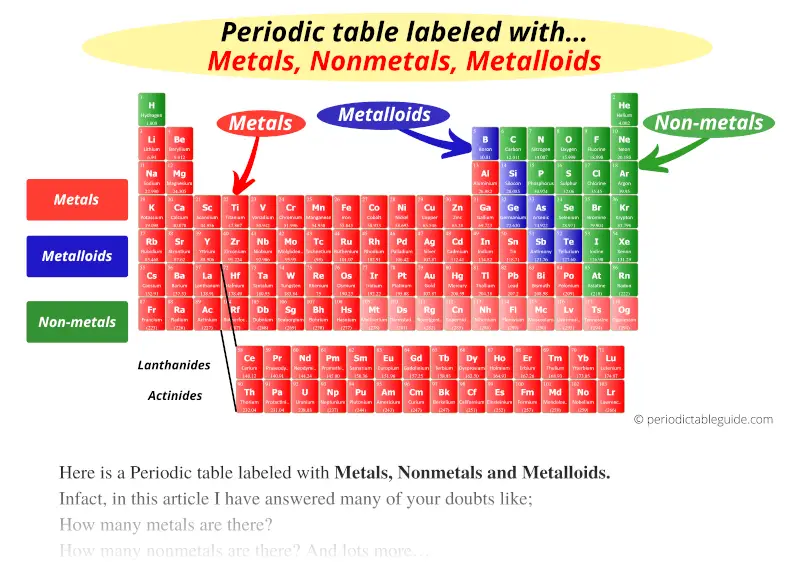
Ever feel like chemistry is a secret language spoken only by scientists in lab coats? Well, let's crack the code! And what better place to start than with the Periodic Table of Elements? Now, before you run screaming, hear me out. We're not going to dive into complicated equations. Instead, we'll focus on a colorful, categorized version: the labeled periodic table, highlighting metals, nonmetals, and metalloids. Think of it as a map to understanding the building blocks of pretty much everything around you!
So, why is this particular version of the periodic table so useful and fun? Simple. It cuts through the clutter. Instead of just seeing a grid of symbols, you immediately grasp the fundamental properties of each element based on its color-coded category. It's like having a cheat sheet that visually explains how different elements behave. Knowing the difference between metals, nonmetals, and metalloids allows you to predict how they'll interact with each other, which is incredibly powerful.
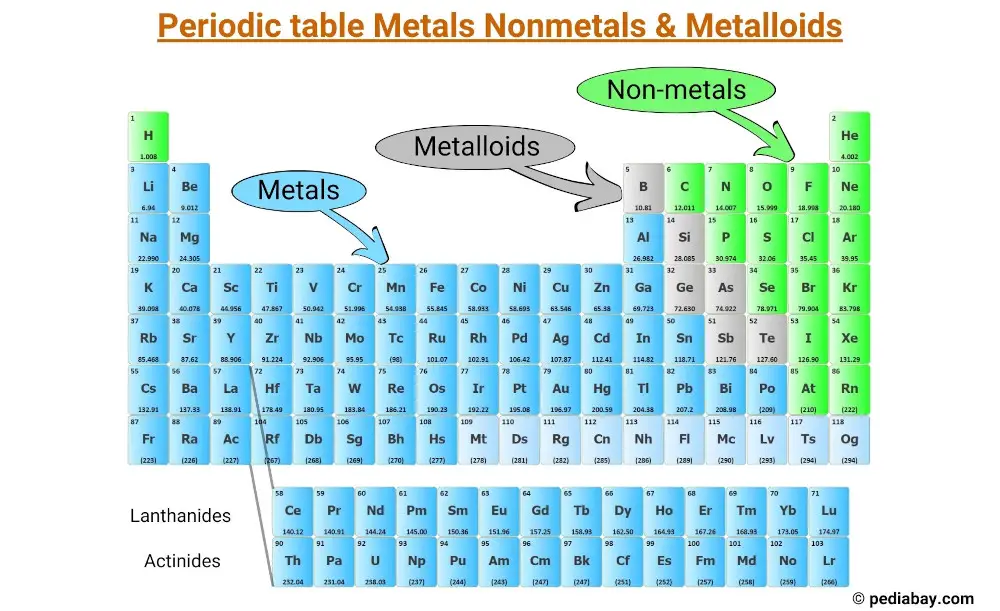
Let's break it down. First, we have the metals. These guys are the rock stars of the element world. They're typically shiny, conduct electricity and heat like champions, and are malleable (meaning you can shape them) and ductile (meaning you can draw them into wires). Think of gold, silver, copper, iron – the usual suspects. Metals are essential for building things, from skyscrapers to smartphones. The vast majority of elements on the periodic table fall into the metal category, and they usually reside on the left side.
Must Read
Next up, the nonmetals. Often found on the right side of the table, nonmetals are generally the opposite of metals. They're often dull in appearance, poor conductors of electricity and heat, and can be brittle (easily broken). Some are gases at room temperature (like oxygen and nitrogen, essential for life!), some are liquids (like bromine), and some are solids (like sulfur and carbon). Don't underestimate them, though. Nonmetals are crucial for biological processes and form the backbone of organic chemistry. The air we breathe, the water we drink, and the food we eat all heavily rely on nonmetals.
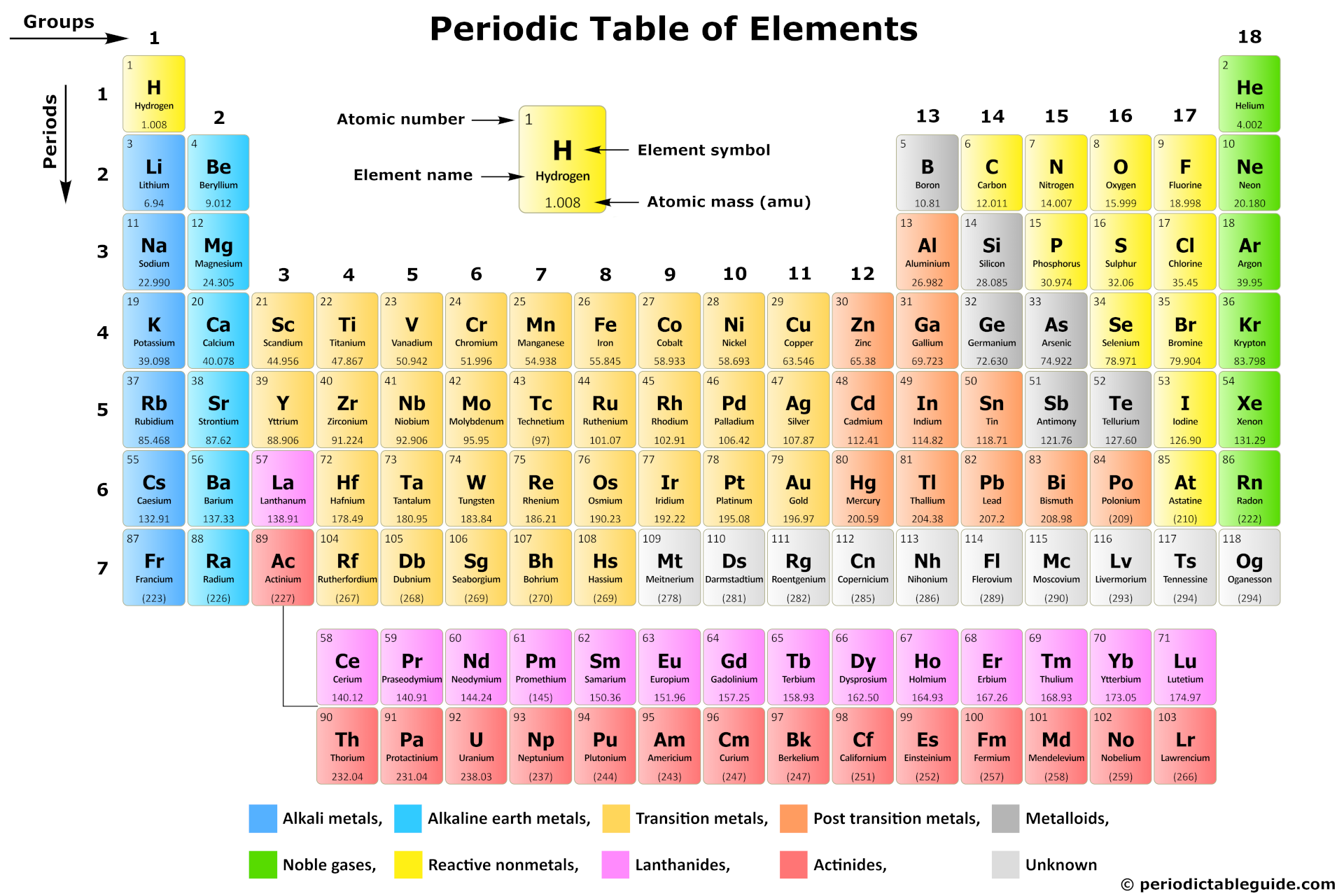
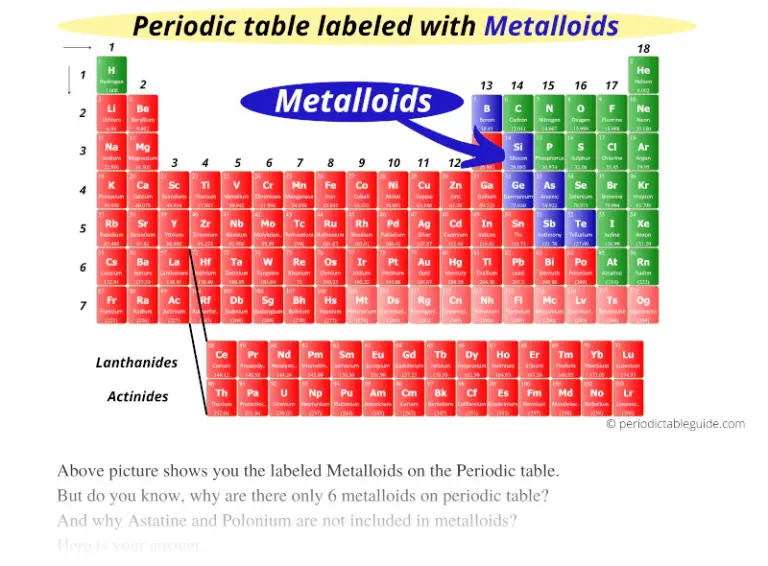
Finally, we have the enigmatic metalloids, also known as semi-metals. These elements live on the border between metals and nonmetals, and they have properties of both! They're the chameleons of the element world. They might look metallic, but they don't conduct electricity as well as true metals. This "in-between" behavior makes them incredibly useful in semiconductors, which are the heart of computers and other electronic devices. Think of silicon, germanium, and arsenic. Without metalloids, we wouldn't have the technology that powers our modern lives!
By understanding the labeled periodic table and the roles of metals, nonmetals, and metalloids, you gain a fundamental understanding of how the world works at a chemical level. It's not just about memorizing facts; it's about seeing the connections between elements and their properties, and realizing how those properties influence the materials we use every day. So, grab a labeled periodic table, explore its colorful landscape, and unlock the secrets of the elements. You might be surprised at how much fun you have!