
Is The Sun Fission Or Fusion

Alright, so grab your mug, settle in. We're about to tackle one of those big, sparkly questions that sometimes pops into your head while you're staring out the window, right?
Like, what's actually going on up there with our giant, fiery friend, the Sun? Is it all about fission, or is it a big ol' fusion party? It’s a classic brain-tickler, isn't it?
Let's Talk Fission First (and Why It's NOT the Sun)
Okay, so fission. Ever heard of nuclear power plants? Or... gulp... atomic bombs? That's fission in action. Think of it like this: you take a really heavy, unstable atom, like uranium, and you basically smash it. You hit it with a tiny particle, and poof! It splits apart into smaller atoms.
Must Read
When it splits, it releases a bunch of energy. It’s like breaking a big, brittle cookie into smaller pieces – but these pieces are super energetic. And those smaller pieces? They can then hit other big cookies, causing a chain reaction. Pretty wild, pretty powerful, but also, y'know, needs very specific, heavy elements to work.
So, is our Sun doing that? Breaking big atoms apart?

Now For the Star of the Show: Fusion!
Alright, switch gears. Let’s talk about fusion. This is where things get really cool, because this is what our Sun – and all the other stars we gaze at – are doing. Think of fusion as the opposite of fission. Instead of breaking things apart, you’re mushing them together.
Imagine trying to push two magnets together if they're trying really hard to repel each other. That's kind of what atoms do. But if you push them hard enough, under incredible pressure and at mind-boggling temperatures, they can actually overcome that repulsion and fuse into a new, heavier atom.
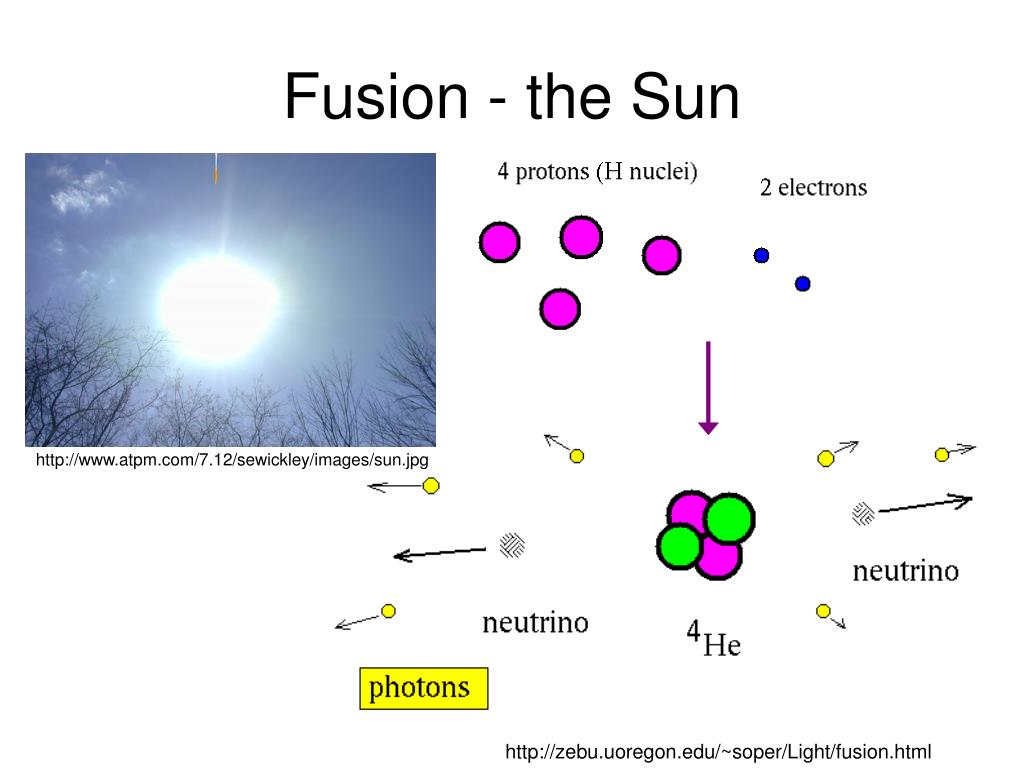
And guess what happens when they fuse? You guessed it: a ton of energy gets released. Like, seriously, an obscene amount of energy. It's like the universe's most efficient hug, where the hug itself creates fireworks.
The Sun's Secret Sauce: Hydrogen to Helium
So, what's fusing in the Sun's core? Primarily, it's hydrogen atoms. Think of them as the Sun's fuel. Down in the Sun's heart, where the pressure is incomprehensible (imagine the weight of millions of Earths pressing down) and the temperature is a scorching 15 million degrees Celsius, these hydrogen atoms are just flying around like crazy.

They’re zipping, they’re colliding, and every now and then, four hydrogen nuclei (the very centers of hydrogen atoms) get squeezed so hard, with such intense energy, that they literally fuse together to form one nucleus of helium. It's a bit more complex than that, a few steps in between, but that's the gist.
And here's the kicker: when those four hydrogens become one helium, a tiny, tiny bit of their mass actually gets lost. But where does it go? It doesn't disappear! That little bit of "lost" mass gets converted directly into pure energy. Yeah, thanks, Einstein. That's where all the Sun's light and heat come from! It's constantly turning mass into energy, a truly awe-inspiring process.

So, billions of times a second, down in its core, the Sun is taking hydrogen, mashing it together to make helium, and spitting out an unbelievable amount of energy. That's why it's been shining for about 4.5 billion years and will keep going for another 5 billion or so!
The Takeaway: It's All About Fusion, Baby!
So, to answer our initial question with a resounding flourish: the Sun is powered by nuclear fusion. It’s not breaking things apart; it’s building them up, one tiny atom at a time, under the most extreme conditions imaginable. It's a gigantic, natural, self-sustaining fusion reactor in the sky!
Pretty cool, right? Next time you feel the warmth on your face, you can casually drop that knowledge bomb. "Ah, the sweet embrace of hydrogen fusing into helium." Your friends will be thoroughly impressed. Or just mildly confused. Either way, you'll know the truth!