
Is Nylon And Polyamide The Same
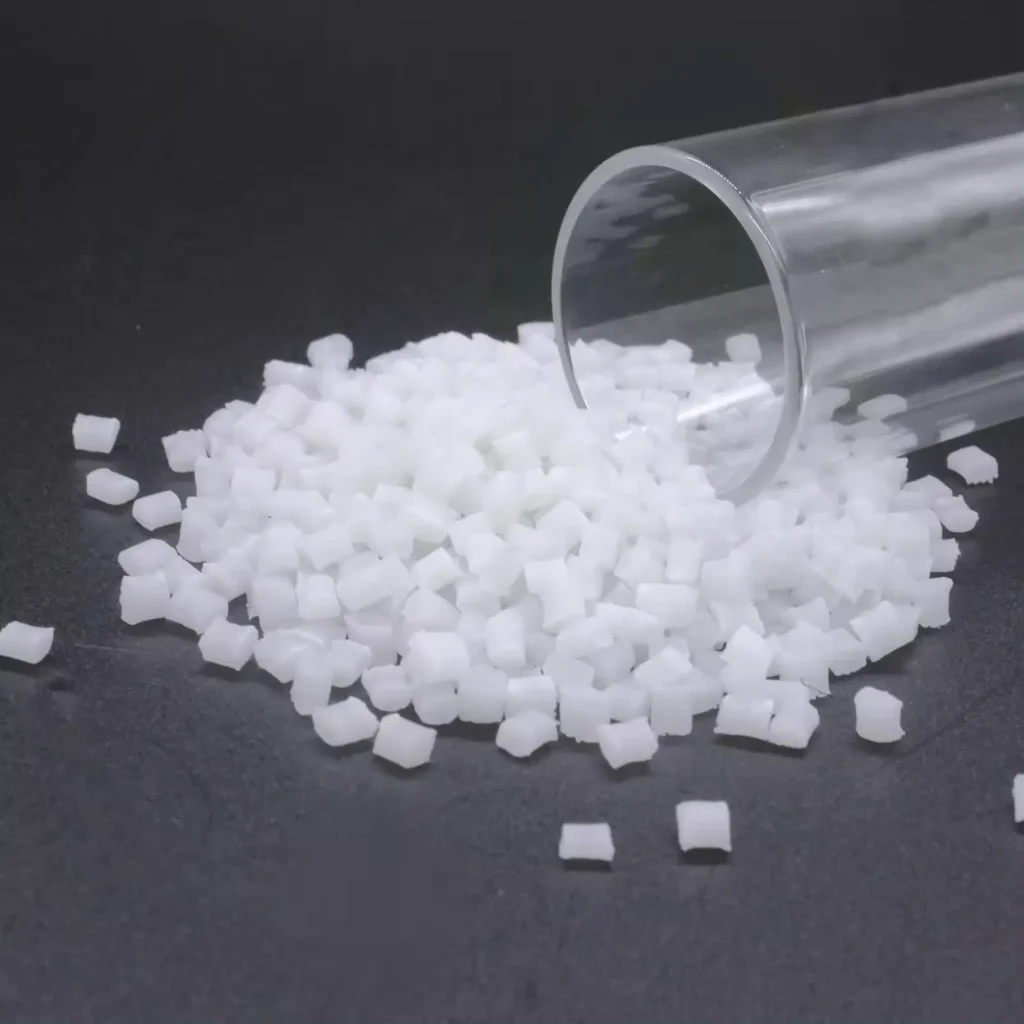
Alright, settle in, grab your imaginary coffee. Because today, my friend, we're diving into one of those super-niche, slightly-geeky questions that pops into your head at 3 AM. You know the ones. Like, "Are hot dogs sandwiches?" (Don't even get me started.) Or, more relevantly for our current chat: Is Nylon and Polyamide the same thing?
Cue the dramatic music!
It’s a question that’s probably crossed your mind if you’ve ever shopped for outdoor gear, swimwear, or, you know, just about anything synthetic these days. You see "Nylon" on one label, "Polyamide" on another, and your brain just goes, "Wait, what's the deal?" Are we talking about twins? Cousins? Or is one just doing an elaborate disguise?
Must Read
The Big Reveal (Spoiler Alert!)
Okay, let's just get straight to it. No beating around the bush. Drumroll, please…
Yes, Nylon IS a type of Polyamide.
Boom! Mind blown, right? Or maybe just mildly informed. Either way, mission accomplished.
:max_bytes(150000):strip_icc()/Comparing-nylon-and-polyester-carpet-fiber-2908806-final2-86e292037c8648b98a8a18b6ab292f42.png)
Think of it like this: all squares are rectangles, but not all rectangles are squares. Or, to use an even more delicious analogy (because coffee and pastries, naturally), all Granny Smith apples are fruit, but not all fruit is a Granny Smith apple.
See? Polyamide is the big family name, the general category, the "fruit" aisle. And Nylon? Well, Nylon is that famous, super-successful cousin who everyone knows and loves – the "Granny Smith."
So, What's a Polyamide, Anyway?
Without getting all science-y and making your eyes glaze over (we're having coffee, not a chemistry lecture, thank goodness), a polyamide is basically a type of polymer. Polymers are long chains of repeating units, like beads on a necklace. And in the case of polyamides, these repeating units are linked together by something called an "amide bond."
Don't worry about the chemical structure. Just know that "polyamide" is a class of synthetic polymers. It’s a whole group of materials sharing a similar chemical backbone.
Enter Nylon, The Star!
Now, Nylon. Ah, Nylon. This little superstar burst onto the scene in the late 1930s, courtesy of DuPont. It was revolutionary! Suddenly, you had a synthetic fiber that was strong, elastic, and could be molded into all sorts of things.
Remember those famous nylon stockings? Parachutes during WWII? Fishing lines? Toothbrush bristles? Yeah, that was all Nylon. It was a game-changer!
Because Nylon was such a groundbreaking, widely marketed, and incredibly popular product, it pretty much became the household name for any synthetic fiber with those amazing properties. It was like Kleenex for tissues, or Band-Aid for adhesive bandages. Everyone knew what you meant when you said "Nylon."
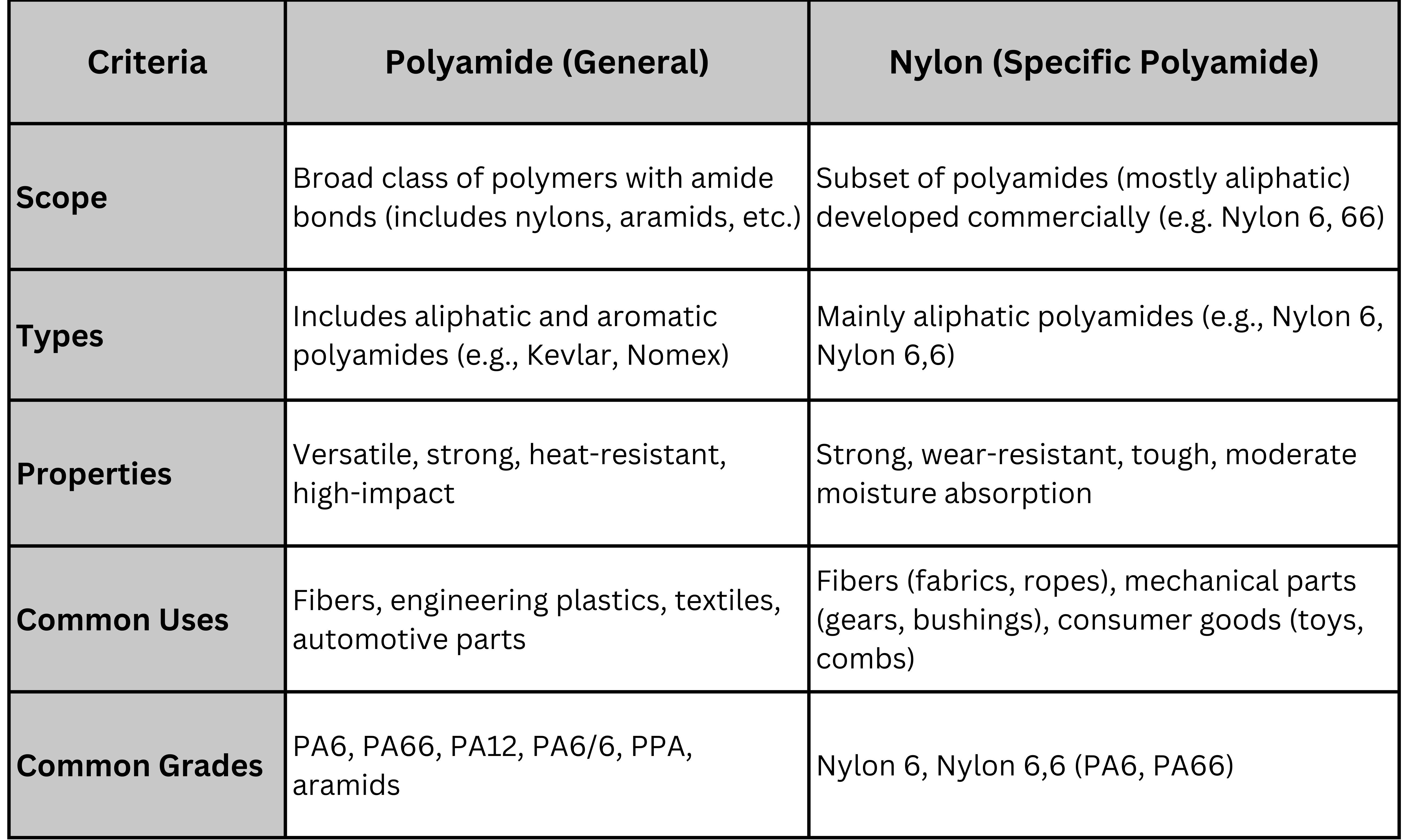
The most common types of Nylon you hear about are Nylon 6 and Nylon 6,6. These are just specific formulations of polyamide that DuPont (and others) developed and commercialized. They're like different flavors of the same amazing cake!
Why the Mix-Up, Then?
Simple. Because Nylon became so dominant and famous, the brand name often eclipsed the generic category name. So, while technically correct to say "polyamide fabric," it often just sounds more familiar and specific to say "Nylon."
Sometimes, manufacturers might use "polyamide" on a label simply because it’s the broader, more chemically accurate term, especially if it’s a specific type of polyamide that isn't one of the universally recognized "Nylons" (like Nylon 6 or Nylon 6,6). Or maybe they just prefer the more technical term. Who knows? Marketing, right?
But rest assured, if you see "polyamide" on your favorite jacket’s label, there's a very good chance it's essentially some form of Nylon.

Does it Matter in Your Everyday Life?
Honestly? Probably not a whole lot.
Whether a tag says "100% Nylon" or "100% Polyamide," you're generally going to get material with similar characteristics: strong, durable, resistant to abrasion, quick-drying, and often quite elastic. These are the hallmarks of this fantastic family of fibers.
But hey, now you know the truth! You can casually drop this knowledge bomb at your next social gathering. "Oh, you know, Nylon is actually just a type of Polyamide..." and watch as everyone is either incredibly impressed or slowly backs away. Either way, you'll feel pretty smart.
So next time you're pondering the fabric content of your hiking socks, you can give a knowing nod. You're now officially in the "in the know" club. Congrats! More coffee?