
Is Natural Gas Energy Renewable Or Nonrenewable

Okay, let's talk gas. Natural gas, that is. The stuff that heats our homes and cooks our dinner.
Renewable or nonrenewable? The debate rages on! I'm here to throw a wrench in the works.
Brace yourselves. I have an unpopular opinion brewing.
Must Read
The Usual Suspects: Renewable vs. Nonrenewable
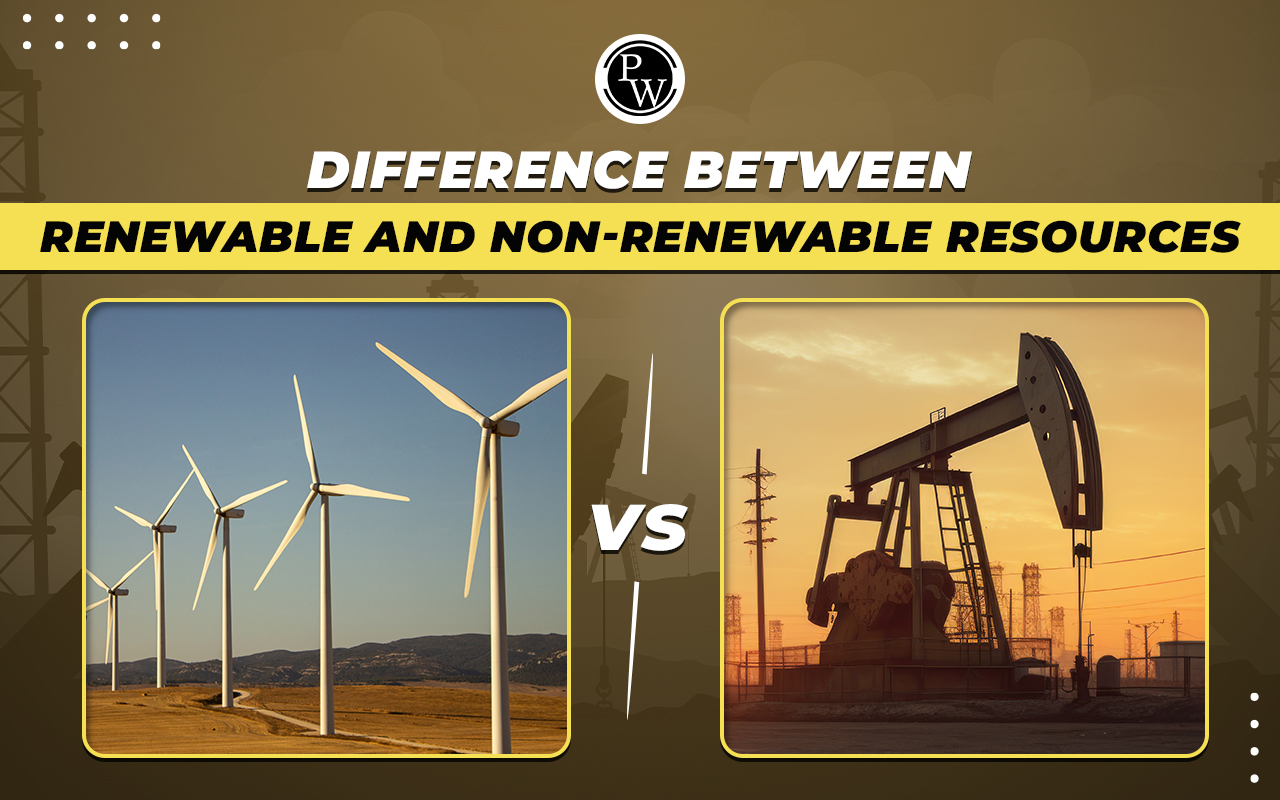
Everyone "knows" the drill. Renewable energy springs from sources that naturally replenish.
Think sunshine (solar), wind (wind turbines), and water (hydroelectric).
Nonrenewable? Finite resources. Once they're gone, they're gone. Cue sad trombone.
Fossil fuels like oil and coal fit squarely in this category. So, where does natural gas fit in?
It's always lumped with the bad guys. But is that fair?
The "Official" Answer: Nonrenewable (Boo!)
The textbooks scream nonrenewable. Governments and energy companies repeat the mantra.
Natural gas comes from decaying organic matter buried deep underground. Millions of years of pressure and heat transform it.
That sounds like a finite process, right?
The standard argument is we're using it up way faster than it can naturally replenish.
But what if...?
My (Slightly Crazy) Idea: The "Eh, Maybe Renewable-ish" Argument
Here's where I might lose some of you. Stick with me!
What if the earth is constantly creating more natural gas than we think?
Okay, I know it sounds bonkers, but there are some geological theories out there suggesting it.
We're talking about abiogenic gas formation. Gas created from inorganic sources deep within the Earth.
Scientists like Thomas Gold, a famous astrophysicist, championed this idea. He wasn't just some random guy!
He believed that vast reserves of gas are constantly being generated deep within the Earth's mantle. It's rising towards the surface through cracks and fissures.
Think of it like the Earth constantly burping out gas. Rude, but maybe renewable?
Even if the abiogenic theory isn't 100% true (and it's heavily debated), maybe there's some small amount of natural gas being created constantly.

Maybe we're only looking at part of the picture.
The Great Scale Debate
The crux of the argument boils down to scale. How much gas are we using? How much is being created?
If we're using a million times more than is being created, it's effectively nonrenewable.
But even a tiny amount of constant creation nudges it ever so slightly toward the renewable side of the spectrum. Doesn't it?
Let's say you have a leaky bathtub. Water drains out, but the faucet drips constantly. Is the water level going down? Absolutely. Is there a constant supply, however minimal? Yes!
Maybe natural gas is just a really, really leaky bathtub.
The "Bridge Fuel" Concept: A Compromise?
Regardless of its true renewable status, natural gas is often touted as a "bridge fuel."
The idea is it's cleaner than coal and oil. We can use it to transition to truly renewable energy sources.
It emits less carbon dioxide when burned. That's undeniably better, right?
But methane leakage is a big concern. Methane is a potent greenhouse gas. Leaks can negate the benefits of lower carbon emissions.
Plus, investing heavily in natural gas infrastructure might delay the shift to truly sustainable alternatives. Are we kicking the can down the road?
Fracking: The Elephant in the Room
We can't talk about natural gas without mentioning fracking. Hydraulic fracturing, to be precise.
It's the process of injecting high-pressure fluid into shale rock to release trapped gas.
Fracking has unlocked vast reserves of natural gas. It has also raised serious environmental concerns.
Water contamination, induced earthquakes, and habitat destruction are just a few of the worries. Not to mention the visual blight!
Even if natural gas was slowly renewable, the environmental costs of extracting it via fracking might outweigh the benefits.
The Real Question: Sustainability
Maybe the renewable vs. nonrenewable debate is the wrong question altogether.
The real question is: Is our current use of natural gas sustainable?
Can we continue to extract and burn it at this rate without causing irreversible damage to the planet?
The answer, I suspect, is a resounding no. Regardless of its origins.
We need to prioritize energy efficiency. And invest in genuinely renewable energy sources like solar, wind, and geothermal.
And yes, maybe even consider nuclear. But that's a whole other can of worms!
My (Final?) Verdict: It's Complicated (But Probably Still Nonrenewable)
So, am I ready to declare natural gas a renewable resource? Probably not.
The evidence for abiogenic gas formation is still limited and heavily contested. And even if it exists, the scale is likely too small to make a significant difference.
But I still think it's fun to question the conventional wisdom. To consider possibilities outside the accepted narrative.
Maybe, just maybe, the Earth is a bit more generous than we give it credit for.
But until we have solid evidence, let's treat natural gas as a finite resource. Let's use it sparingly and responsibly.
And let's keep pushing for a future powered by truly renewable energy. The kind that doesn't involve leaky bathtubs or Earth burps.
What do you think? Am I completely off my rocker? Let me know in the comments!