
Is Malleable A Chemical Or Physical Property
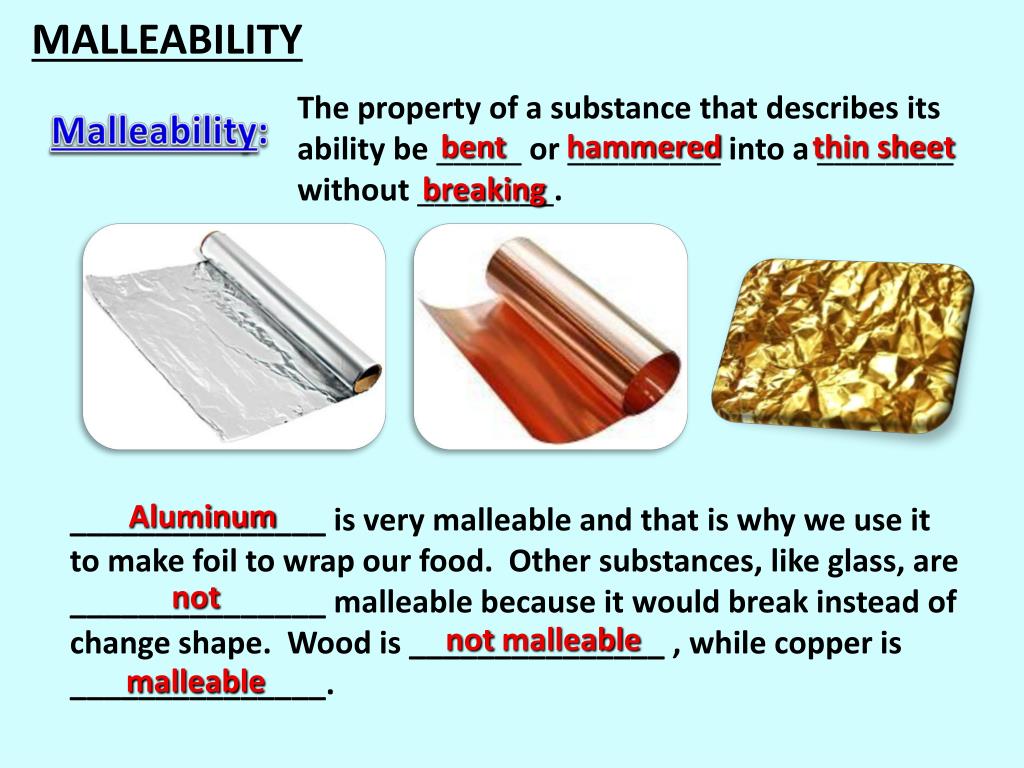
Okay, buckle up buttercups, because we're diving headfirst into the thrilling world of… properties! Specifically, that bendy, shapely property known as, you guessed it, malleability! Is it a chemical thing? A physical thing? Don't sweat it, we'll figure it out, and I promise it'll be more fun than watching paint dry (unless you're really into paint drying, in which case, you do you!).
What in the World is Malleability?
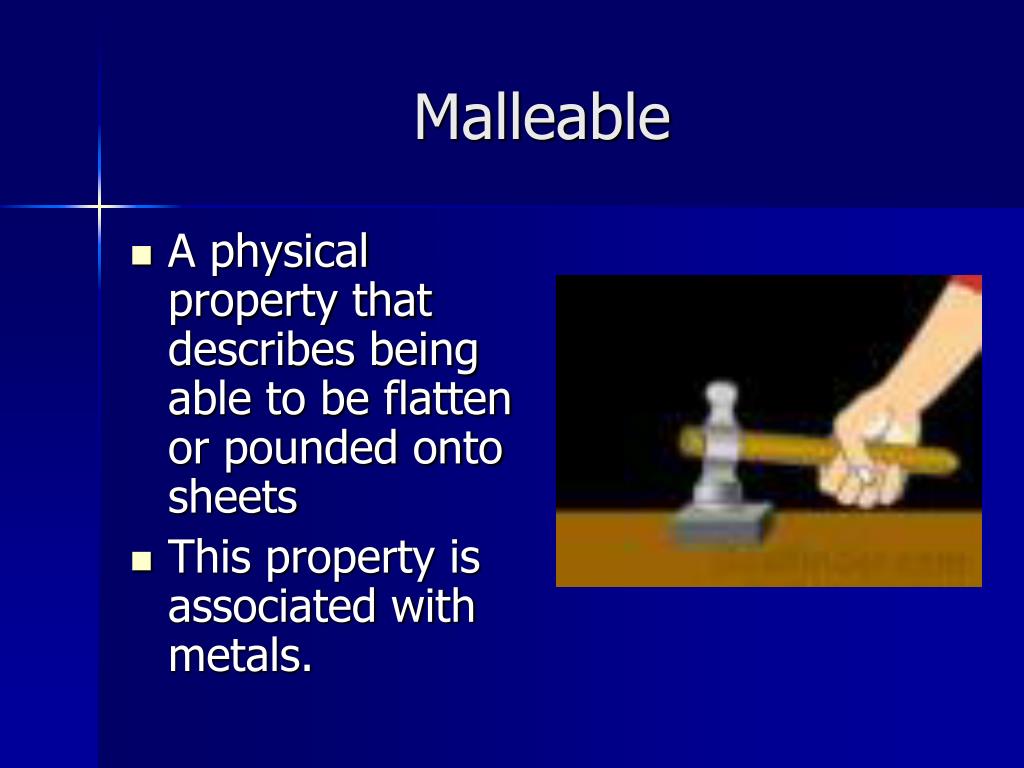
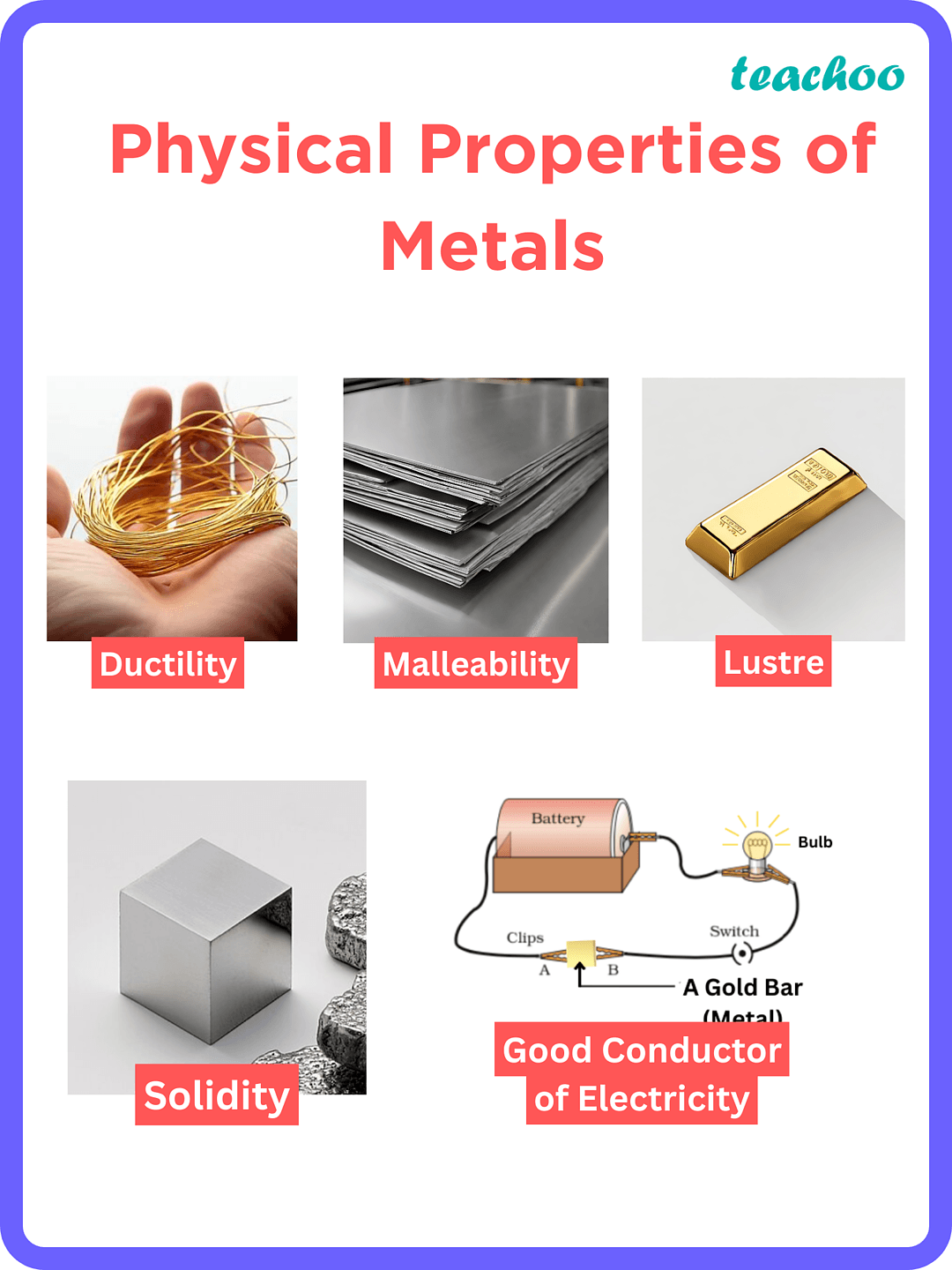
Before we get all scientific-y, let's talk about what malleability actually means. Simply put, it's a substance's ability to be hammered or rolled into thin sheets without crumbling into a sad little pile of dust. Think of aluminum foil! That stuff starts as a hunk of metal, but with some serious squishing (technical term!), it becomes the perfect wrapper for your leftover pizza. That, my friends, is malleability in action!
Gold is another rockstar of malleability. Seriously, gold is so malleable, you could theoretically (with the right equipment and a whole lot of patience) hammer a single ounce of gold into a sheet that covers an entire tennis court. Okay, maybe that's a slight exaggeration, but it's really malleable. This is why gold is used in electronics (like those fancy connectors in your phone) - it's easily shaped and doesn't corrode!
Must Read
The Physical vs. Chemical Showdown!
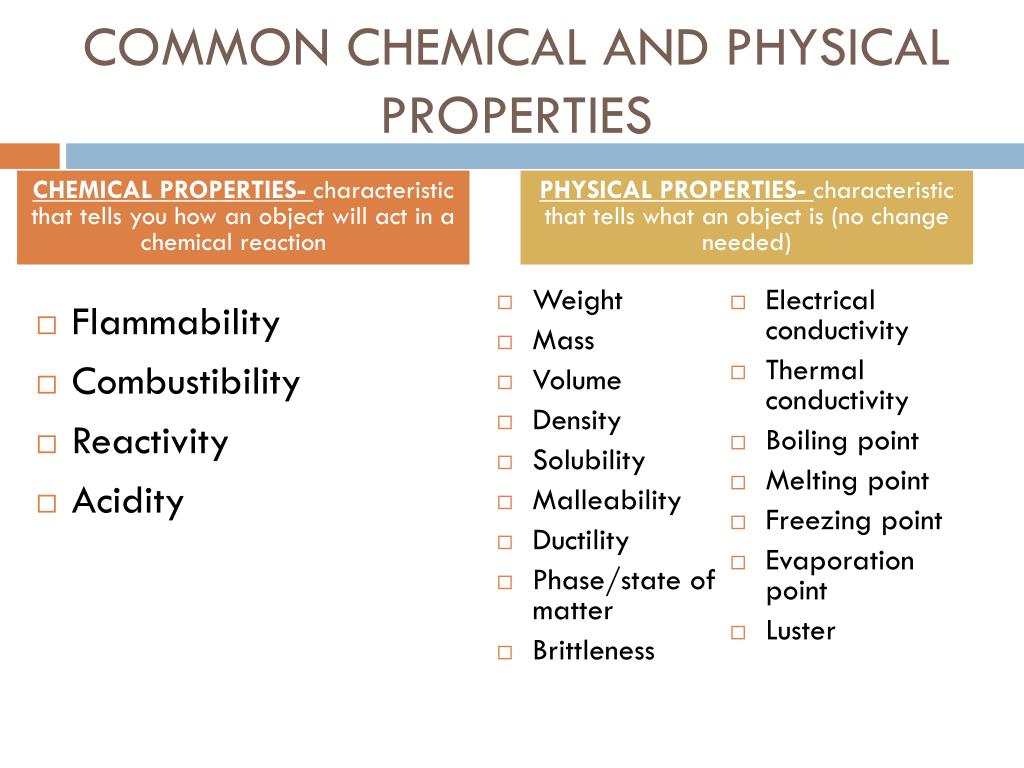
So, where does malleability fit in the grand scheme of things? Is it a physical property, like color or density? Or is it a chemical property, like flammability (that is, how easily something catches on fire)? This is where it gets interesting! To understand this, we need to understand the difference between the two.
Physical Properties: The Superficial Stuff
Physical properties are characteristics you can observe or measure without changing the substance into something completely different. For example, the melting point of ice is a physical property. When ice melts, it's still water, just in a different form! You haven't fundamentally altered its chemical makeup. Other examples are boiling point, density, color, and texture. We're talking about the surface level attributes. If it only involves a shape change, you bet it's physical!
Chemical Properties: The Inner Transformation
Chemical properties, on the other hand, describe how a substance behaves during a chemical reaction. They involve the substance transforming into something new. Think of burning wood. You start with wood, but after you set it ablaze, you end up with ash, smoke, and other gases. A whole new cast of characters emerges! Rusting, flammability, and reactivity with acids are all chemical properties.
The Verdict: Malleability is a Physical Property!
Drumroll please…! Malleability is a physical property! Bam! The reason is simple: when you hammer a metal into a thin sheet, you're not changing its chemical composition. It's still the same element or compound, just in a different shape. The atoms are rearranging themselves, but they're not forming new bonds or becoming entirely different substances.
Think about playdough! You can squish it, roll it, and mold it into all sorts of crazy shapes, but it's still playdough. You haven't changed its fundamental ingredients or its essence. Malleability is like playdough for grown-ups (but with potentially shinier, more valuable materials).
To solidify this, consider the opposite of malleable: brittle. A brittle substance, like glass, will shatter if you try to hammer it. But the shattered glass is still… well, glass! It's just in smaller, less aesthetically pleasing pieces.
Malleability: More Than Just a Fancy Word
So, the next time you're wrapping your sandwich in aluminum foil or admiring a shiny gold ring, take a moment to appreciate the amazing property of malleability. It's a testament to the ability of some materials to be shaped and molded without losing their inherent qualities. It's a physical property, and it's pretty darn cool.
"The beauty of malleability lies in its ability to transform raw materials into useful and beautiful objects," said Professor Emilia Stone, a leading materials scientist.And now you, my friend, are a malleability expert. Go forth and impress your friends and family with your newfound knowledge! (But maybe don't try hammering your gold jewelry at home.)
And remember, learning about science doesn't have to be a chore. With a little curiosity and a dash of enthusiasm, it can be a fun and engaging adventure!
