Is Ductility A Chemical Or Physical Property

Ever marvel at the graceful curves of a wrought iron gate, or the intricate designs in your favorite piece of jewelry? Or maybe you’ve just absentmindedly bent a paperclip into a new shape while on a phone call. These seemingly disparate activities all rely on a fascinating property of materials called ductility. We interact with ductility constantly, often without even realizing it, and it's a cornerstone of modern manufacturing and design.
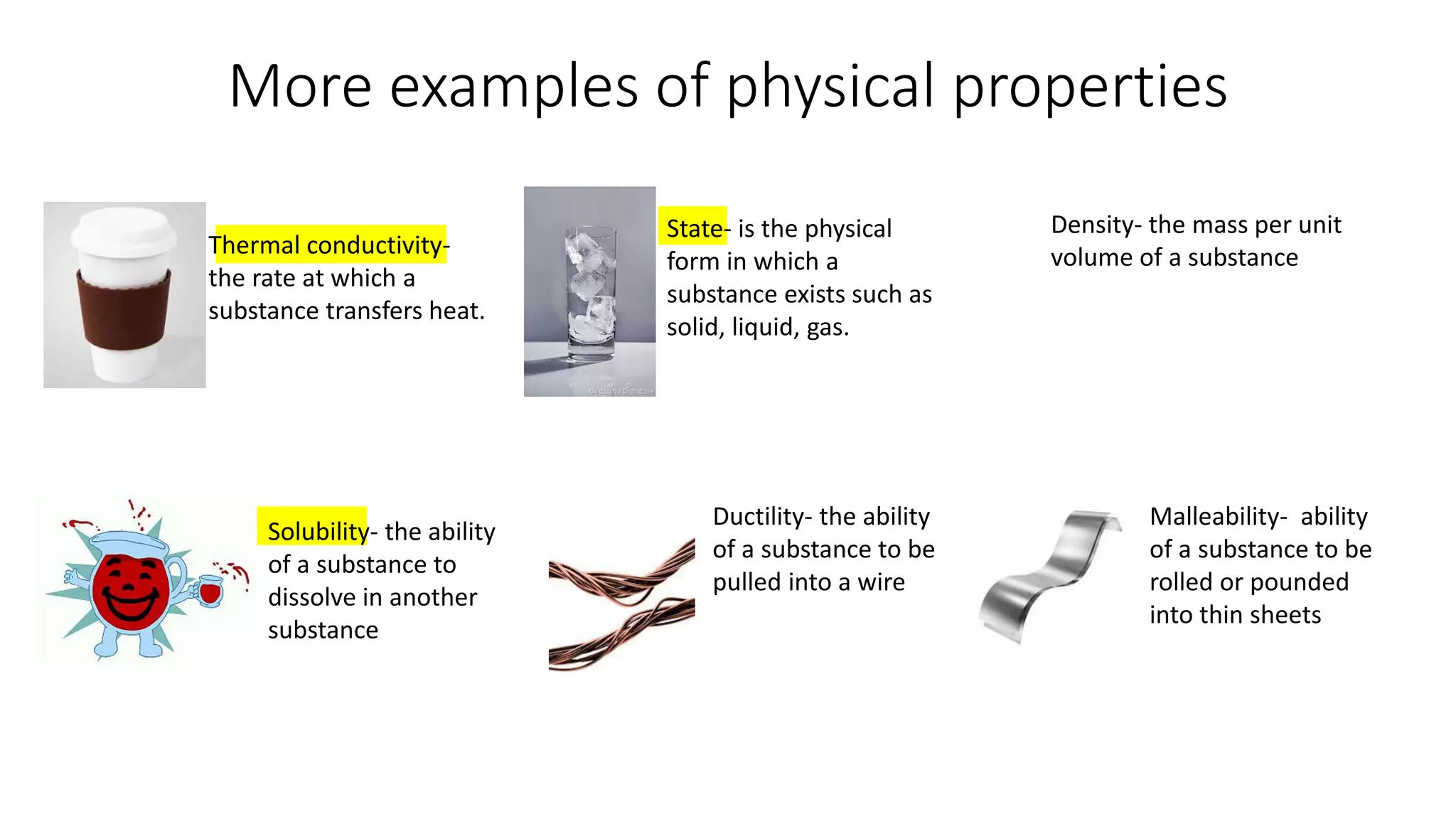
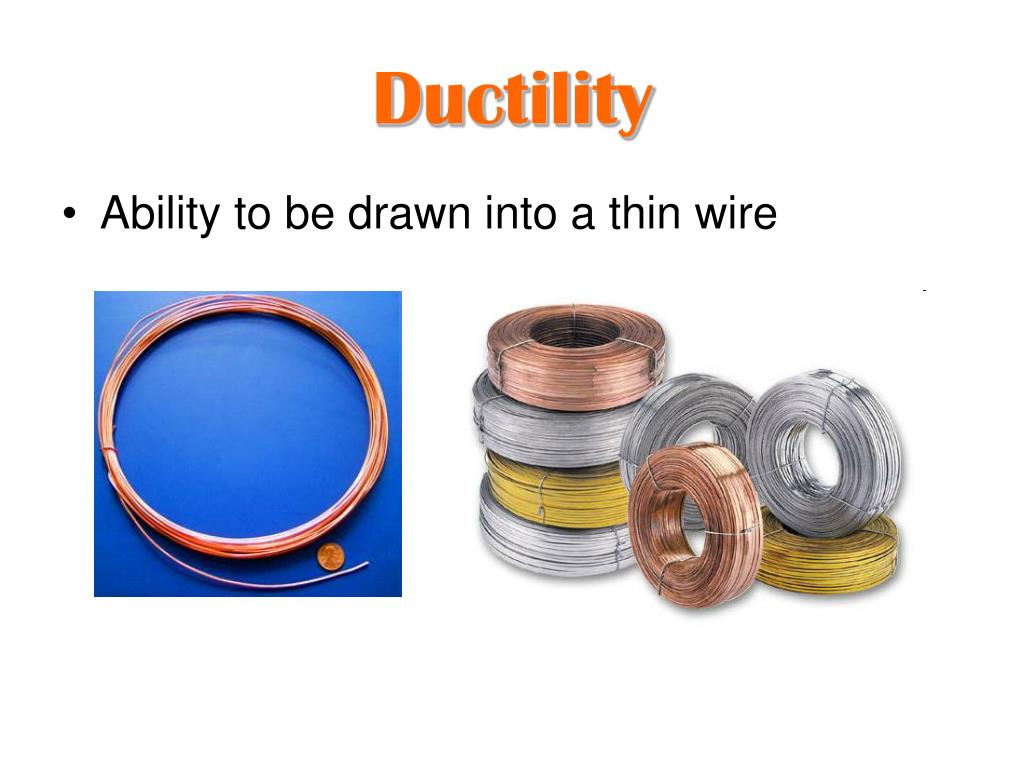
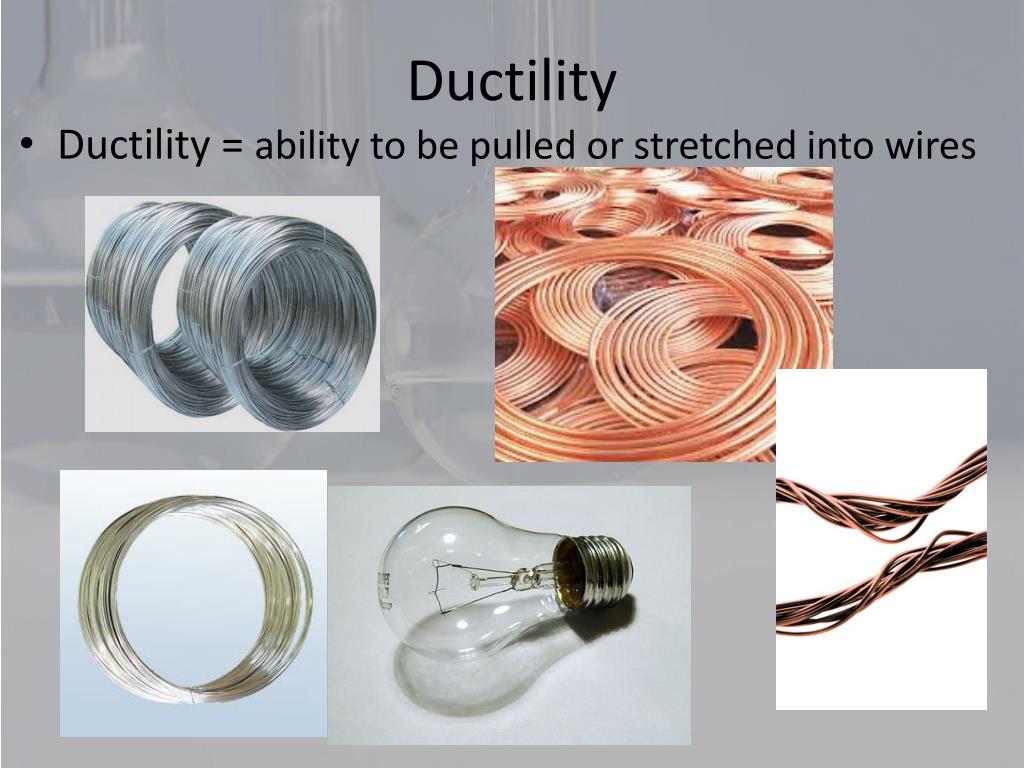
So, what exactly is ductility and why is it so important? Simply put, ductility is a material's ability to be stretched into a wire. Think of it as the opposite of brittleness. A ductile material can be drawn out into a thin strand without breaking. This allows us to create wires for electrical circuits, pipes for plumbing, and countless other essential components. Imagine trying to build a car without ductile metals – the electrical wiring would be impossible! The benefits are clear: ductility allows for flexibility in design, enables the creation of intricate shapes, and contributes to the overall strength and durability of many products.
Ductility is all around us! Copper wiring is a prime example, allowing electricity to flow safely and efficiently through our homes and devices. Gold's high ductility is why it's used in fine jewelry, allowing artisans to create delicate and intricate designs. Even aluminum, used in everything from cans to airplanes, exhibits significant ductility. The creation of complex machine parts, from engine components to precision instruments, often relies on the ductile nature of specific alloys.
Must Read
But now for the crucial question: is ductility a chemical or physical property? This is where things get interesting. Ductility is a physical property. Why? Because observing or measuring a material's ductility doesn't change its fundamental chemical composition. When you stretch a piece of copper into a wire, it's still copper! Its atoms are simply rearranging themselves to accommodate the new shape. A chemical property, on the other hand, describes how a substance reacts with other substances, leading to a change in its chemical makeup. Think of flammability – that's a chemical property because burning wood turns it into ash, carbon dioxide, and other substances that are no longer wood.

So, how can you appreciate and understand ductility more effectively? One way is to experiment (safely!) with different materials. Observe how readily they bend or stretch. Notice the difference between bending a piece of copper wire versus trying to bend a ceramic tile. Thinking about the microscopic structure of materials can also help. Ductile materials often have a crystalline structure that allows atoms to slide past each other relatively easily without breaking the bonds between them. Materials science is a fascinating field that delves deeper into this relationship between structure and properties.
Ultimately, ductility is a crucial characteristic that shapes our world in countless ways. By understanding this physical property, we can better appreciate the ingenuity of engineering and the artistry of design that surrounds us every day.