
Is Bronze In The Periodic Table

Alright, let's dive into a question that might sound super simple, but actually opens up a whole world of wonder, and frankly, makes you sound pretty smart at your next dinner party. Ready? Here it is: Is Bronze in the Periodic Table?
Go on, take a guess! Many people, when they first hear it, might scratch their heads. Some might confidently declare "Yes!" because hey, it's a metal, right? Others might hesitantly lean towards "No," but aren't quite sure why. And that, my friends, is perfectly okay! Because asking questions, even seemingly straightforward ones, is the first step to uncovering some truly fascinating stuff.
The Big Reveal (Drumroll, Please!)
So, is bronze in the Periodic Table? The short, sweet, and scientifically accurate answer is: No, it is not!
Must Read
Surprised? Don't be! This isn't about getting it "right" or "wrong" as much as it is about understanding the fundamental building blocks of our universe. And once you grasp this little distinction, suddenly, a lot of things start making more sense, and the world around you becomes even more intriguing.
So, What Is the Periodic Table, Anyway?
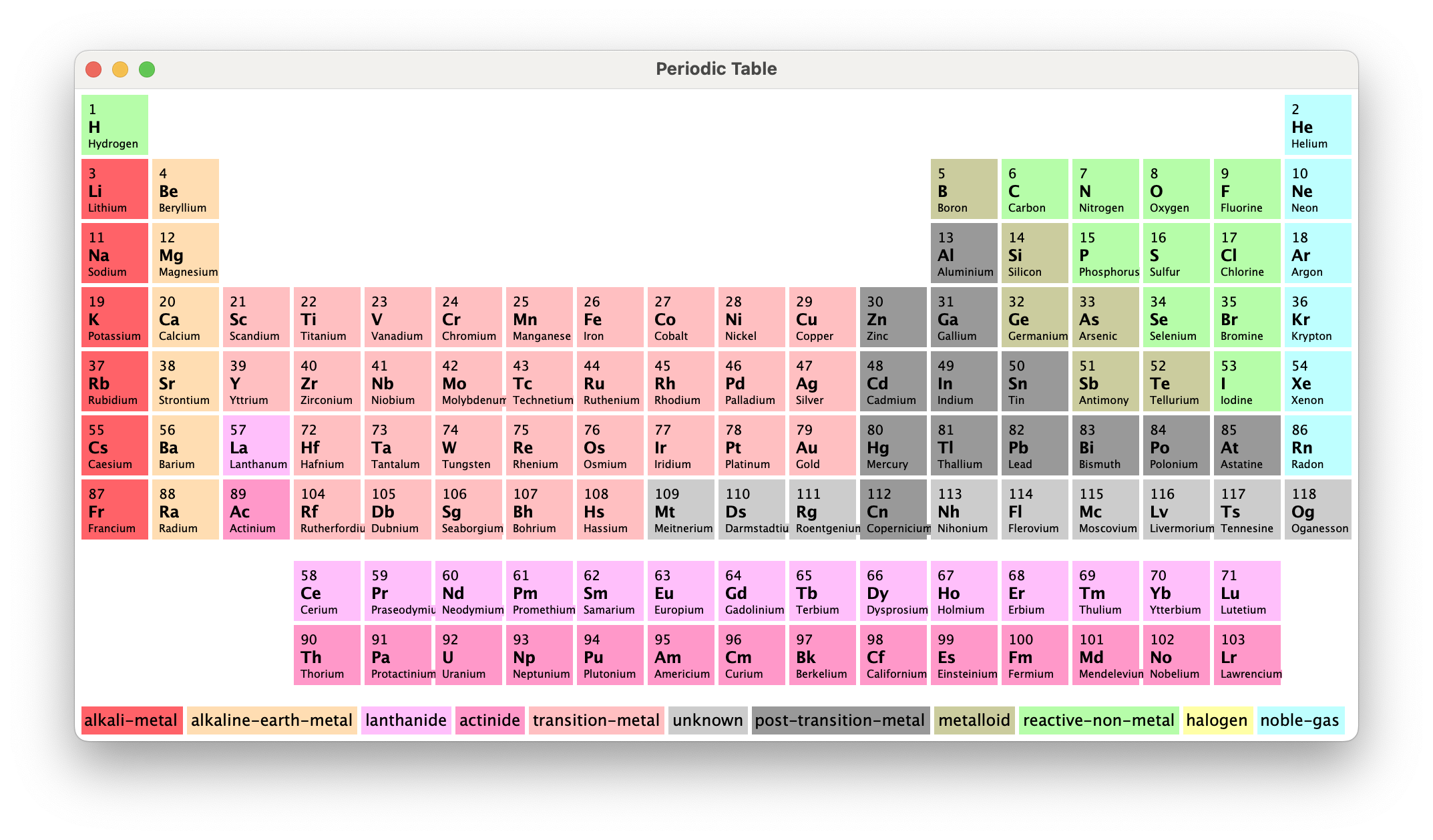
Think of the Periodic Table like the ultimate, definitive LEGO instruction manual for the universe. It lists all the fundamental, pure elements – the absolute simplest substances that cannot be broken down further by ordinary chemical means. We're talking about things like Oxygen, Gold, Carbon, Iron, and, yes, Copper and Tin. Each one is a unique type of atom, with its own special number of protons, giving it its own unique personality and place on the table.

These elements are the atomic celebrities, the OGs of matter. Every single thing you see, touch, or even breathe is ultimately made up of combinations of these amazing elements. Pretty cool, huh?
If Not an Element, Then What Is Bronze?
Ah, now we get to the heart of it! Bronze is what we call an alloy. And what's an alloy? It's simply a mixture of two or more metals, or a metal combined with another non-metal element. Think of it like baking a cake. You take flour, sugar, eggs, and butter (individual ingredients, or in our analogy, "elements"), mix them together, bake them, and voilà! You have a cake – a new, delicious creation with properties different from any single ingredient.
Bronze, in its most classic form, is primarily an alloy of copper and tin. Both copper and tin? Yep, you guessed it! They are in the Periodic Table! Copper (Cu, atomic number 29) and Tin (Sn, atomic number 50) are fantastic elements on their own. But when you melt them down and mix them in specific ratios, something magical happens. They create bronze, a material that's often much harder, stronger, and more durable than either copper or tin alone.
This is why alloys are so incredibly useful! We engineer them to have specific properties. Steel, for instance, is another incredibly famous alloy – mostly iron with a bit of carbon, making it much stronger than pure iron. Gold jewelry often contains other metals to make it more durable. It's all about playing with the properties!
Why Does This Matter (and Why Is It So Fun)?
You might be thinking, "Okay, so bronze isn't an element. Big deal, right?" But hold on a second! This little piece of knowledge is a gateway to so much more. It teaches us to:

1. Differentiate Between Basics and Blends
It helps us understand the difference between the fundamental building blocks (elements) and the incredible things we can create by combining them (compounds and mixtures like alloys). This distinction is key to understanding chemistry, materials science, and even cooking!
2. Appreciate the Engineering Around Us
Suddenly, the bronze statue in the park isn't just a statue; it's a testament to ancient metallurgy, a clever combination of elements designed for beauty and longevity. Your car isn't just metal; it's a symphony of engineered alloys, each precisely chosen for its specific job.
3. Embrace Curiosity (It's Your Superpower!)
This question, "Is Bronze in the Periodic Table?", isn't just about bronze. It's about the sheer joy of asking "Why?" and "How?". It's about taking a moment to ponder the everyday and realizing that beneath the surface, there's always a deeper layer of wonder waiting to be discovered. When you understand concepts like alloys, the world just feels a little more connected, a little more understandable, and a whole lot more fascinating.

Think about the sheer ingenuity of our ancestors during the Bronze Age. They figured out, through trial and error, how to combine two relatively soft metals to create something revolutionary – tools, weapons, and art that transformed societies. They weren't just "using metal"; they were unknowingly practicing advanced materials science!
Keep Digging, Keep Discovering!
So, the next time you encounter something seemingly simple, like a penny (another alloy, by the way!), or a piece of jewelry, pause for a moment. Ask yourself: Is this an element? Is it a compound? An alloy? What's it made of? How does it work?
That little spark of curiosity, that willingness to look a little closer and understand a little deeper, is what makes life so incredibly rich and fun. The world isn't just full of facts to memorize; it's full of mysteries to unravel, connections to make, and endless opportunities to say, "Aha! Now I get it!" So, go forth, my curious friends, and keep exploring the amazing elemental dance that creates everything around us. Your inner scientist (and your dinner party guests) will thank you!