
Is Bronze A Homogeneous Or Heterogeneous Mixture

Okay, folks, let's dive into the dazzling world of materials! Today's hot topic: Bronze! Is it a carefully coordinated team player, blending seamlessly, or a chaotic free-for-all? In fancy science words: is it a homogeneous or heterogeneous mixture?
Bronze: The Alloyed Avenger!
First, let's define our terms. Imagine baking a cake. If you mix everything perfectly, so every bite tastes exactly the same, that's like a homogeneous mixture. You can't easily see the different ingredients anymore; they're all one happy, uniform blob. Milk is a good example, or well-mixed sugar water. It looks all the same throughout!
Now, picture a pizza. You've got sauce, cheese, pepperoni, maybe some pineapple (controversial, I know!). You can clearly see each ingredient. Every bite is a gamble – will it be cheesy, meaty, or fruity? That's a heterogeneous mixture. The ingredients are separate and easily identifiable.
Must Read
So, where does bronze fit into this culinary (or rather, metallurgical) metaphor? Well, Bronze is an alloy, which is a fancy word for "a mixture of metals." Specifically, it's mostly copper, usually with tin added in. But it's not just tossing some copper and tin chunks together and hoping for the best!
The Magical Melting Pot!
Making bronze involves some serious heat! Copper and tin are melted together at high temperatures, then carefully stirred (think of it like a giant, molten metal smoothie!). The goal? To get the tin atoms to distribute themselves evenly amongst the copper atoms. Imagine trying to convince a bunch of bouncy balls to evenly space themselves out in a room – that's the challenge! But when it works... oh, it works!
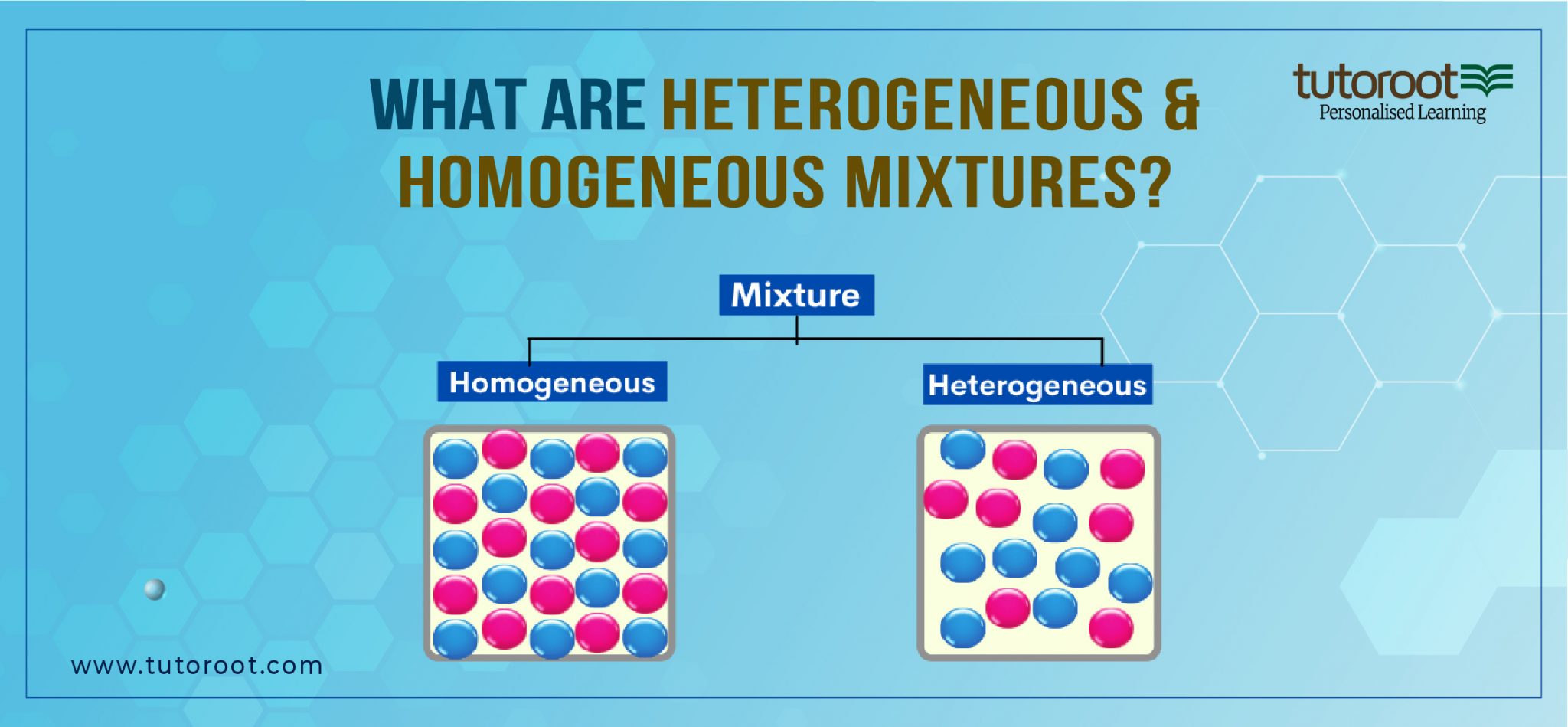
So, after all that high-temperature tangoing, is the final product a consistent blend? Is every tiny speck of bronze the same as every other tiny speck?
The answer, drumroll please... It's homogeneous! In most cases! (I know, I know, there's always a catch). When bronze is made properly, the tin is evenly distributed throughout the copper. You can't see the individual metals with the naked eye, or even with a regular microscope. It looks and behaves as one single material.

But Wait! There's a Twist!
Now, here's where things get a little more complex. Sometimes, if the bronze isn't mixed perfectly, or if it cools down too quickly, you can get some uneven distribution of the metals. This can lead to small pockets where there's more tin than copper, or vice versa. It’s like when your cookie dough has clumps of chocolate chips in one spot and none in another.
In these cases, on a microscopic level, the bronze might technically be considered heterogeneous. But, for all practical purposes, for what you see with your eyes and how the bronze behaves as a material, it's still considered homogeneous. The unevenness is too small to really matter in most applications.
:max_bytes(150000):strip_icc()/TC_606106-heterogeneous-and-homogeneous-mixtures1-5ac4f1a9642dca0036847e52.png)
Think of it this way: If you're building a sword, you don't want pockets of super-tin-rich bronze because those spots might be weaker. But for a small decorative statue, a tiny bit of unevenness probably won't make a difference.
Bronze: A Star of Uniformity!
So, to recap: Generally speaking, bronze is a homogeneous mixture. It's a beautifully blended alloy where the different metals are evenly distributed. Sure, there might be a few microscopic hiccups here and there, but overall, it's a testament to the power of well-mixed metals! And isn't that just... bronze-tiful?
Now, go forth and impress your friends with your newfound knowledge of bronze! And remember, even in the world of science, a little bit of chaos can still lead to something amazing!
