Is Alloy The Same As Aluminum

Have you ever marvelled at the sleek design of a modern bicycle, the effortless glide of an airplane, or even just the satisfying lightness of your favourite beverage can? These everyday wonders, and countless more, owe their existence to one remarkable material: aluminum. It's everywhere, shaping our world with its unique blend of strength and feather-light grace. But here's a question that often sparks curiosity: Is alloy the same as aluminum?
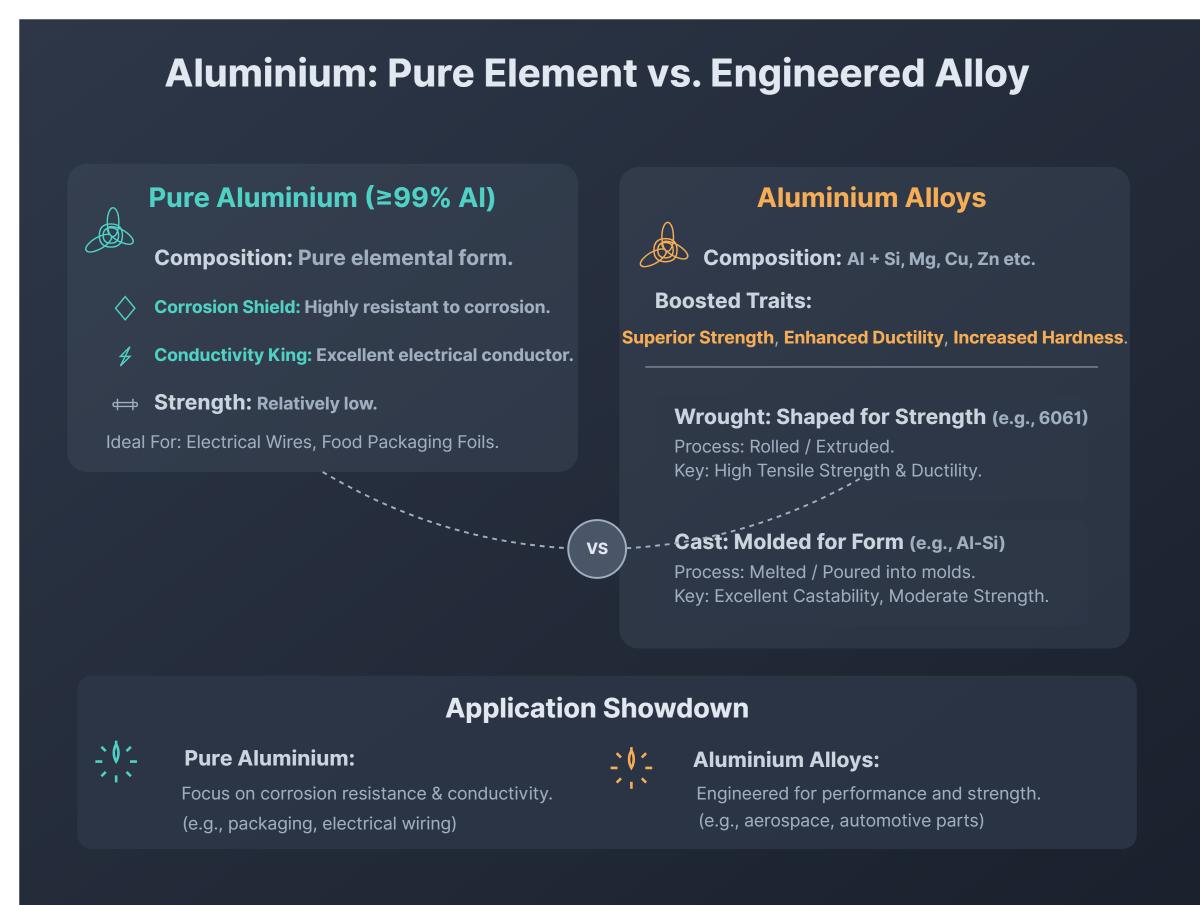
The answer, in a wonderfully simple and empowering way, is both "yes" and "no," and understanding this distinction opens up a whole new realm of appreciation for the materials around us! Think of aluminum as the star ingredient, the foundational element. An alloy, then, is like a secret recipe where aluminum is mixed with tiny amounts of other elements – like copper, magnesium, zinc, or silicon – to create a material with enhanced superpowers!
For artists, hobbyists, and even casual learners, grasping this concept is truly liberating. It means that aluminum isn't just one thing; it's a versatile family of materials, each tailored for specific purposes. Imagine a sculptor needing a material that's not only light but also incredibly strong and resistant to corrosion for an outdoor piece – they'd choose a specific aluminum alloy. A jewellery maker might opt for another alloy that can be brilliantly anodized into a spectrum of vibrant colours, making their designs truly pop. The benefits are immense: from crafting durable, lightweight drones to elegant home furnishings, understanding alloys allows us to select the perfect material for the perfect job, transforming ideas into tangible realities with incredible efficiency and beauty.
Must Read
Let's look at some examples. That lightweight bike frame might be crafted from a 6061 aluminum alloy, known for its weldability and general strength. The fuselage of an aircraft, needing ultimate tensile strength, often utilizes a 7075 aluminum alloy. Even in your kitchen, anodized aluminum pots and pans leverage the enhanced hardness and non-reactive properties that come from careful alloying. These variations aren't just technical jargon; they represent intentional design choices, allowing for everything from intricate, delicate sculptures that defy gravity to robust, industrial components that withstand extreme stresses. It’s all about leveraging aluminum’s core strengths and then boosting them precisely where needed.
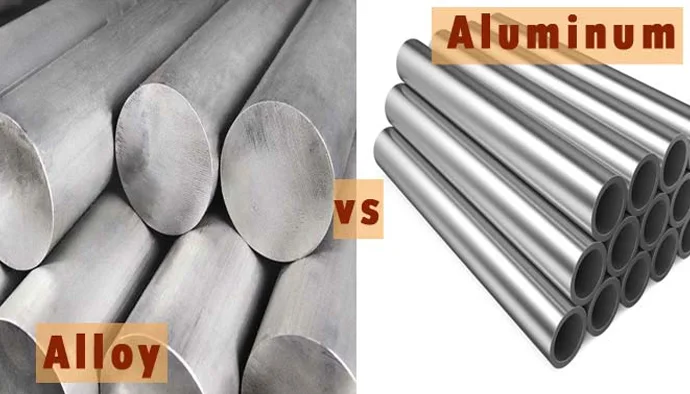
Ready to explore this fascinating world at home? It's easier than you think! Start by becoming a "material detective." Look around your own space: identify objects you suspect are aluminum. Is it shiny? Light? Now, ponder: what specific properties does this item need? For a fun, hands-on activity, consider experimenting with aluminum foil or wire for simple crafting – you'll immediately feel its malleability. Or, on your next hardware store visit, ask about different types of aluminum sheet or tubing; you might be surprised by the variety! Researching a bit about common aluminum alloy designations (like "6063" for architectural uses) can be genuinely enlightening, offering a deeper appreciation for the engineering behind everyday items.
Ultimately, understanding that "aluminum" is often used as a shorthand for "aluminum alloy" isn't just about scientific accuracy; it's about unlocking a richer appreciation for the ingenuity that goes into creating the objects we interact with daily. It's enjoyable because it transforms mundane observations into moments of discovery, connecting us to the incredible world of material science and inspiring us to see the endless possibilities that emerge when we blend raw elements with a touch of human cleverness. So go ahead, look at that soda can, that window frame, or that piece of art with new eyes – you're seeing the magnificent versatility of aluminum, enhanced by the magic of alloying!