
Hydroboration Oxidation Of Alkynes
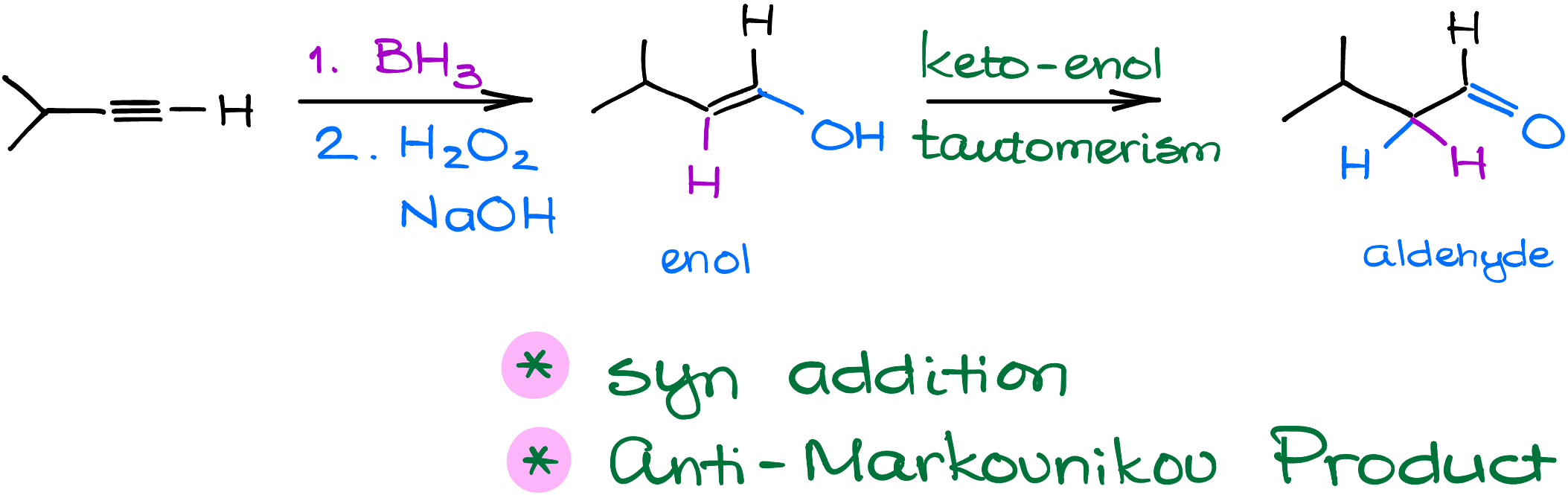
Hey, pull up a chair! Coffee's on, and we're diving into some seriously cool chemistry. Today's topic? Hydroboration-Oxidation of Alkynes. Sounds intimidating, right? Don't worry, we'll break it down. It's not nearly as scary as your organic chem professor made it out to be (probably!).
So, What IS Hydroboration-Oxidation, Anyway?
Okay, so imagine you have an alkyne. You know, a carbon-carbon triple bond? Those guys are pretty reactive. We want to add water (H₂O) across that triple bond, but we want to do it in a specific way. Direct addition? Nah, too boring. Plus, it's messy and gives us a mix of products. We want precision, people!
That's where hydroboration-oxidation comes in. It's like a carefully choreographed dance where we sneak in the water molecule in a controlled fashion. Think of it as a chemical ninja move!
Must Read
Essentially, it's a two-step process:
- Hydroboration: We react the alkyne with a borane reagent (something with boron, like BH₃, but usually a bit fancier because BH₃ is a pain to work with). The boron and a hydrogen atom attach to the alkyne's triple bond. And here's the kicker: boron likes to attach to the less substituted carbon. Why? Steric hindrance, my friend. Boron's a bit bulky, so it prefers the less crowded spot.
- Oxidation: Now, we treat the product from step one with hydrogen peroxide (H₂O₂) in a basic solution (like NaOH). This replaces the boron with a hydroxyl group (OH). Voila! We’ve added water, but in a very specific orientation!
Why Bother? What's the Point?
Good question! Why go through all this trouble? Well, the beauty of hydroboration-oxidation is that it gives us anti-Markovnikov addition of water. Wait, what? Okay, let's unpack that. Remember Markovnikov's rule? It basically says that when adding something to an alkene or alkyne, the hydrogen usually goes to the carbon with more hydrogens already.
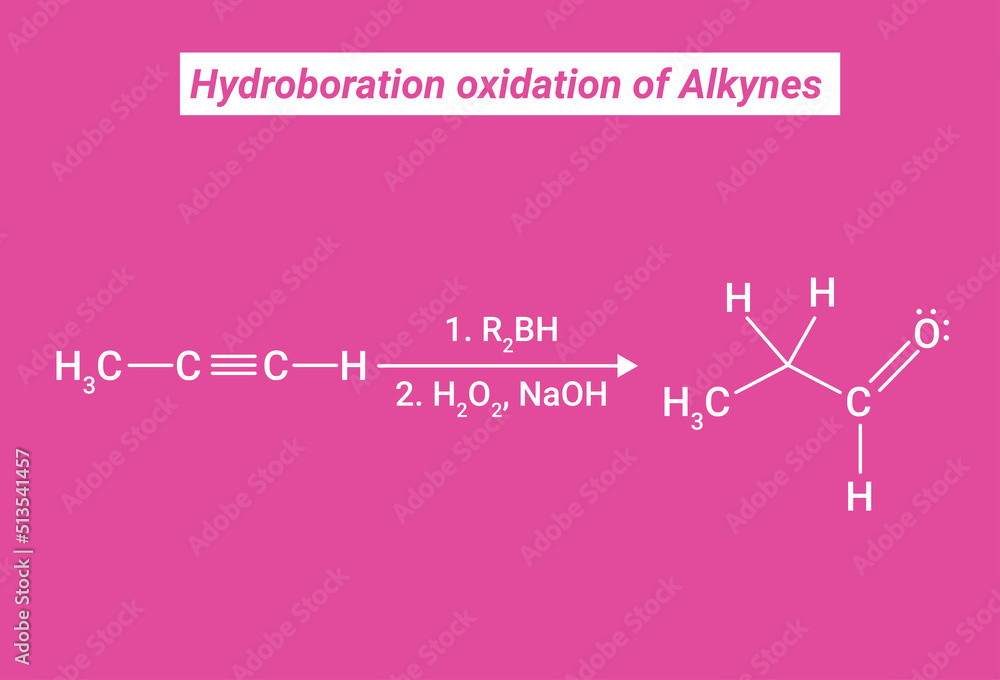
Hydroboration-oxidation flips the script! It's rebellious! The hydrogen goes to the more substituted carbon, and the OH goes to the less substituted one. This is super useful for synthesizing specific compounds that you couldn't get easily any other way. Think of it as a chemical cheat code!
For terminal alkynes (where the triple bond is at the end of the chain), this leads to the formation of an aldehyde. Pretty neat, huh? If you started with an internal alkyne, you'd get a ketone. (But ketones are less picky than aldehydes in this specific case).
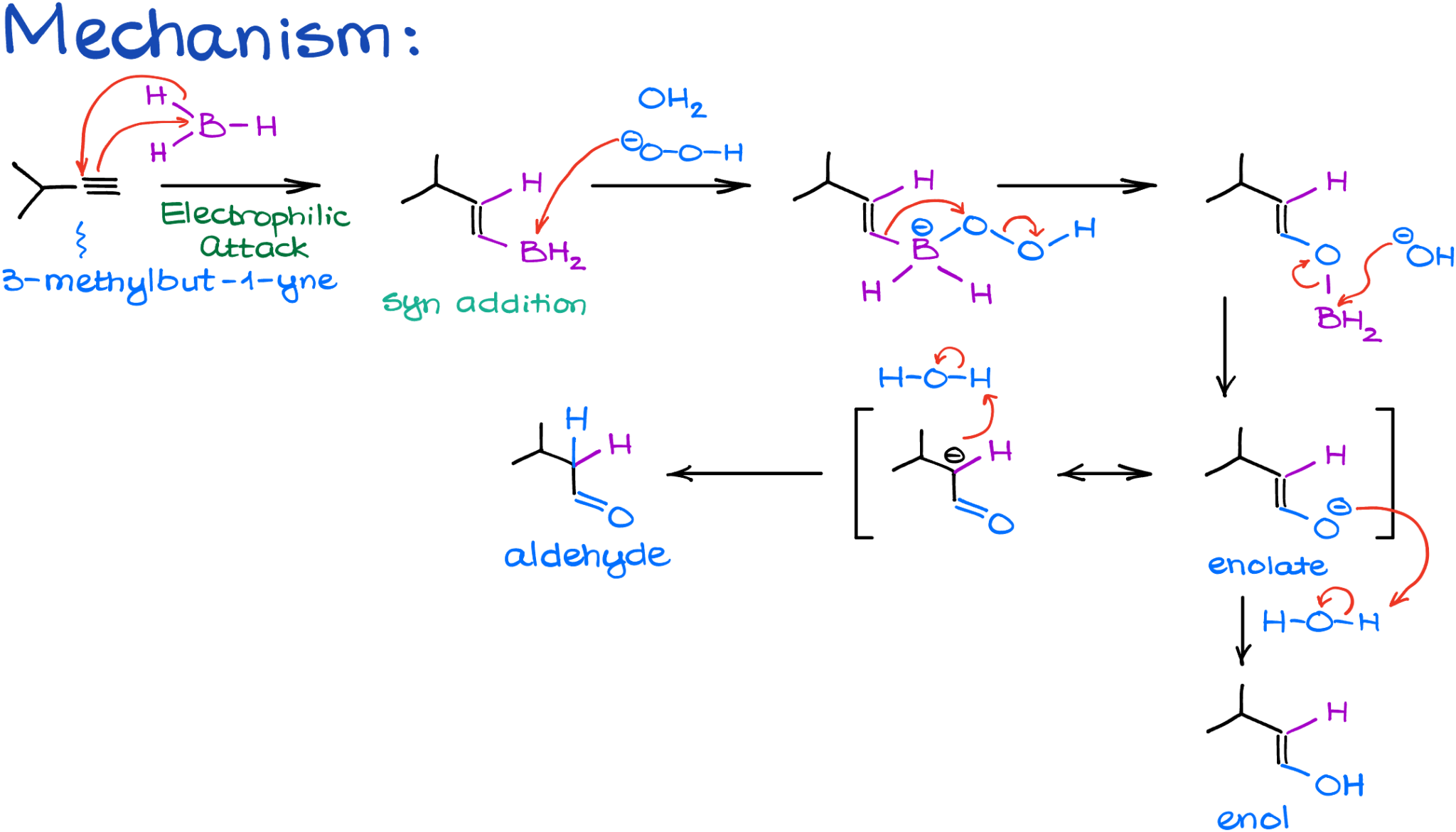
The Enol Intermediate: A Fleeting Glimpse
Now, there’s a little secret in the hydroboration-oxidation dance: the enol intermediate. The first product after oxidation is actually an enol. An enol is just an alkene with an alcohol (-OH) group directly attached to one of the carbons in the double bond.
Enols are notoriously unstable. They quickly rearrange via a process called tautomerization. This tautomerization shifts a proton around (basically, an H+ moves), converting the enol into either an aldehyde (from terminal alkynes) or a ketone (from internal alkynes). Consider it a quick transformation!
Some Pro Tips and Gotchas
- Steric Hindrance is Key: Remember, the bulkier the borane reagent, the more selective it is for the less substituted carbon.
- Regioselectivity: Hydroboration-oxidation is highly regioselective. This means it favors one specific product over others. That's its superpower!
- Careful with the Oxidation: The oxidation step needs to be done carefully. You don't want to over-oxidize your product! (Unless, of course, you do want to... but that's a story for another coffee break.)
So, there you have it! Hydroboration-oxidation of alkynes in a nutshell. It's a powerful tool for adding water to alkynes in a controlled, anti-Markovnikov fashion. It might seem a bit complicated at first, but with a little practice, you'll be hydroborating and oxidizing like a pro. Now, who wants another cup of coffee?

