
How To Use A Transfer Switch With A Generator

Okay, so the power's out, right? Total bummer. You're sitting there in the dark, the fridge is starting to hum suspiciously (like it's plotting against you), and you're seriously considering eating that emergency can of beans...cold. But wait! You've got a generator! And even better, you're not going to fry your entire neighborhood grid thanks to your shiny new transfer switch. High five! Let's get this party started, safely of course.
What's the Deal with a Transfer Switch Anyway?
Think of a transfer switch as the VIP bouncer for your home's electrical system. It’s there to make sure that power only comes from one source at a time – either the utility company or your generator. Without it, you could send power back into the grid, which is a big no-no. It's dangerous for utility workers trying to fix the outage, and it could damage your generator too. Plus, your neighbors might start giving you the side-eye. Nobody wants that!
The Pre-Game: Getting Ready for Power!
Before you even think about firing up that generator, let's do a little prep work, shall we? Safety first, always! It’s way more fun to watch Netflix powered by a generator than to be... well, not watching Netflix because you got electrocuted. Let’s avoid that.
Must Read
- Read the Manuals! I know, I know, nobody actually reads manuals. But trust me on this one. Your generator and transfer switch manuals are your best friends right now. They'll have specific instructions for your setup.
- Turn Off Main Breaker: This is crucial. Locate your main breaker in your electrical panel and switch it to the "off" position. This isolates your home from the grid, preventing that backfeeding nightmare we talked about.
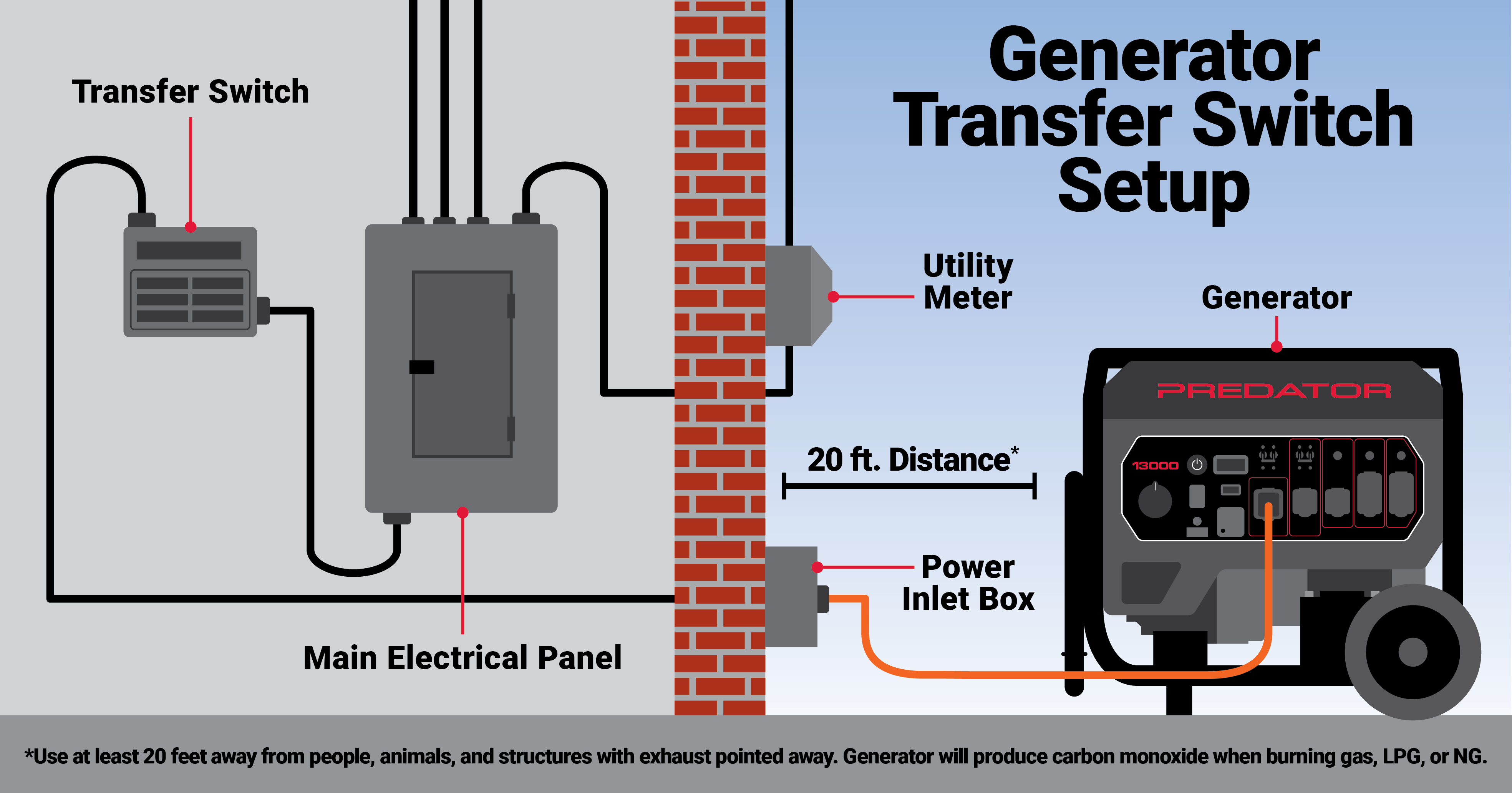
- Proper Ventilation: Generators produce carbon monoxide, which is a silent, invisible killer. Make sure your generator is outside in a well-ventilated area, far away from windows, doors, and vents. Seriously, this is non-negotiable.
- Extension Cords: If you are going to use an extension cord, use a heavy-duty, outdoor-rated cord with the appropriate amperage rating for your generator.
Time to Flip the Switch (or Switches)!
Alright, with the pre-game out of the way, let’s get down to the main event! The exact steps can vary depending on the type of transfer switch you have – manual or automatic – but here’s the general idea:
For Manual Transfer Switches:

- Start the Generator: Follow the manufacturer's instructions to start your generator. Let it warm up for a few minutes. Don't just yank the cord like you're trying to start a lawnmower that owes you money!
- Plug It In: Connect your generator to the transfer switch using the appropriately sized power cord (usually a heavy-duty extension cord with the right connectors).
- Flip the Switch! Now comes the moment of truth. Locate the transfer switch and flip it from the "Line" (utility power) position to the "Generator" position. You might hear a satisfying clunk. That's the sound of victory (and hopefully, electricity!).
For Automatic Transfer Switches (ATS):
These are the fancy ones! They automatically detect a power outage and switch to generator power. Pretty cool, right? You still need to make sure the generator is properly connected and fueled, but the switching happens automatically. Just follow the manufacturer’s instructions for initial setup and maintenance.
Powering Up Your Essentials: What to Turn On First?
Okay, the generator is humming happily, and the transfer switch is doing its thing. But don't go turning on every appliance at once! That's a recipe for overloading your generator. Start with the essentials: lights, refrigerator, maybe the TV so you can keep up with the latest zombie apocalypse news (you know, just in case). Add other appliances gradually to avoid tripping the generator's breaker.
When the Lights Come Back On: Switching Back
When the utility power returns (hooray!), you'll need to switch back. This is basically the reverse of the startup procedure:
For Manual Transfer Switches:

- Flip the Switch: Switch the transfer switch back to the "Line" (utility power) position.
- Let It Stabilize: Allow the utility power to stabilize for a few minutes.
- Turn Off the Generator: Follow the manufacturer's instructions to shut down the generator. Don't just pull the plug!
For Automatic Transfer Switches:
The ATS should automatically switch back to utility power when it detects that the grid is stable. The generator may continue to run for a short period to cool down.
Important Reminders (Because We Care!)
- Never overload your generator! Check the wattage ratings of your appliances and make sure they don't exceed the generator's capacity.
- Regularly maintain your generator and transfer switch. Follow the manufacturer's recommendations for oil changes, filter replacements, and other maintenance tasks.
- Keep a carbon monoxide detector in your home. Seriously, do it.
So, there you have it! You're now a transfer switch and generator guru! (Okay, maybe not a guru, but definitely more knowledgeable than you were five minutes ago.) Remember, safety first, read the manuals, and don’t be afraid to ask for help if you're unsure about anything. Now go forth and conquer those power outages! You've got this! And who knows, maybe your neighbors will start bringing you the emergency cans of beans. Now that's a good neighbor!
