
How To See Pc Power Usage

Ever look at your trusty computer, humming away, and wonder just how much juice it’s guzzling? It’s like peering into the fuel tank of a rocket ship, isn’t it, full of unknown, powerful energy?
Or maybe it's more like wondering how many cookies your teenager secretly ate after dinner. The digital equivalent of a mystery that begs to be solved!
Most of us just plug it in, hit the power button, and let the digital magic happen. And honestly, that's a perfectly valid, often preferable, life choice.
Must Read
But then, a tiny, nagging thought appears, usually after an electricity bill arrives. A whisper in the back of your mind, persistent and unavoidable: "How much power...?"
It’s a question that feels a bit like asking a wizard for their tax returns. Unnecessary, perhaps, and potentially magic-destroying for your beloved machine.
Do we really, truly want to know? Is this information going to change our lives, or just make us slightly more anxious about every blink of a screen?
The Great Power Hunt: A Quest for Numbers (and maybe a little anxiety)
Embarking on this quest to see your PC's power usage is a noble, if slightly obsessive, endeavor. It’s a journey into the hidden electrical currents that power your digital life.
Think of yourself as a digital detective, equipped with curiosity and a thirst for Watts. A curious cat with a keen eye for invisible energy flows and silent consumption.
But here's the kicker, the dirty little secret, the truth nobody tells you: for most of us, it's just pure, unadulterated curiosity. A fleeting fascination with the unseen world.
Why Bother With Such Esoteric Knowledge? (Spoiler: Mostly for Fun)
Are you secretly training to be an energy auditor, ready to revolutionize the power grid? Or perhaps you're planning to power your entire street with a single potato, and need benchmarks?
More likely, you just want to peek behind the digital curtain, for bragging rights or just to satisfy an itch. To see the hidden gears turning, or in this case, the electrons flowing at dizzying speeds.
It’s like knowing how much caffeine is in your favorite coffee brew. You probably won't stop drinking it, but it’s an interesting factoid to tuck away, isn't it?
"Ignorance, when it comes to your PC's power consumption, can be absolutely blissful."
This might be my bold, controversial statement for the day. My very own "unpopular opinion" that I dare you to vehemently disagree with, or perhaps secretly agree.
Your PC is a marvelous, intricate contraption, a silent servant that makes your digital dreams come true. It's a loyal gaming companion, a spreadsheet wizard, and a movie marathon master.
Does knowing its caloric intake truly enhance its magic, or just add another layer of worry? Perhaps not, perhaps the mystery is part of the charm.

Peeking Through the Software Keyhole (The Less Direct Route, But Still Intriguing)
Alright, alright, if you insist on pulling back the curtain and seeing some numbers, let's start with the least intrusive methods. These won't require any actual unplugging, which is a bonus.
These are the digital equivalent of a light pat-down, a quick glance at the dashboard. You'll get some valuable clues, but certainly not the entire, exhaustive story of consumption.
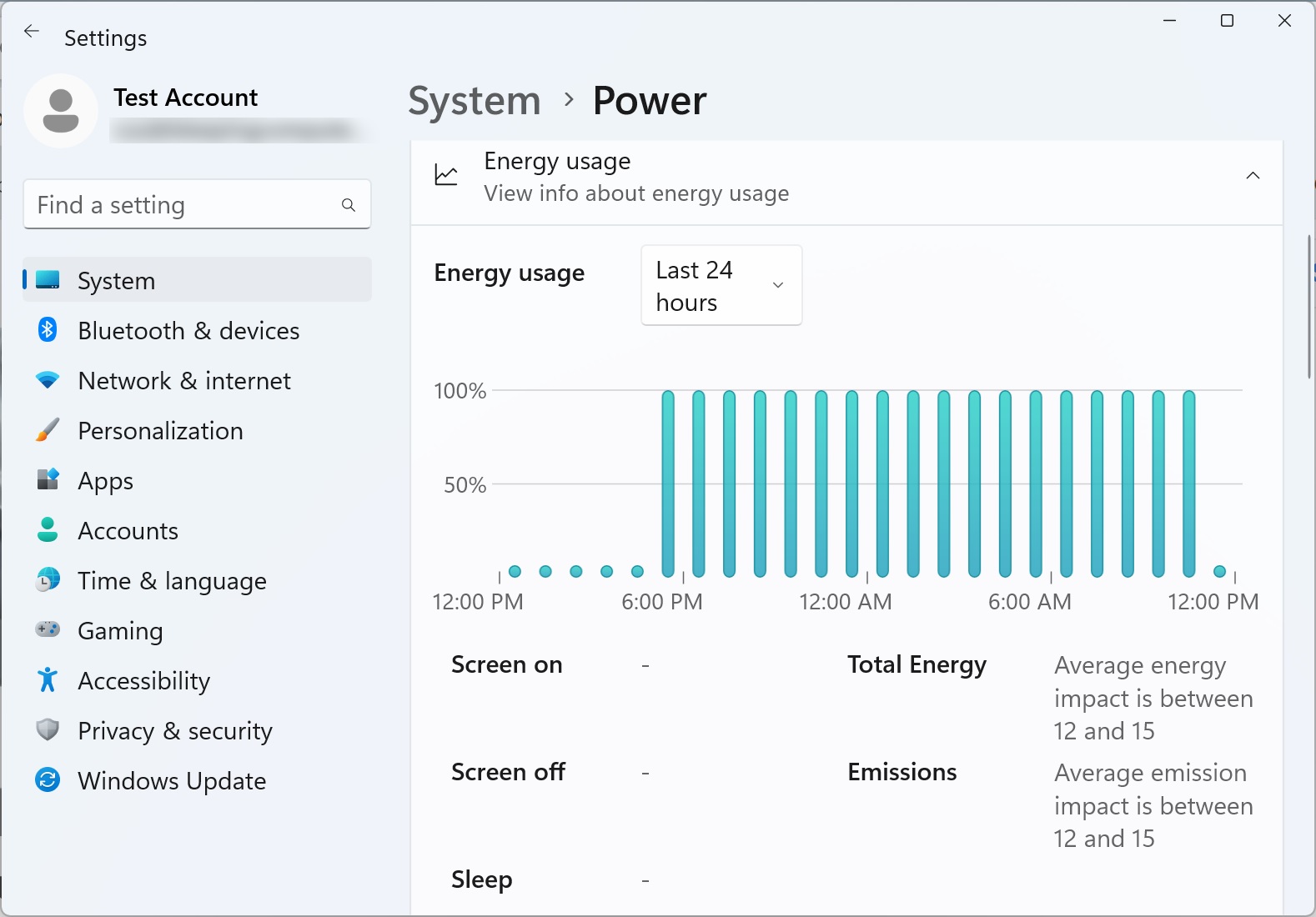
Your operating system, bless its digital heart, offers some hints if you know where to look. Think of it as your PC mumbling quietly about its activity levels and effort.
The Mighty Task Manager (A Glimpse, Not a Full Financial Report)
Press Ctrl+Shift+Esc on Windows, and poof! There it is, your PC's bustling, multi-tabbed central hub. It's like the nervous system of your digital friend.
You’ll immediately see things like CPU usage and GPU usage, often displayed as percentages. These are like activity meters, showing how busy your computer’s brains and graphics grunt are at that very moment.
High usage usually means more power is being consumed, a clear indicator of a busy machine. But it’s not a direct, precise wattage readout, sadly. It's more of a mood ring for your hardware than a measuring tape for its energy.
It tells you if your PC is chilling on a digital couch, watching Netflix, or frantically running a digital marathon. But it won't tell you exactly how many calories it burned, just that it's working hard.
Still, it’s a fun place to poke around and explore, an endlessly fascinating landscape of processes and performance. Like watching a tiny, intricate ant farm, but with silicon ants doing very important digital tasks.
The Arcane Scrolls: Third-Party Software (Closer to the Truth, But Still Estimates)
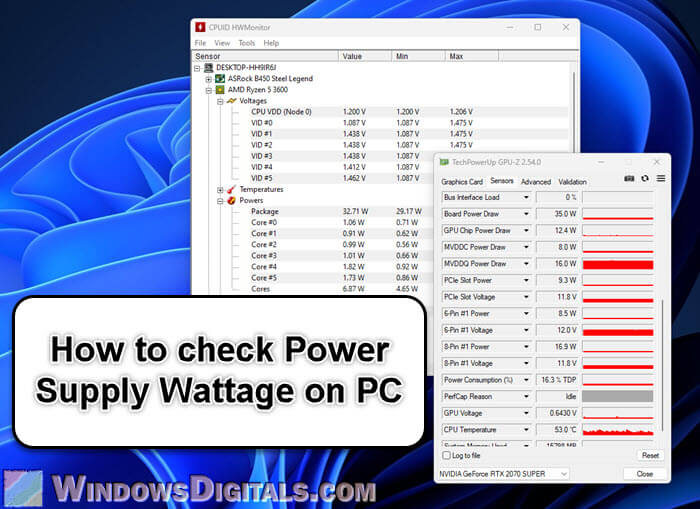
If Task Manager is a mood ring, then tools like HWMonitor or HWiNFO are ancient, complex scrolls filled with intricate data. They are for the truly committed digital archaeologists.
These programs dive much deeper into your PC’s mysterious innards, beyond just basic activity. They try to coax out more specific numbers and readings from the various components, like a digital detective extracting confessions.
You might actually see estimated power draw for your formidable graphics card (GPU) or powerful processor (CPU) often displayed clearly in watts. This is getting warmer!
These are still estimates, mind you, based on sensor readings and clever algorithms. Like a very astute friend guessing how much pizza you ate based on how full you look, plus a detailed menu review.
They’re good, often very good at their estimations, but remember, the PC is a complex beast, a symphony of many parts. Many components drink from the same power fountain, not just the big two.
![How To Check Your PC’s Power Consumption [4 Methods]](https://www.cgdirector.com/wp-content/uploads/media/2022/08/Open-Hardware-Monitor-Screenshot-768x1019.jpg)
Installing these is usually straightforward, typically just download from a reputable source, click next, next, finish. Then, prepare to behold a mesmerizing sea of numbers, temperatures, and fan speeds!
You'll see temperatures soaring, fan speeds whirring, clock speeds fluctuating, and yes, those coveted estimated wattages. It's like being a digital doctor, performing a full diagnostic on your patient.
The Grand Reveal: The External Power Meter (The True Confession, No Lies Here)
Now, if you truly want the raw, unadulterated truth about your PC's hunger, you need to go old school. You need a dedicated, physical gadget that speaks the language of electricity.
Enter the unsung hero of our story, the unassuming but incredibly powerful Kill A Watt meter, or any similar wall power meter. This is where the rubber meets the road, electrically speaking.
This little box is like a lie detector for your electronics, a precise energy auditor in miniature form. It diligently sniffs out every single electron being pulled from your wall socket, no matter how tiny.
It’s a gloriously simple device to use, no complex software installations or arcane settings required. You merely plug it directly into your wall outlet.
Then you plug your entire PC system (including its monitor, speakers, and anything else connected to the same power strip, if you want the full picture) directly into the meter.
And voilà! A clear, unambiguous number magically appears on its little screen. A beautiful, undeniable number proudly displayed in watts. No more guessing games.
This is the total, actual power your entire PC system is drawing from the wall, right this very second. The whole enchilada, the grand total, without any digital estimation.
It’s strangely satisfying to finally see that real, tangible number staring back at you. Like finally getting the exact score to a game you’ve been playing blindfolded for years.
You’ll notice that number jump around quite a bit, depending on your activities. When you're just browsing cat videos, it might be surprisingly low, a mere whisper of energy.
But fire up a demanding, graphically intensive game, or render a complex video, and watch that number climb significantly! Your PC flexes its muscles, and the meter reports the effort.
It’s like watching a digital speedometer for your electricity consumption, responding instantly to every digital pedal press. Or, perhaps, a very honest, miniature energy auditor sitting right there in your room, tirelessly reporting.
"The Kill A Watt is the ultimate truth serum for your PC's power habits, revealing all its electrical secrets."
No software estimates, no sensor-based guesswork, just pure, unadulterated electrical consumption straight from the source. It’s almost too honest, too transparent for comfort.
You might find yourself running different applications, switching games, or even just opening a few browser tabs, just to see the numbers playfully change. It becomes a new kind of digital sport, a game of Watts.
And then, perhaps, you'll cast a quick glance at your monthly electricity bill. And sigh, a gentle, understanding sigh. Or not, because remember, blissful ignorance is always an option!
Decoding the Watts: What Does That Magical Number Even Mean? (No Math, Promise)
So, you finally have a number. Let’s imagine it's 150 watts when you're diligently working, writing an article like this one. Or maybe a hefty 400 watts when you're deep into an epic gaming session.
What does a "watt" even do? To put it simply, think of a traditional light bulb, an old-fashioned incandescent one. A common 100-watt bulb uses 100 watts of power to shine brightly.
So, when your gaming PC is chugging along at 400 watts, it's pulling the equivalent power of four bright 100-watt light bulbs. Pretty bright, right? That's a lot of illumination, or digital horsepower.
It's essentially the rate at which electrical energy is being consumed by your device at any given moment. More watts means more juice is being pulled from the wall, plain and simple.
Over time, these instantaneous watts add up into kilowatt-hours (kWh), which is the unit your friendly electricity company uses to calculate your bill. But let's not dwell on scary math equations.
We're here for easy entertainment, a lighthearted exploration, not an advanced calculus lesson on your power bill. Just know that a higher number means your PC is hungrier, demanding more sustenance.
A lower number means it's politely sipping its energy drink, being a bit more frugal. It's a spectrum, from a gentle hum to a roaring electrical feast.
The Anti-Climax: Now You Know. So What? (And Why That's Perfectly Fine)
You've done it, intrepid explorer! You've uncovered the secret, pulled back the digital curtain, and know your PC's true power habits. What glorious, world-changing event happens now?
Do you suddenly feel empowered to rewrite the laws of physics, perhaps inventing a perpetual motion machine? Do you start lecturing your Wi-Fi router about its surprisingly high energy footprint?
Probably not, and guess what? That is absolutely, wonderfully okay! This is precisely where my "unpopular opinion" truly shines, like a beacon in the digital night.
For most of us, knowing this number, whether it's 100 watts or 500 watts, is just a cool bit of trivia. A quirky digital badge of honor for the truly curious, a fun fact for your next dinner party.
You might, at most, optimize your PC settings a little, maybe dim your monitor slightly, or close a few unnecessary background apps. Small tweaks, perhaps born of newfound awareness.
Or, you might simply shrug, say "how interesting," and go right back to playing your favorite game, or binge-watching that new show, numbers be damned. The enjoyment often outweighs the energy concern.
And that’s the true beauty of it all. The journey of discovery, the playful exploration, is often much more fun and rewarding than the destination itself. The pursuit of knowledge has its own joy.
Your PC isn't suddenly going to transform into a magical low-power hero just because you know its electrical secrets. It's still the same loyal, hard-working companion, just now with a little more transparency.
"The true power isn't in the watts you measure, but in the playful knowledge you gain (and perhaps consciously, blissfully ignore)."
Embrace the Mystery (Or Don't! It's Your PC, Your Rules)
So, there you have it, dear reader. A lighthearted, entertaining romp through the surprisingly intricate world of PC power consumption. Hopefully, it brought a smile to your face.
Whether you choose to embark on this watt-finding quest with sophisticated software, a trusty hardware meter, or simply blissful, contented ignorance, the choice is entirely yours to make.
Your computer will continue to faithfully compute, stream, game, and create, regardless of whether you’re meticulously tracking its every electrical sip and gulp. It's truly indifferent.
Perhaps it's better to sometimes just marvel at the sheer magic of the machine, to appreciate its capabilities without needing to dissect every single spell it casts. Some things are better left a little mystical.
After all, a little bit of mystery keeps life, and your digital existence, much more entertaining and less like a utility bill audit. It adds a certain charm to the everyday.
Go forth, curious adventurer, and either find your watts with glee, or continue to bask in the warm, comforting glow of unknowing. Both are perfectly splendid, perfectly valid options for your digital life.