How To Say Sugar Daddy In Spanish

So, you want to say "sugar daddy" in Spanish, huh? Maybe you're planning a trip to a Spanish-speaking country, binge-watching a telenovela, or just being a curious language enthusiast. Whatever the reason, let's dive into this surprisingly nuanced and potentially hilarious topic. Buckle up, because it's not as simple as plugging it into Google Translate!
The most straightforward translation, and the one you'll likely hear most often, is "sugar daddy" itself. Yep, that's right. Just like "email" or "jeans," some English words have simply been adopted into the Spanish lexicon. You might hear someone say, "Ella tiene un sugar daddy," which directly translates to "She has a sugar daddy." Pretty easy, right?
But where's the fun in sticking to the obvious? Spanish, like any language, is rich with colorful expressions and regional variations. So, let's explore some more… interesting options.
Must Read
Beyond "Sugar Daddy": Getting Creative
Think about what a "sugar daddy" represents. Generosity, age, wealth… These are the key ingredients we need to work with. One option is to describe the relationship indirectly. You could say, "Tiene un benefactor" which translates to "She has a benefactor." It's polite, a little vague, and hints at financial support without being too explicit.
However, "benefactor" lacks the playful, and sometimes slightly scandalous, connotations of "sugar daddy." If you're looking for something with a bit more oomph, you might consider phrases that focus on the age difference. Although, tread carefully! You don’t want to offend anyone.
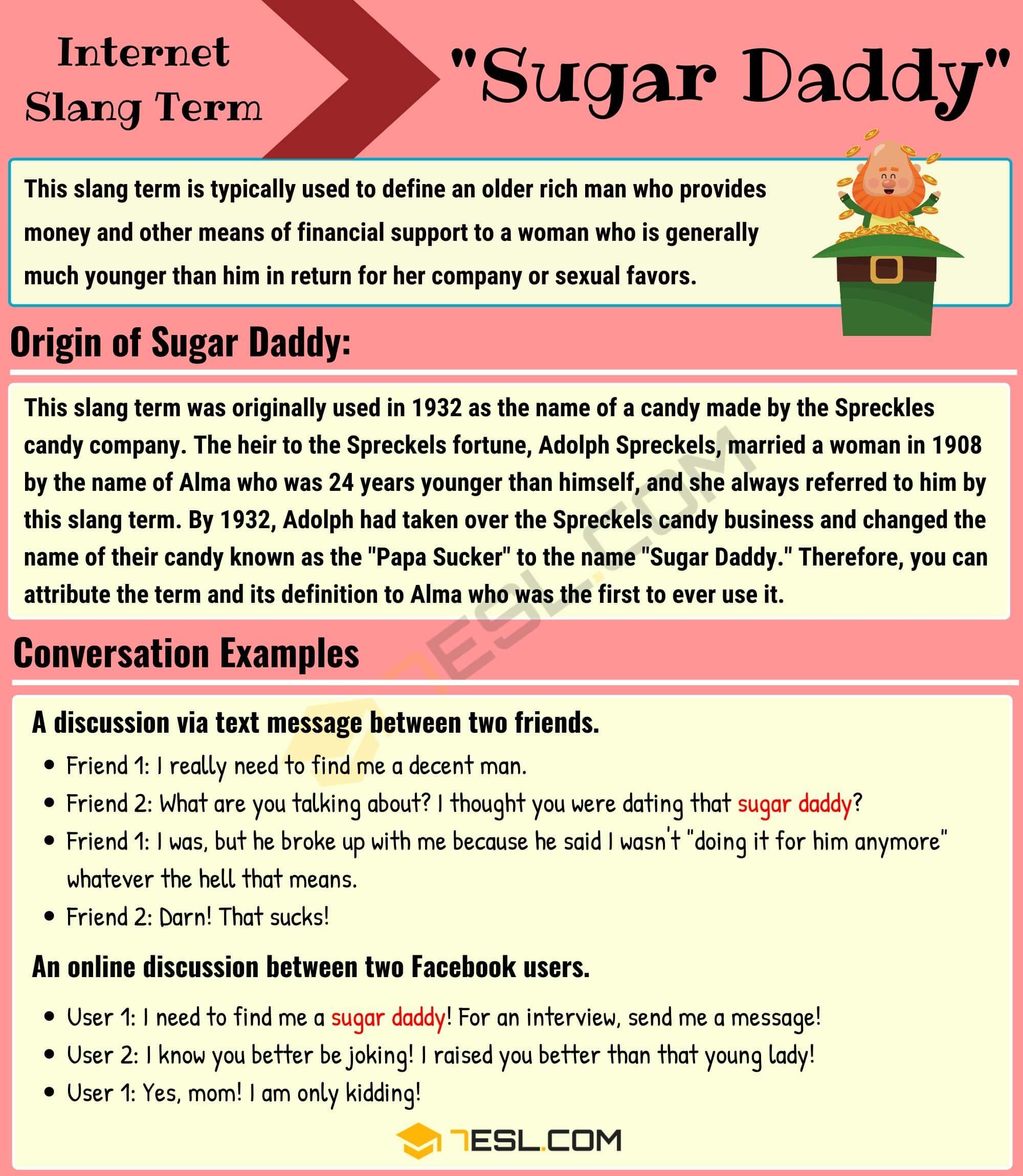
In some contexts, you might hear someone jokingly refer to a "viejo verde." This literally translates to "green old man," and it's a rather impolite way to describe an older man who is overly interested in younger women. It carries a very negative connotation, so use it with extreme caution (or probably not at all!).
Another option is to focus on the financial aspect. You could say, "Tiene un patrocinador," which means "She has a sponsor." This implies that someone is providing financial support, but it doesn't necessarily imply a romantic or sexual relationship. It's a bit more neutral than "sugar daddy."
Regional Flavors and Hidden Meanings
Remember, Spanish isn't a monolithic language. The Spanish spoken in Spain is different from the Spanish spoken in Mexico, Argentina, or Colombia. Just like with any slang term, the appropriate way to say "sugar daddy" can vary significantly from region to region. What's perfectly acceptable in one country might be considered offensive or simply nonsensical in another.

For example, in some Latin American countries, you might hear terms that are more…euphemistic. These phrases often rely on local slang and inside jokes, making them difficult for outsiders to understand. The best way to learn these regional variations is to spend time in those countries and listen to how native speakers talk.
Imagine trying to explain the concept of a "sugar daddy" to your abuela (grandmother). She might look at you with confusion and ask, "¿Un qué?" (A what?). You'd probably need to use a very indirect and polite explanation, emphasizing the generosity and financial support rather than the potentially scandalous aspects of the relationship.

Ultimately, the best way to say "sugar daddy" in Spanish depends on the context, your audience, and your desired level of humor (or seriousness). Using "sugar daddy" itself is a safe bet, but don't be afraid to explore other options and see what resonates with you. Just remember to be mindful of the cultural nuances and potential for misinterpretation.
And who knows, maybe learning how to say "sugar daddy" in Spanish will be the first step in a grand adventure! Or at least a good conversation starter at your next Spanish language exchange.
"El lenguaje es el vestido de los pensamientos." - Language is the dress of thought. Don't forget to dress your 'sugar daddy' conversations appropriately!