
How To Replace Wired Smoke Detectors
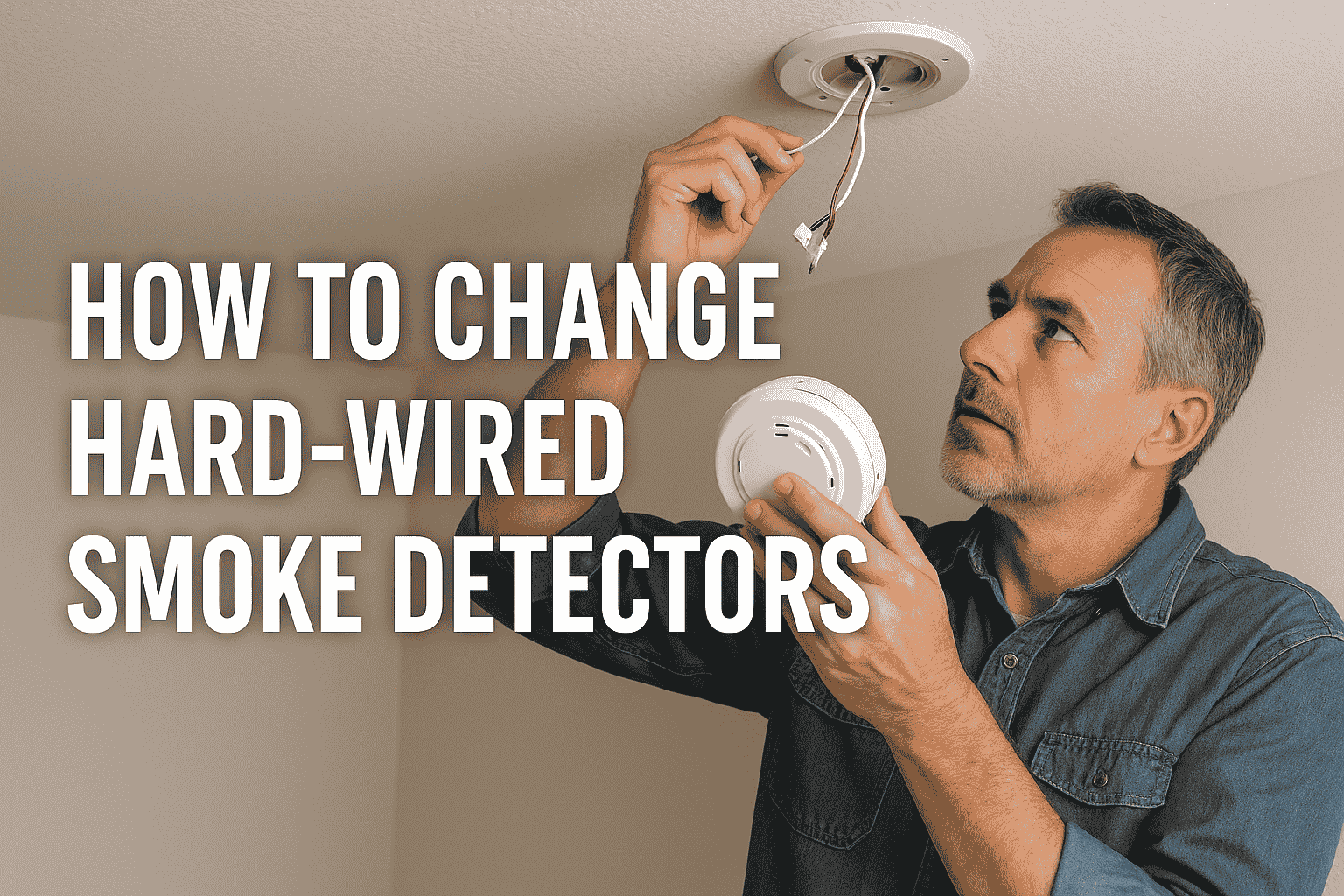
The Great Detector Swap: A Journey of Beeps and Breakthroughs
The journey often begins with a quiet hum, a subtle suggestion from an aging guardian that its watch is nearing an end. Or perhaps it’s a sudden, piercing shriek at 3 AM, startling the cat and reminding you that some things in life are indeed wired to make a dramatic exit.
My own adventure started not with a bang, but with a series of increasingly insistent chirps, little avian protests from the ceiling that our old wired smoke detectors were ready for retirement. They'd served us faithfully for years, silent sentinels until their internal clocks chimed for a well-deserved break.
The Treasure Hunt for Tools
First, of course, was the gathering of the new guardians. Modern smoke detectors, with their sleek designs and promise of advanced sensing, looked like something out of a sci-fi movie compared to the slightly yellowed, chunky plastic discs clinging to our ceilings. They arrived in neat boxes, brimming with purpose.
Must Read
Then came the hunt for the right tools. My toolbox, usually a chaotic archive of half-finished projects and misplaced screws, needed a proper excavation. I unearthed a trusty Phillips head screwdriver, its handle worn smooth from countless DIY missions.
"Every project starts with the right tool, or at least, the right-ish tool you can finally locate." I chuckled to myself, dusting off a pair of wire strippers that hadn't seen daylight since a very ambitious, and ultimately abandoned, attempt to fix a lamp.
Oh, and a step stool. A very important, sturdy step stool. Not just any stool, but the one that had witnessed everything from holiday decorations going up to ambitious spider web removals. It felt like recruiting an old friend for a new mission.
The Breaker Box Ballet
With new detectors on standby and tools at the ready, the next step involved a graceful, albeit slightly anxious, dance towards the breaker box. This mysterious grey panel, usually tucked away in a utility closet or garage, holds the true power of the household.
Finding the correct breaker felt like a mini-mystery novel. Labels, often faded or scribbled in someone's long-forgotten handwriting, promised "Kitchen Lights" or "Master Bath." The one for the smoke detectors, however, was usually a bit more enigmatic, perhaps simply "Living Area" or sometimes, thrillingly, just a blank space.
I decided on a process of elimination, flipping a likely candidate. Suddenly, the kitchen lights went out. "Bingo!" I whispered, feeling like a victorious detective. A quick shout to my partner confirmed the detectors were indeed silent, their little red lights extinguished. It was a momentary, peaceful darkness, a pause before the next chapter.

Our dog, Buster, seemed momentarily confused by the sudden dimming, tilting his head with an almost human-like inquiry. His slight whine was quickly soothed by a reassuring pat, a silent promise that the lights, and the world, would soon return to normal.
Farewell to the Old Guard
Approaching the old detector felt a bit like saying goodbye to a loyal, if somewhat overzealous, employee. With the power off, there was no danger, just a moment of quiet respect for its years of service.
Most wired detectors are held in place by a simple twist. A gentle counter-clockwise turn, and the old plastic disc came free from its mounting bracket. It often released a small puff of dust, a tiny cloud of evidence from years of patiently watching over us.
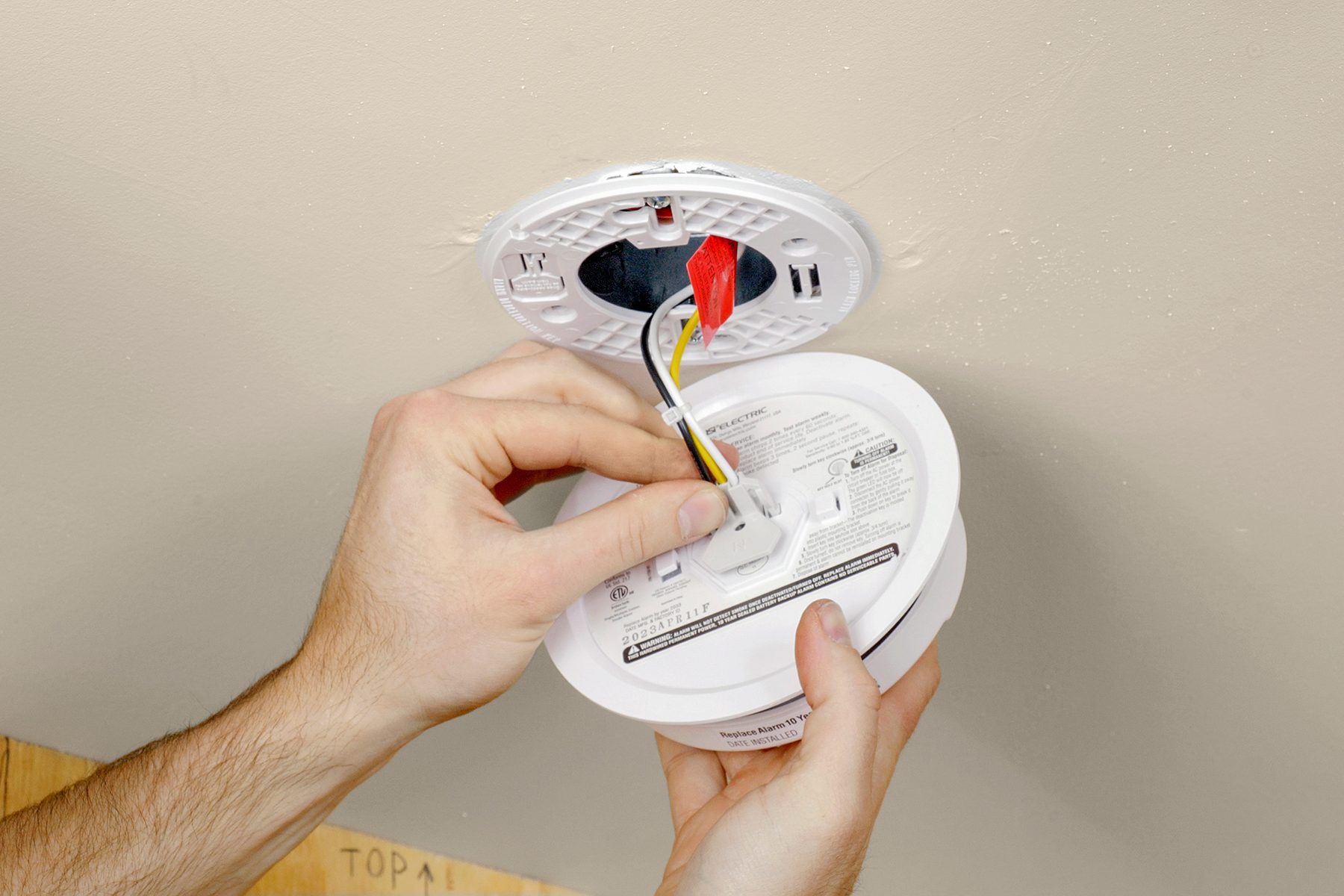
Then came the wires. Three little wires, usually black, white, and red (or sometimes orange), connected the detector to the house's electrical system and to its interconnected brethren. These were held by a small wiring harness, a plug-and-socket arrangement that just needed a firm squeeze and pull.
"Behold, the humble wire harness," I mused, holding the detached detector. It felt lighter than I expected, a hollow shell of its former vigilant self. It was a surprising physical manifestation of how much technology has advanced, even in something as seemingly simple as a smoke detector.
Underneath, the mounting bracket remained, usually screwed into the ceiling electrical box. A couple of screws later, and that too came down, revealing the bare wires peeking out from the ceiling, ready for their new companion.
Welcoming the New Recruit
The new detectors came with their own fresh mounting brackets and wiring harnesses. These modern marvels often have slightly different connectors, so using the new harness is key. It’s like replacing an old phone charger with a new, updated model – similar purpose, but a different fit.
First, the new mounting bracket went up. Lining it up with the existing electrical box in the ceiling was usually straightforward, a matter of matching screw holes. A few twists of the screwdriver, and the sturdy new base was ready to welcome its charge.
Then, the wires. This is where a little mindfulness comes in. The new harness would have the same color wires: black to black, white to white, and red (or orange) to red (or orange). Think of it like matching socks, but with a much more important outcome.
My fingers, usually clumsy with tiny things, felt surprisingly adept as I twisted the matching wire ends together, securing each connection with a wire nut. These little plastic caps, often brightly colored, provide a safe and snug connection, ensuring everything stays properly linked.
Once the wire nuts were tightened, giving each a gentle tug to ensure security, I tucked the bundle of wires neatly back into the electrical box. It’s a bit like tidying up a messy drawer – everything in its place, ready for the final act.

The Grand Installation
With the new wiring harness connected and tucked away, the new detector was ready to take its place. These often connect with a simple click into the new harness, feeling reassuringly snug.
Then, just like its predecessor, the new detector usually twists onto the mounting bracket. A clockwise turn until you feel a satisfying lock, and it’s securely in place, looking far more stylish and ready for action than its old-fashioned ancestor.
I stood back, admiring the sleek, white disc against the ceiling. It looked less like a utilitarian device and more like a minimalist piece of modern art. A quiet moment of pride washed over me, a testament to a small but significant act of home improvement.
My partner, Sarah, walked in, coffee in hand. "Looking good, chief," she said with a grin, "Any major battles with the wiring gremlins?" Her encouragement, a simple, heartfelt acknowledgment, made the whole process feel even more rewarding.
The Moment of Truth: A Symphony of Beeps
With all the new detectors installed throughout the house, it was time for the grand finale. Back to the breaker box, a flick of the switch, and power surged back into the house. Lights blinked on, appliances whirred back to life, and Buster, our dog, perked his ears up, sensing the return of normalcy.

Then came the test. Each new detector has a "test" button, often prominently marked. Pressing it unleashes a surprisingly loud, ear-splitting beep. This isn't just a local alarm; because they're wired together, all the detectors throughout the house join in the chorus.
The first time, it's a bit of a shock. A symphony of beeps echoed through the house, a cacophony that startled Buster into a comical series of yelps and spins. We burst out laughing, a shared moment of relief and amusement.
"It's like a rock concert for safety!" Sarah exclaimed over the din, holding her hands over her ears but smiling.
This interconnected chorus is actually a wonderful thing. It means if smoke is detected in the basement, you'll hear it loud and clear on the second floor. A true household communication system, ensuring everyone is alerted immediately.
After a moment, I released the button, and silence returned, a welcome hush after the alarm. The little red lights on the new detectors blinked reassuringly, a silent promise of vigilance. The house felt a little safer, a little more modern, and certainly quieter without those old, incessant chirps.
Replacing wired smoke detectors isn't just a chore; it's a small act of guardianship, a moment to connect with your home's unseen safety net. It’s an opportunity for a mini-adventure, a few laughs, and the quiet satisfaction of knowing you’ve brought peace of mind to your sanctuary. And perhaps, a few less 3 AM wake-up calls from a grumpy, aging detector.