
How To Read The Electric Meter

Okay, confession time. Back when I first moved into my own place, electricity bills were like mysterious scrolls delivered by a grumpy owl. I’d open them, gasp at the number, and then just… pay. No questions asked. My rationale was, "It's electricity! I used it. End of story." Then one month, the bill was astronomical. Like, "did I accidentally power a small city block?" astronomical. I panicked. I checked all the appliances. I even unplugged my toaster when I wasn't using it, which, let's be honest, felt like a desperate act.
I called the utility company, convinced they'd made a mistake. And bless the customer service rep's heart, she patiently explained something revolutionary: I could read my own meter. My mind was blown. It was like discovering I could read the speedometer in my car to know how fast I was going, rather than just waiting for a ticket. Suddenly, a whole new world of understanding (and potential savings!) opened up. And honestly, it made me feel like a bit of a detective, which is way cooler than feeling like a helpless bill-payer, right?
So, if you’ve ever stared blankly at that box on the side of your house, wondering what alien language it speaks, you’re in the right place. Let's demystify it together. It’s not as scary as it looks, I promise!
Must Read
First Things First: Digital vs. Analog
Before you even step outside, know that there are generally two types of electric meters you might encounter: the sleek, modern digital kind, and the more traditional, charming analog version with its little spinning dials. Most newer homes have digital, but plenty of older ones still rock the analog look. You might even have a smart meter, which basically reads itself and sends the data directly to the power company. If so, congratulations, you've skipped this entire article! But hey, stick around for fun anyway.
Reading the Digital Meter: The Easy Peasy Version
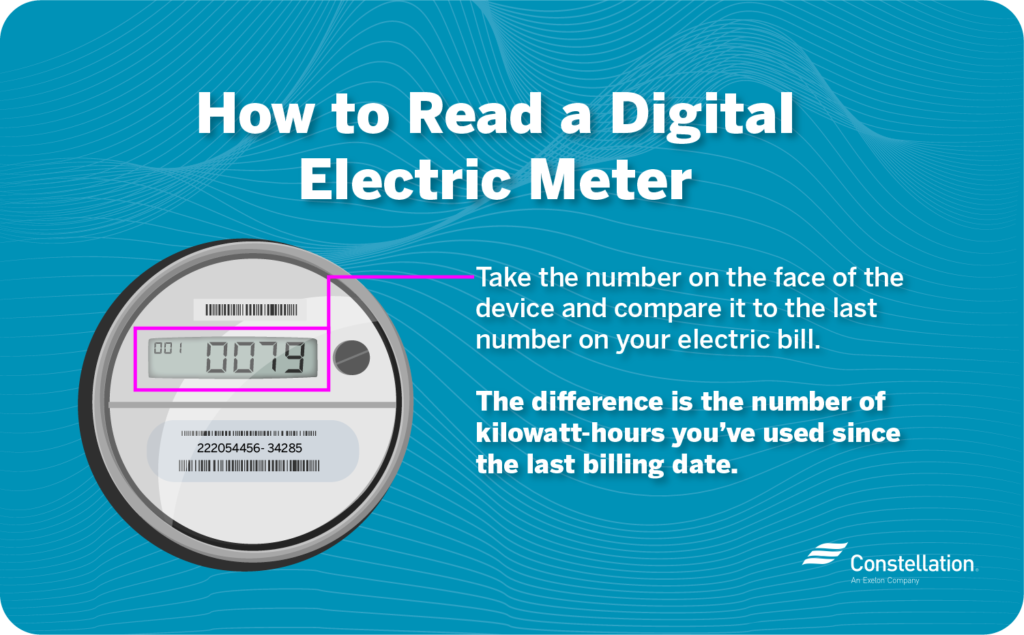
If you have a digital meter, consider yourself lucky. This is the equivalent of reading the time on a digital clock. Most digital meters display a series of numbers that cycle through various readings (like current demand, voltage, etc.). What you’re looking for is the number that represents your total kilowatt-hours (kWh) consumed. It’s usually just a straightforward number with "kWh" somewhere nearby, or it might flash as the primary reading for a few seconds. Jot down all the numbers you see, from left to right. That's it! Seriously, that's the whole trick.
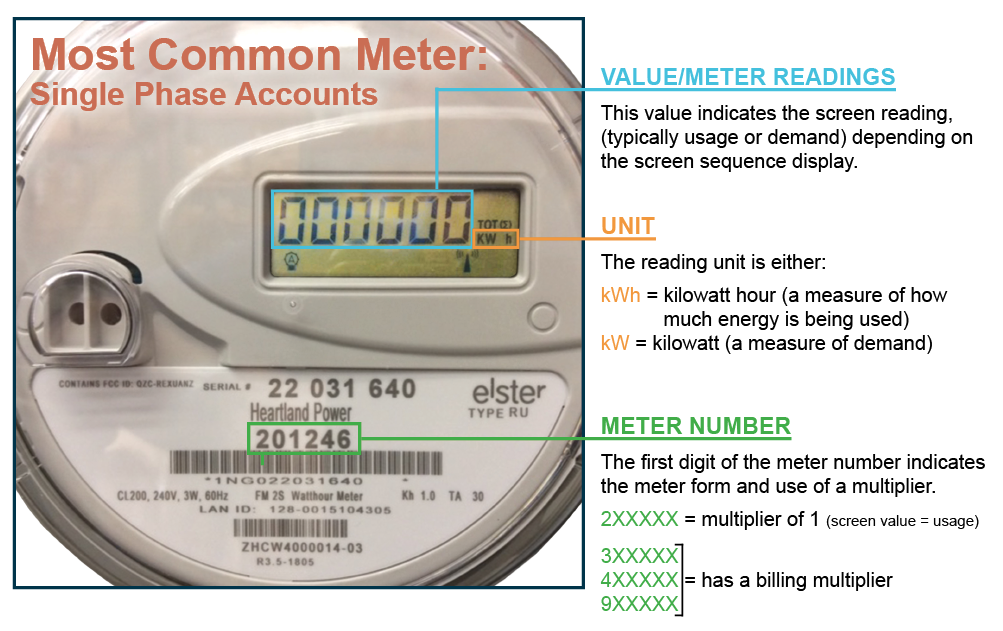
See? I told you it wouldn't be painful. Now, for the real challenge...
Reading the Analog (Dial) Meter: Time for Your Detective Hat
Alright, deep breath. Analog meters are where things get a little more interesting. And by interesting, I mean they require a smidge of focus and a dash of logic. But once you get it, you'll feel like you've cracked a secret code. There are usually four or five small dials on your meter, each with numbers from 0 to 9. Think of them like little clock faces, but with a twist.

Here’s how to tackle it, step by step:
1. Read From Left to Right
This is your golden rule. Just like reading a book, you always read the dials from the far left to the far right. Don’t skip around, don’t get fancy. Just left to right, every time.

2. The Pointer's Direction (The Tricky Bit!)
Here’s where it gets a bit mind-bending: the pointers on these dials alternate directions. The first dial might spin clockwise, the second counter-clockwise, the third clockwise again, and so on. Yeah, they like to keep you on your toes. Don't panic; the numbers are still laid out logically around the dial.
3. What Number Do You Pick?
This is the most crucial part. For each dial, you need to determine which number the pointer has most recently passed.
- If the pointer is clearly between two numbers, always, always go with the lower number. Even if it looks like it's almost reached the next one. Patience, grasshopper! For example, if it's between 4 and 5, you record 4.
-
If the pointer is sitting right on a number (e.g., exactly on the 7), you're not done yet. You need to sneak a peek at the dial immediately to its right.
- If that next dial hasn't fully completed its rotation past zero yet (meaning its pointer is somewhere between 9 and 0), then your first dial actually hasn't quite reached the number it's on. So, you'd record the lower number – the one it just passed. For instance, if dial one is on 7, but dial two is on 9, then dial one is actually 6.
- If the dial to the right has passed zero (its pointer is somewhere between 0 and 1, or 1 and 2, etc.), then you're safe to record the number your first dial is pointing at. So, if dial one is on 7 and dial two is on 1, then dial one is indeed 7.
4. Record Your Reading
Once you've deciphered each dial using the rules above, write down the numbers in the order you read them (left to right). Voila! You have your meter reading. It might look something like 05387 kWh.
Why Bother Reading It Yourself?
You might be thinking, "This is a lot of effort when the utility company does it for me." And you're not wrong! But there are some pretty solid reasons to do a little manual check-up:
- Catch Errors: Utility companies are run by humans (mostly), and humans make mistakes. Comparing your own reading to what's on your bill can help you spot potential billing errors.
- Track Usage: Want to see if that new energy-efficient fridge is actually saving you money? Or how much energy your epic gaming marathon uses? Reading your meter daily or weekly gives you real-time data on your consumption.
- Budgeting: Understanding your usage helps you anticipate your bill and manage your budget better. No more mystery scrolls!
- Peace of Mind: Honestly, there's a certain satisfaction in understanding how things work. Plus, you get bragging rights for mastering the analog meter!
So, go forth, my friend! Grab a notepad, maybe your phone camera for a quick pic (super helpful for double-checking those tricky dials!), and confront that electric meter. You might just save yourself some cash, and you'll definitely gain a little more control over your household utilities. Happy reading!