
How To Read Electic Meter

Hey there, future energy guru! Ever stare at that mysterious box on the side of your house, the one with the spinning bits or flashing numbers, and wonder what on earth it’s trying to tell you? You're not alone! For many, reading an electric meter feels like trying to decipher ancient alien script. But guess what? It’s actually super simple, and once you get it, you’ll feel like you’ve unlocked a secret superpower. No cape required, just a keen eye!
Why bother, you ask? Well, besides impressing your friends at your next board game night (trust me, it’s a niche skill!), knowing how to read your meter gives you control. You can track your usage, spot unusual spikes (is your teenager secretly running a server farm in their closet?), and even estimate your bill before it arrives. Think of the extra pizza money you could save!
The Two Main Characters: Digital vs. Analog
First things first, let's identify your meter type. There are two main kinds you'll likely encounter:
Must Read
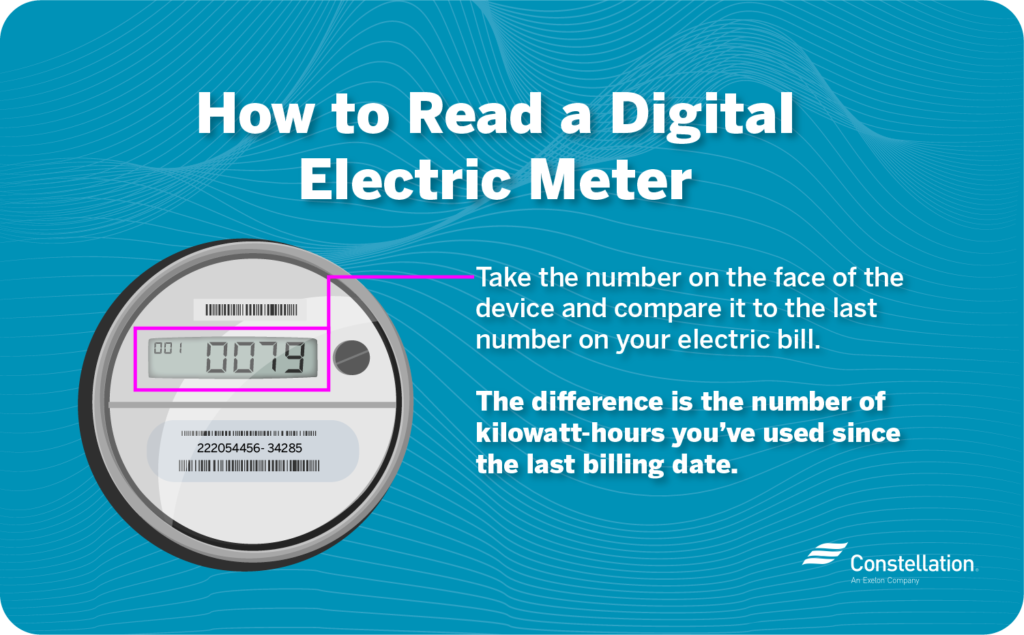
1. The Digital Dynamo: These are the modern, easy-peasy ones. They look like a small digital display, often with a set of numbers that just… sit there. Sometimes they might cycle through different readings (like total usage, current demand, etc.), but usually, there's one clear number for your total kilowatt-hours (kWh).
How to read it: This is where it gets complicated... just kidding! You literally just read the numbers from left to right. That's it! No tricks, no secret handshake. If there's a decimal point, ignore the numbers after it (or count them as fractions of a kWh, but for general tracking, the whole numbers are what you're after). Easy peasy, lemon squeezy!

2. The Analog Ace (aka The Dial Meter): Ah, the classic! These have a series of four or five small clock-like dials, each with a pointer. This is where most people get a little flustered, thinking they need an advanced degree in clock-watching. But fear not! We're about to make you a dial-reading wizard.
Demystifying the Analog Dial Meter: Your Step-by-Step Guide
Grab a pen and paper (or your phone's notepad, we're modern humans!) and let's tackle those dials from left to right.
Step 1: Count Your Dials. Most meters have four or five. Each dial represents a digit in your total kWh reading. Simple!

Step 2: Note the Direction. Here's a fun quirk: the dials don't all spin the same way! They alternate. The first dial spins clockwise (0-9), the second counter-clockwise (0-9), the third clockwise, and so on. Keep this in mind as you read, as it helps you understand the flow.
Step 3: Read from Left to Right. This is the most important rule. Don't skip around like you're browsing Netflix! Start with the leftmost dial and work your way across.

Step 4: The Golden Rule for Pointers. This is where the magic (and common confusion) happens, but we'll break it down:
- If the pointer is between two numbers (e.g., between 3 and 4), always, always read the lower number. So, if it's chilling between 3 and 4, your digit for that dial is 3. No biggie, right?
-
Now, for the slightly trickier bit: What if the pointer is pointing exactly at a number? Like, precisely on the 7? Don't panic! You need to take a quick peek at the dial immediately to its right.
- If that next dial's pointer hasn't quite reached zero yet (meaning it's still somewhere between 9 and 0, or just passed 9), then you actually read the lower number for your current dial. So, if your current dial is exactly on 7, but the next one is still between 9 and 0, your digit for the current dial is 6 (the number before 7). Sneaky, huh?
- If the next dial's pointer has passed zero (meaning it's pointing at 1, 2, 3, etc.), then you go ahead and confidently read the number your current dial is pointing at. So, if your current dial is exactly on 7, and the next one is happily pointing at 2, your digit for the current dial is indeed 7.
Let's try an example: Imagine your dials read like this:
Dial 1 (leftmost): Pointer between 4 and 5 → Write down 4.
Dial 2: Pointer exactly on 7. Now, look at Dial 3.
Dial 3: Pointer between 9 and 0 (it hasn't passed zero yet) → Aha! Since Dial 3 hasn't passed zero, for Dial 2 (which was exactly on 7), we actually write down 6.
Dial 4: Pointer between 2 and 3 → Write down 2.
Dial 5: Pointer between 8 and 9 → Write down 8.
Your reading for this example would be 4628 kWh. See? You just read your electric meter! Give yourself a pat on the back, or maybe a high-five. You totally rocked that!
Pro Tip: Read your meter at the same time each month. This helps you get a consistent picture of your usage. Also, take a photo! It's a great backup and can help settle any debates with your utility company (or your housemates about who left the gaming console on all night).
So there you have it! What seemed like a daunting task is now a piece of cake. You've officially conquered the electric meter. Go forth and use this newfound knowledge wisely – perhaps to optimize your AC usage, challenge your family to an energy-saving competition, or simply to understand that mysterious bill better. You're not just reading numbers; you're gaining insight into your home's energy heartbeat. And that, my friend, is pretty awesome.
Keep shining brightly, but maybe not too brightly if you're trying to save on that electric bill! 😉