
How To Put Out A Grease Fire In Oven

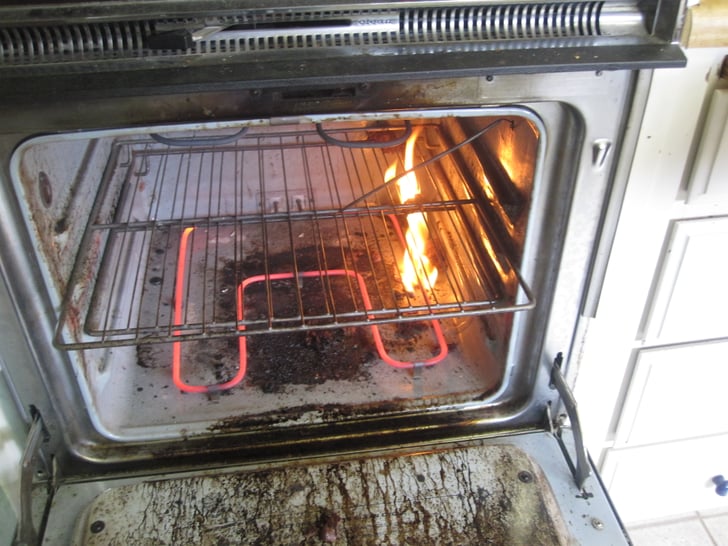
Hey there, fellow kitchen adventurers! Ever been baking up a storm, maybe roasting some veggies or a delicious chicken, and suddenly – gasp! – you see a little flicker, a bit of smoke, maybe even a mini flame party inside your oven? Yup, we're talking about a grease fire. Now, before your heart does a dramatic leap into your throat, let's take a deep breath together. Because, believe it or not, understanding how to handle this is actually pretty cool, and way less scary than it sounds. Think of it as unlocking a secret level in your home chef game!
Grease Fire in the Oven: A Little Science Party (That You Didn't Invite)
So, what exactly is happening when grease catches fire in your oven? It’s often just a little splash of oil or fat from your food, dripped onto the heating element or the bottom of a hot oven, reaching its smoke point and then its flash point. Suddenly, it’s like a tiny, uncontrolled campfire, powered by delicious animal fat. And while it might look alarming, it’s usually confined, and it’s a situation where knowledge truly is power.
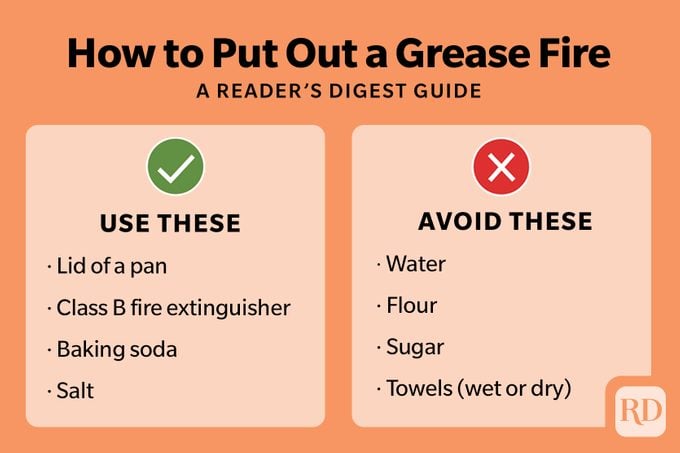
Isn't it fascinating how different substances behave? Water puts out a wood fire by cooling it down, right? But with grease, it’s a whole different ballgame. Trying to douse a grease fire with water is like trying to put out a bonfire with a squirt gun filled with gasoline – it just makes things worse, potentially causing the fire to spread or even create dangerous steam and grease explosions. We definitely don't want that! So, let's remember this golden rule: no water on a grease fire! Got it? Excellent.
Must Read
The Golden Rule: Suffocation is Key!
Okay, so if water is out, what's our secret weapon? Well, it's actually incredibly simple, and it leverages one of fire's fundamental needs: oxygen. Just like you and I need air to breathe, a fire needs oxygen to burn. Take away the oxygen, and poof! No more fire.
Your Oven Door: The Ultimate Firefighter
Here’s the absolute coolest, most effective, and often simplest solution to an oven grease fire: close the oven door. That's it! Sounds almost too easy, right? But it's brilliant. Your oven is designed to be a relatively airtight box when the door is shut. By closing it, you effectively cut off the fire's oxygen supply. It's like gently tucking the fire into bed and saying, "Goodnight, little flame. Time to go out."
- Step 1: Don't panic! Seriously, take a breath.
- Step 2: Turn off the oven. Cut off the heat source.
- Step 3: Close the oven door. If it's open, gently, calmly, shut it. Resist the urge to peek!
That's usually all it takes. Give it a good 15-20 minutes for the oven to cool down and the fire to completely starve itself out. It's a testament to simple physics, playing out right in your kitchen. Isn't that neat?
Backup Plans: When You Need a Little Extra Help
What if, for some reason, the oven door trick isn't quite cutting it, or maybe it's a smaller flare-up and you want to be extra sure? We've got a couple of other smart moves up our sleeve.

The Humble Baking Soda & Salt Combo
If you have a small, contained grease fire (and this is key – we're not talking about a raging inferno, but maybe a little persistent flame), baking soda or salt can be your quiet heroes. Why? Both are non-combustible and, when applied generously, they can smother the fire by forming a crust that cuts off its oxygen. Think of it like a cozy, suffocating blanket for the flames.
Never use flour! Flour is combustible and can actually explode when airborne in the presence of fire. Yikes! So, stick to your trusted baking soda or table salt.
The Mighty Fire Extinguisher (For Real Emergencies)
Okay, this is our heavy artillery, our absolute last resort. If the fire is getting out of control, spreading, or simply not responding to the oven door or baking soda, then it's time for a Class K or Class B fire extinguisher (designed for grease fires). These things are powerful, but they are also messy, so be prepared for a cleanup. And always, always make sure you know how to use yours before an emergency. Better yet, if you feel unsafe or unsure, get out and call 911! Your safety is the most important ingredient in any recipe.
Prevention and The Aftermath: Keeping Your Kitchen Chill
Once your oven fire is safely extinguished, there are a few things to remember:
- Ventilate: Open windows, turn on the range hood. Your kitchen might smell a bit smoky, and you want to air it out.
- Clean up: Once everything is completely cool, clean your oven! Regular cleaning helps prevent grease buildup, which is the root cause of these fires. A clean oven is a happy, fire-free oven.
- Check your food: Unfortunately, anything that was in the oven during the fire is probably a goner. Better safe than sorry when it comes to charred food and potential lingering smoke flavors.
So, there you have it! What might seem like a terrifying kitchen catastrophe is actually a pretty straightforward problem with simple, effective solutions. Knowing how to handle an oven grease fire isn't just a useful skill; it's a testament to understanding the world around you, even in the humble setting of your kitchen. And isn't that just a little bit awesome? Keep calm, stay curious, and happy cooking!
