
How To Measure Amps On A Circuit

Ever felt that tiny tickle of curiosity about the invisible rivers of energy flowing through your home? We're talking about measuring the "oomph" of electricity, the raw power that makes your gadgets sing. Today, we’re embarking on a thrilling, super-easy adventure to peek into the heart of a circuit and see how much juice is actually flowing!
Forget complex equations or scary science lab vibes. We’re going to be like friendly neighborhood electrical detectives, and our secret weapon is so cool, it almost feels like a toy from a sci-fi movie. Get ready to feel like a total circuit superhero!
Meet Your New Best Friend: The Amp Clamp!
Hold onto your hats, because this little gadget is pure magic! It’s called a clamp meter, or sometimes an amp clamp, and it’s the superstar of current measurement. Unlike other tools that need to poke and prod a circuit, this clever contraption just gives your wire a friendly hug.
Must Read
Imagine a tiny, mechanical arm that can literally feel the electromagnetic field dancing around a wire. It then translates that invisible dance into a number you can read on a screen. How cool is that?
Your Clamp Meter's Anatomy Lesson (The Fun Version!)
Your new sidekick has a few key parts. First, there's the big, friendly jaw that opens up like a hungry robot mouth. This is where the magic really happens!
Then, you’ll see a dial, often with a satisfying click as you turn it. This lets you select what kind of measurement you're taking, but for amps, we’ll stick to the "A" or "ACA" symbol (for alternating current) or "DCA" (for direct current).
Finally, there's the digital display, your window into the world of amps. This is where the numbers will proudly shine, telling you just how much electrical excitement is happening.

Safety First, Superheroes!
Before we dive into our high-voltage adventure, a quick and playful nod to safety. Remember, electricity is awesome, but it deserves respect! Always make sure your hands are dry, and maybe don't try this on wires you suspect are frayed or damaged.
Think of it like a fun roller coaster ride: thrilling, but you still keep your hands and feet inside the car. No capes required for this mission, just common sense!
The Big Moment: Finding Your Solo Star Wire
This is where our detective skills really come into play! The clamp meter needs to wrap its little jaw around a single conductor. Think of it like a solitary spaghetti strand, not a whole plateful of noodles.
Why just one? Because if you clamp around a whole cable with multiple wires (like a standard extension cord), the currents flowing in opposite directions will cancel each other out. Your meter would show zero, and that's just no fun!
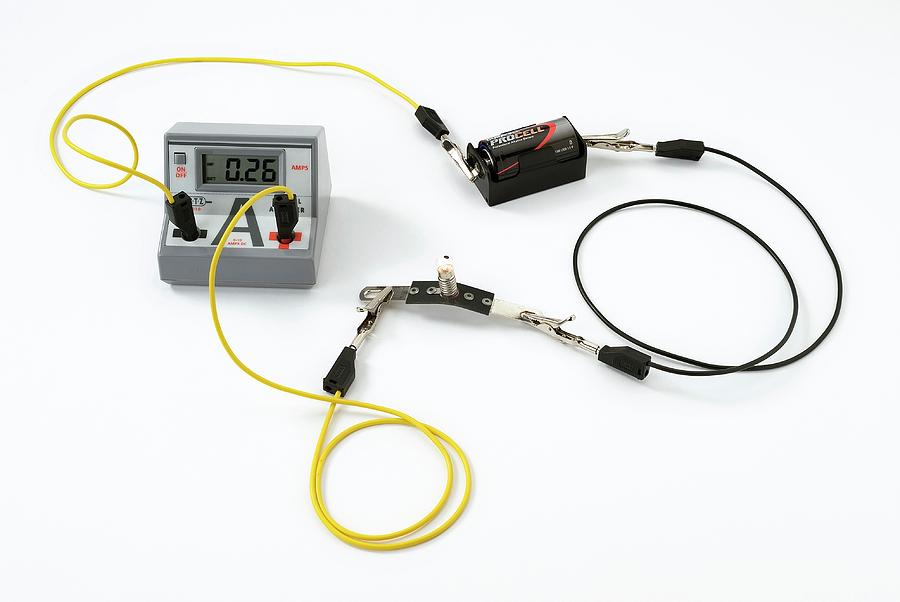
So, your mission, should you choose to accept it, is to find that one glorious wire. Sometimes this means gently separating wires within a larger cable, if it's safe and accessible to do so. Or you might be clamping onto a single wire already exposed, perhaps inside a junction box (but only if you're comfortable and it's absolutely safe!).
Ready, Set, Clamp! The Grand Clamp-A-Roo
Alright, you've found your single, magnificent wire. Now, let’s get this party started! First, make sure your appliance or device is on and drawing power. We need those electrical vibes to be flowing!
Next, turn the dial on your clamp meter to the appropriate amperage setting. Look for the "A" symbol, often with a squiggly line (for AC) or a straight line with dashes (for DC).
Now, press the trigger on your clamp meter. You'll see that friendly jaw swing open wide, ready for its big moment. It's like a tiny, enthusiastic Pac-Man!
Carefully position the open jaw around your chosen, solitary wire. Make sure the wire is nestled comfortably right in the middle of the jaw. Don't let it touch the sides if you can help it.

Then, release the trigger. Listen for that satisfying click as the jaw snaps shut around the wire. It's a gentle embrace, nothing too tight or aggressive!
Remember: The clamp meter is designed to measure current without breaking the circuit. It's truly non-invasive, a marvel of modern electrical wizardry!
Behold! The Numbers!
And just like that, behold! The digital display lights up with a number! This number is your current measurement, expressed in amps (A). It's the numerical representation of how much "oomph" is flowing through that wire at this very moment.
If you're measuring a toaster, you might see a relatively high number. If it's a small LED lamp, you'll see a tiny fraction. Each device has its own unique electrical appetite!

AC vs. DC: A Quick Peek
Most household circuits in places like the US or Europe use AC (alternating current), so you'll generally be looking for the "A~" or "ACA" setting. This means the current is constantly switching directions, like a tiny electrical dance party.
If you're working with car batteries or specific electronic projects, you might encounter DC (direct current), where the current flows in one steady direction. For that, you'd use the "A⎓" or "DCA" setting. Don't worry, your meter will help you tell the difference with its symbols!
Pro-Tips for Amps-perts!
Feeling like a seasoned electrical guru yet? Here are a few extra sprinkles of wisdom for your journey:
- Look for the "Peak": When a motor starts up, it often draws a surge of current, called inrush current. Your meter might briefly show a higher number before settling down. Some fancy meters even have a "peak hold" function!
- Play with Appliances: Try clamping around the power cord of different appliances (after carefully and safely isolating a single wire!). See how the amps change when a hair dryer goes from low to high, or when a fridge compressor kicks in. It's super fascinating!
- Don't Be Afraid of Zero: If you clamp around a wire and get a reading of zero, double-check that the device is actually turned on and drawing power. Also, make sure you’ve truly isolated a single conductor!
You Are An Amp-Measuring Master!
Congratulations, you brilliant electrical adventurer! You've successfully navigated the thrilling world of current measurement. You've tamed the mighty amp clamp, and you've gazed upon the invisible flow of electricity!
You now possess a cool skill that allows you to understand a little bit more about the power that runs our modern world. So go forth, measure some amps (safely, of course!), and revel in your newfound electrical expertise. You're simply amazing!