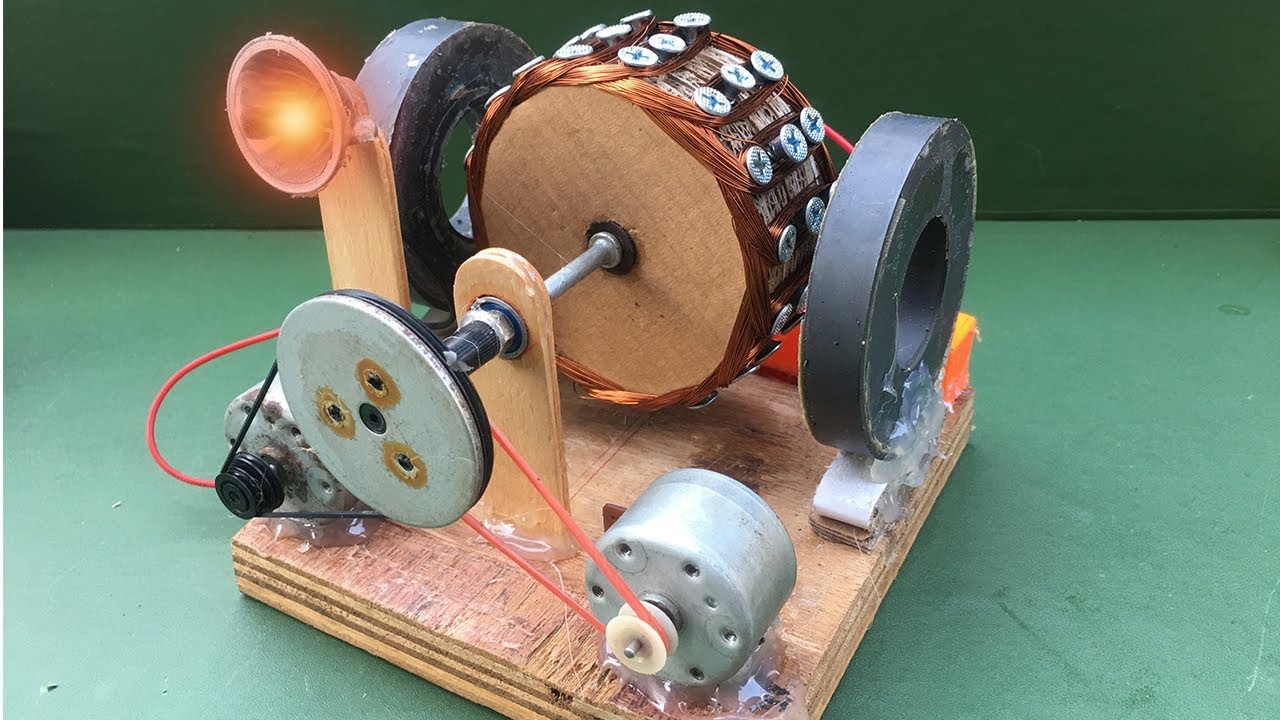
How To Make A Generator From An Electric Motor

Let's be honest, there's something undeniably appealing about DIY power. Maybe it's the satisfaction of creating something useful with your own hands, or the thrill of understanding how everyday technology actually works. Or perhaps it’s the peace of mind knowing you have a backup power source, even a small one. Whatever the reason, the idea of building a generator from an electric motor has captivated tinkerers and practical problem-solvers alike.
But why would you even want to make a generator from an electric motor? Well, the benefits are numerous. First and foremost, it's a fantastic learning experience. You'll delve into the fundamentals of electromagnetism, reverse engineering, and basic electrical circuits. Beyond the educational aspect, a homemade generator can provide a small, independent power source. Think powering a low-wattage LED light in a shed, charging your phone during a power outage (albeit slowly!), or even powering a small science project. It’s about taking control of your energy needs, even in a tiny way.
The core principle is brilliantly simple: an electric motor and a generator are essentially the same device, just used in reverse. A motor converts electrical energy into mechanical energy (spinning), while a generator converts mechanical energy into electrical energy. Think of it like a bicycle; pedaling (mechanical energy) turns the wheels, and in our case, spinning the motor's shaft generates electricity.
Must Read
So, how do you actually do it? The process involves a few key steps. First, you need an electric motor. An old washing machine motor, a discarded drill motor, or even a small DC motor from a toy car can work. Next, you'll need to connect a method for spinning the motor’s shaft. This could be a hand crank, a small windmill, or even a water wheel – the possibilities are only limited by your imagination and available resources. The critical part is connecting a multimeter to the motor's terminals to measure the voltage and current being produced as you spin the shaft. You might need to experiment with different speeds and loads to find the sweet spot for optimal power generation.
Important Safety Note: Working with electricity can be dangerous. Always disconnect power sources before working on electrical components. If you're unsure about anything, consult with a qualified electrician.

To enjoy this project more effectively, here are a few practical tips: First, choose the right motor. Motors with strong magnets tend to generate more voltage. Second, experiment with different loads. Try connecting different resistors or small appliances to see how the output changes. Third, focus on consistent speed. A steady, controlled spin will produce a more stable voltage output. Finally, don’t expect miracles! These homemade generators typically produce only a small amount of power, but the knowledge and satisfaction you gain are immeasurable. Consider adding a capacitor to smooth out the voltage output, especially if you plan on charging sensitive electronics.
Building a generator from an electric motor is more than just a fun project; it’s a journey into the heart of electrical engineering, empowering you with a deeper understanding of the world around you and perhaps, a little bit of off-grid independence.