
How To Know Where Your Septic Tank Is

Ah, the great backyard mystery. You know the one. It’s not about finding lost treasure or a secret garden gnome convention. No, it’s far more fundamental. We’re talking about the elusive, the enigmatic, the utterly essential septic tank.
Many of us bought our homes with a dreamy nod to the past. We pictured cozy evenings, sunny mornings, and perfectly manicured lawns. What we didn't picture was a hidden underground vault full of… well, you know. And often, we don't even know where this vault lives!
It's an "unpopular opinion" perhaps, but many homeowners are perfectly content living in blissful ignorance. Out of sight, out of mind, right? Until, that is, a problem bubbles up. Literally. Or you decide to plant that prize-winning rose bush exactly where it shouldn't be.
Must Read
The Great Septic Tank Hunt: A Homeowner’s Saga
So, how do you locate this subterranean secret keeper? It's not always on a handy treasure map. Sometimes, it feels like it moves around just to mess with us.
Method 1: The "Ask Someone Else" Gambit
Your first thought might be, "I'll just ask the previous owners!" This is a noble pursuit. Sometimes, it even works! They might pull out a dusty, hand-drawn sketch from the back of a junk drawer. More often, you get a shrug and a vague gesture towards "somewhere near the big oak tree." Helpful. Very helpful.
Or you might try asking your neighbors. Especially if they've lived there forever. They might have seen a giant hole being dug decades ago. They might also give you conflicting advice. Such is life in the septic tank detective world.
Method 2: The "Follow the Pipes" Adventure
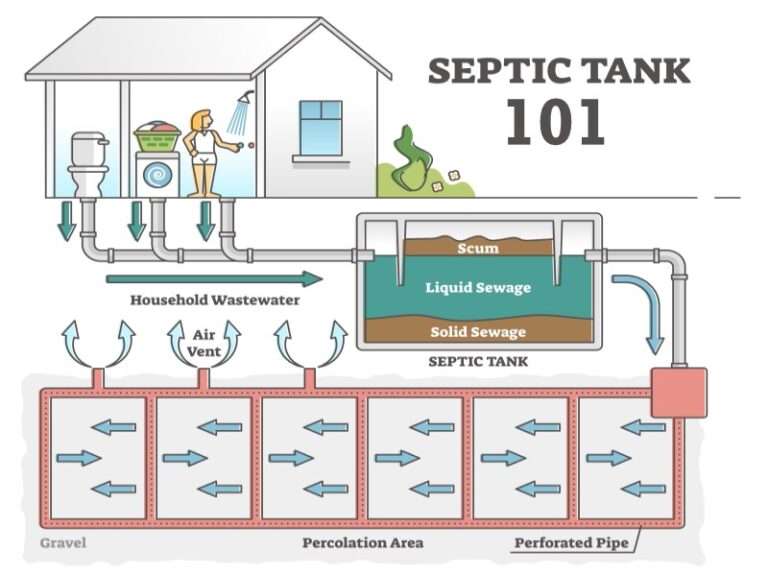
This method requires a bit of courage. Head into your basement or crawl space. Find where the main drain line exits your house. It's usually a large pipe. Now, imagine that pipe continuing straight out into your yard. The septic tank is often (but not always!) within 10 to 20 feet of that exit point.
This is where imagination meets reality. Sometimes, the pipe takes a surprising turn. Like a plot twist in a low-budget movie. Don't be surprised if it veers off course. Those pipes have a mind of their own.
Method 3: The "Grass is Always Greener (or Browner)" Clue
Keep an eye on your lawn. Seriously. Your septic tank and especially your drainfield (where the treated water disperses) can leave clues. Is there a patch of grass that's unusually lush and green, even in a drought? That could be it. The extra moisture and nutrients might be giving it a boost.
Conversely, sometimes the grass directly over the tank can be drier or even snow-free in winter. This is because the tank generates a little heat. It's like your lawn is giving you a secret wink, trying to tell you something important.
Pro Tip: Look for rectangular or square patterns in the grass. Septic tanks are rarely round.
Method 4: The Gentle "Probe and Poke" Maneuver
This is where you become a modern-day prospector, but instead of gold, you're looking for concrete. Get a long piece of rebar or a soil probe. Walk a grid pattern in the suspected area, pushing the rebar into the ground every foot or so. You're feeling for something solid and flat.

When you hit something hard, try to trace its edges. This could be the lid of your septic tank. Be gentle, though! We don't want any accidental breaches. This method takes patience, a good pair of gloves, and a willingness to look a little odd to your neighbors.
Method 5: The Official Detective Work
Sometimes the answers are in plain sight, or at least in public records. Check with your local health department or county planning office. They often have maps or "as-built" drawings of your property, detailing where your septic system was installed. This is often the most reliable way to find the exact location, short of hiring a pro.
A simple phone call or a trip to the municipal building might save you a lot of guessing and even more digging. Who knew bureaucracy could be so helpful?

Method 6: The "Call in the Big Guns" Strategy
When all else fails, or if you just prefer to avoid becoming an amateur archaeologist, call a professional. Septic system inspectors or pumpers have specialized equipment. They can use metal detectors for lids, or even camera scopes to send down your drains. They'll find it, no problem.
Yes, it costs money, but think of it as an investment in peace of mind. And avoiding an embarrassing hole where your outdoor BBQ was supposed to go. Sometimes, admitting defeat and calling an expert is the smartest move of all.
Finding your septic tank doesn't have to be a dreaded chore. It can be a humorous adventure, a quirky homeowner rite of passage. Embrace the mystery, follow the clues, and happy hunting!