
How To Hook Up Generator To Home

Alright, picture this: it’s the dead of night, the wind is howling like a banshee, and suddenly… poof! Your entire world plunges into an inky blackness. Your phone’s at 3%, the coffee maker is mocking you with its silence, and you’re pretty sure that strange noise was just your cat plotting world domination. Sound familiar? Welcome to the wonderful world of the power outage! But fear not, my intrepid friend, because today we’re going to talk about how to unleash the beast – I mean, your generator – and hook it up to your home like a true, albeit slightly nervous, suburban hero.
Now, before we get all gung-ho and start wrestling with wires, let’s get something straight: this isn't a game of connect-the-dots. We're dealing with electricity, which, while fantastic for binge-watching, is also quite adept at zapping things you like, such as yourself. So, rule number one, tattooed on your brain, is: safety first, always! I'm talking about treating this process with the respect you'd give a grumpy, electrified badger.
The "Don't Do This, Ever!" Section
Let's clear the air about the absolute, no-questions-asked, "you'll regret this more than that regrettable tattoo" way of doing things. That's the old "extension cord through the window" trick. You know, where you run a bunch of flimsy cords from your generator to your fridge, TV, and maybe a single sad lamp. Not only is it a fire hazard, a trip hazard, and an aesthetic disaster, but it also means you’re basically running a pop-up electrical shop in your living room.
Must Read
And then there's the even scarier boogeyman: backfeeding. This is where you try to plug your generator directly into a wall outlet in your house. Don't ever, ever do this! It sends power back down the utility lines, potentially electrifying lines that linemen are trying to repair. Imagine being a lineman, working hard to restore power, and suddenly getting a nasty jolt from your neighbor’s valiant (but misguided) attempt to keep their freezer running. Not cool. This is extremely dangerous and can be fatal for utility workers or even your own household appliances.
Enter the Heroes: Transfer Switch or Interlock Kit
So, if not a spaghetti mess of extension cords or playing electrician roulette, then what? Glad you asked! The proper way to hook up your generator to your home involves one of two unsung heroes: a transfer switch or an interlock kit. Think of these as the bouncers at the electrical club, ensuring only one power source (either the utility company or your generator) is allowed on the dance floor at any given time.

A transfer switch is a dedicated panel that's wired directly into your main electrical panel. When the power goes out, you manually switch it over. It’s like a sophisticated traffic cop for electrons, ensuring your generator only powers the circuits you've selected – usually the fridge, a few lights, and maybe that essential coffee maker. It's safe, efficient, and makes you look like you know what you're doing (even if you’re still secretly Googling "what is an amp?").
An interlock kit, on the other hand, is a mechanical device installed on your main electrical panel. It physically prevents you from turning on both the main utility breaker and the generator breaker at the same time. It’s simple, effective, and less expensive than a full transfer switch. It basically says, "Hey buddy, pick one. You can't have both!"
Whichever option you choose, please, for the love of all things holy, have it installed by a licensed electrician. This isn't a DIY project unless you are a licensed electrician. Seriously, leave this part to the pros. They have cool tools and know things like "load balancing" and "arc flash," which sound intimidating because they are.
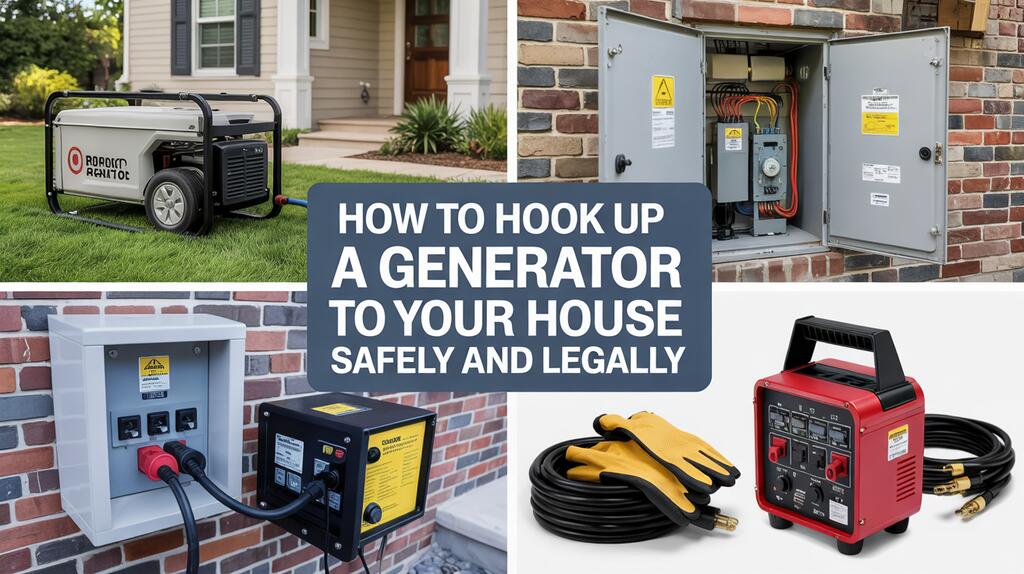
Prepping Your Power Pal
Okay, your transfer switch or interlock is installed. Now for the generator itself. First, placement is crucial. Your generator is essentially a small, noisy, gas-guzzling engine. That means it produces carbon monoxide – an invisible, odorless, tasteless killer. So, set it up outdoors, at least 20 feet away from your house, with the exhaust pointed away from windows and doors. Imagine it's a very loud, very gassy guest who needs to stay outside. Did you know that carbon monoxide poisoning is one of the leading causes of accidental poisoning deaths in the US? It's not a joke, folks. Invest in CO detectors for your home!
Next, fuel it up! Use fresh, unleaded gasoline, and consider a fuel stabilizer if you're storing it for a while. Nobody wants to find their generator won't start when the chips are down, all because of some stale fuel. And speaking of starting, always follow your generator's specific starting instructions. Some have chokes, some have electric starts, some require a secret handshake. Know your beast!
The Big Connection (The Fun Part!)
Once your generator is purring away outside (or at least growling nicely), it’s time for the hook-up. You’ll have a special, heavy-duty power cord with a specific twist-lock plug on one end and a different plug on the other. This cord connects your generator to an external inlet box, which is wired to your transfer switch or interlock kit. It’s a bit like plugging a giant extension cord into a dedicated outdoor outlet on your house.
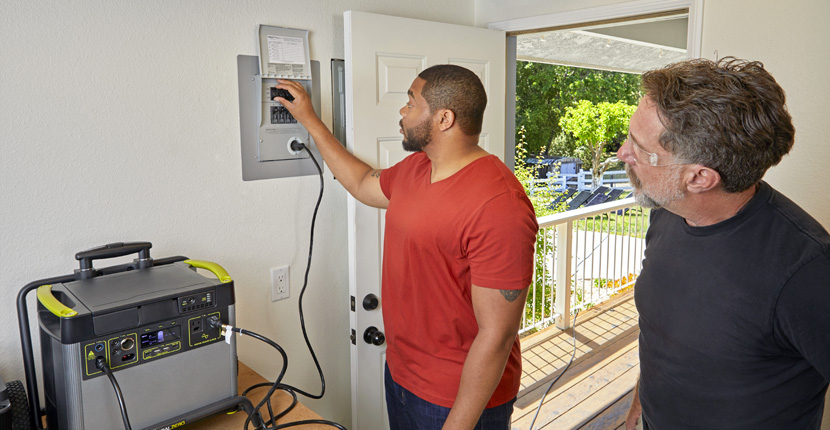
Plug the cord into the generator first, then into the inlet box. This order helps avoid accidentally touching a live plug end.
The Moment of Truth: Powering Up Your Home!
With the generator running and connected, head to your main electrical panel (or transfer switch panel). If you have an interlock kit, you'll flip off your main utility breaker, then slide the interlock plate, and finally, flip on the generator breaker. If you have a transfer switch, you’ll flip its main switch from "utility" to "generator."
Now, here's where the magic happens: you'll start flipping on individual breakers or switches for the circuits you want to power. Remember, you’re not running the entire house off this thing! Pick your essentials: fridge, freezer, a few lights, maybe the WiFi router (because panic-Googling requires internet). Don't try to run your central AC, oven, or clothes dryer – those are massive power hogs and will likely overload your generator, causing it to grunt indignantly and then shut down.

And just like that, light! Refrigeration! And perhaps, most importantly, the ability to make that desperately needed cup of coffee. You are now officially a power outage wizard!
Shutting Down (Don't Forget This Step!)
When the sweet hum of utility power finally returns, you need to reverse the process. First, turn off all the individual circuit breakers you had on. Then, flip the generator breaker off (or switch your transfer switch back to "utility"). Next, unplug the generator cord from the inlet box, then from the generator. Finally, shut down your generator and let it cool. It's like putting a cranky child down for a nap – be gentle and follow the routine.
And there you have it! The not-so-secret guide to safely and effectively hooking up a generator to your home. It might seem daunting at first, but with the right equipment (installed by a pro!), some common sense, and a healthy respect for electricity, you'll be the calmest, best-lit person on the block next time the lights go out. Go forth and power, my friends, but do it safely!