
How To Find What Is Tripping My Circuit Breaker

Oh no, the lights went out again! Don't panic, you're not alone. We've all been there, staring into the darkness, wondering why our trusty circuit breaker decided to take an unscheduled vacation.
But fear not, intrepid homeowner! With a little detective work, you can become a breaker-tripping Sherlock Holmes and restore order to your electrically challenged kingdom. Let's get started!
Step 1: The Breaker Box Investigation
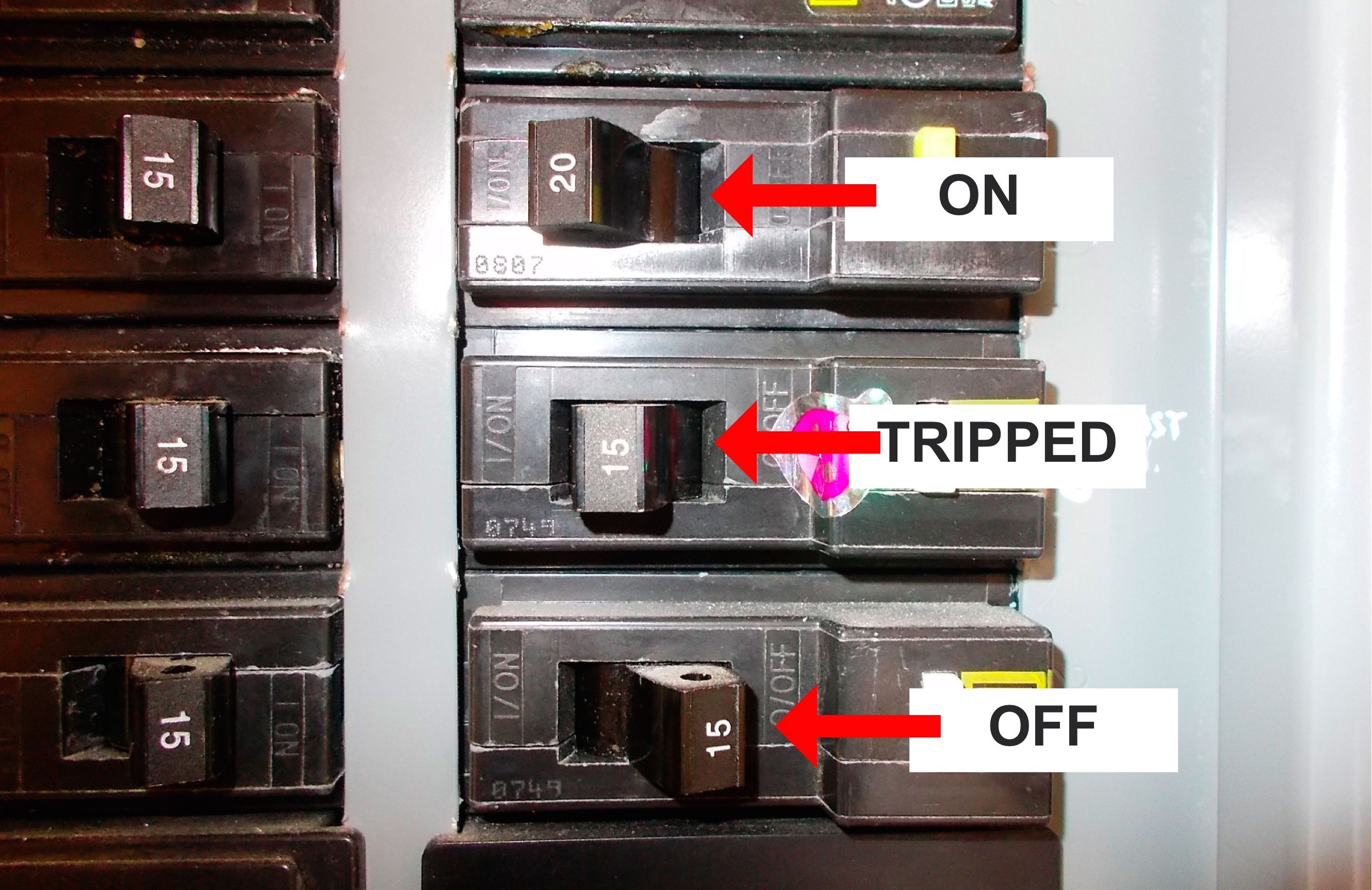
First things first, head to your breaker box. It's usually lurking in the basement, garage, or some other equally glamorous location. You're looking for a switch that's not quite in the "on" position.
Must Read
It might be flipped all the way to "off," or chilling in a mysterious middle ground between "on" and "off." That's your culprit!
Flip that bad boy all the way to "off" first. Then, with a satisfying flick, switch it back to "on". Did the lights come back? If so, victory is yours! But our investigation continues...
Step 2: The Process of Elimination (or "Unplugapalooza!")
So, the breaker flipped again. This is where the real fun begins. Time to play the unplugging game!
Think about what was running when the breaker tripped. Was your hair dryer blasting at full power? Was the microwave nuking a burrito to oblivion? Those are your prime suspects.
Unplug everything on that circuit. Yes, everything! Lamps, toasters, TVs, that weird electric toothbrush you never use. Become one with the empty outlets. Embrace the minimalist lifestyle, temporarily.
The Obvious Offenders
Start with the big power-hungry culprits. We're talking hair dryers, space heaters, toasters, and anything with a heating element. These guys are notorious breaker-trippers.
They're like the energy-guzzling SUVs of the appliance world. Respect them, but don't let them hog all the electricity.
Microwaves are also high on the suspect list. Especially when they're working hard to defrost that forgotten freezer surprise.

The Sneaky Suspects
Don't overlook the smaller appliances. Sometimes, it's not the obvious offenders, but the sneaky little guys that are causing the problem.
Lamps, phone chargers, even that electric toothbrush can sometimes contribute to an overloaded circuit. They might seem innocent, but they can be part of a bigger conspiracy.
Think about anything that was plugged in on that circuit, even if it was seemingly idle.
Step 3: The Reintroduction Ritual
Okay, everything is unplugged. Now, slowly start plugging things back in, one at a time. It's like a delicate dance, a tango with electricity.
Plug in one item, then wait a bit. Give the circuit time to breathe. See if it holds. If it does, move on to the next item.
Keep doing this until...BAM! The breaker trips again. That's the moment of truth! You've found your culprit!
Unplug that device immediately. You've identified the source of your electrical woes.
Step 4: Dealing with the Culprit
Now that you've identified the offending appliance, you have a few options. First, try plugging it into a different outlet on a different circuit.
Maybe that particular outlet is just having a bad day. If it works fine on another circuit, problem solved! You can probably continue using it.
If it trips the breaker on another circuit too, then Houston, we have a problem! The appliance itself might be faulty.
It might be time for a repair or, dare I say, a replacement. Sometimes, it's just time to say goodbye to that ancient toaster.
Step 5: The Overloaded Circuit Dilemma
What if you've unplugged everything, and the breaker still trips? Or, what if no single appliance seems to be the problem? Then, you might have an overloaded circuit.
This means you're trying to run too many things on one circuit at the same time. It's like trying to fit too many clowns in a tiny car. Eventually, something's gonna give.
The solution? Spread the load! Plug some of your appliances into outlets on different circuits. Use extension cords if necessary, but be careful not to create a tripping hazard.
The "Lightening the Load" Strategy
Think about how you're using electricity. Do you really need the hair dryer, the space heater, and the microwave all running at the same time? Probably not.
Try staggering your appliance usage. Heat up your burrito first, then dry your hair. It's all about strategic energy management.
You can also invest in energy-efficient appliances. They use less power, which means less strain on your circuits. It's good for your wallet and the environment!
Step 6: When to Call in the Professionals
If you've tried everything and your breaker is still tripping, it's time to call in the big guns. We're talking about a qualified electrician.
Electrical problems can be dangerous, and it's always better to be safe than sorry. Don't try to fix something you're not comfortable with. Your safety is worth more than saving a few bucks.
A professional electrician can diagnose the problem and fix it properly. They might find a wiring issue, a faulty breaker, or something else entirely.
They have the tools, the knowledge, and the experience to handle even the trickiest electrical problems.
Signs You Need an Electrician, Like, Yesterday
If you see sparks, smell burning, or feel a tingle when you touch an appliance, don't hesitate! Call an electrician immediately!
These are serious warning signs that something is very wrong. Don't try to troubleshoot it yourself. Get professional help right away.
Also, if your breaker trips frequently, even when you're not using a lot of electricity, that could be a sign of a bigger problem.
Constant tripping could be caused by loose wires or a faulty breaker. An electrician can inspect your wiring and replace any faulty components.
A Few Words of Caution
Always be careful when working with electricity. Turn off the power at the breaker before you start any electrical work.
Use insulated tools and wear rubber gloves. It's better to be safe than sorry. Electricity is powerful and unforgiving.
Never overload extension cords. They can overheat and cause a fire. Make sure your extension cords are rated for the amount of power you're using.
Be mindful of water around electricity. Water and electricity don't mix! Keep electrical appliances away from sinks, bathtubs, and other sources of water.
If you're not comfortable working with electricity, don't do it! Call a qualified electrician. They're the experts.
Final Thoughts
Finding out what is tripping your breaker might be a challenge, but it is not insurmountable. Go forth, and conquer those breakers! With a little patience and detective work, you'll be back in the light in no time!
Remember, electricity is a powerful force. Treat it with respect, and always be careful. And when in doubt, call a professional.
Now, go forth and illuminate your world!