
How To Find Lowest Common Multiple Of 3 Numbers

Okay, let's talk numbers. Not the scary kind, like taxes. We're diving into the weird and wonderful world of the Lowest Common Multiple. Or LCM, for short. Sounds fancy, right?
But what if you have, like, three numbers? Suddenly, it's not so simple. Prepare yourself.
The Quest for the Elusive LCM (for 3!)
Finding the LCM of two numbers? Easy peasy. It's like finding a matching pair of socks. A little searching, a little luck.
Must Read
Adding a third sock? Suddenly, you're in sock purgatory. Let's figure out how to escape.
Prime Factorization: Your Secret Weapon
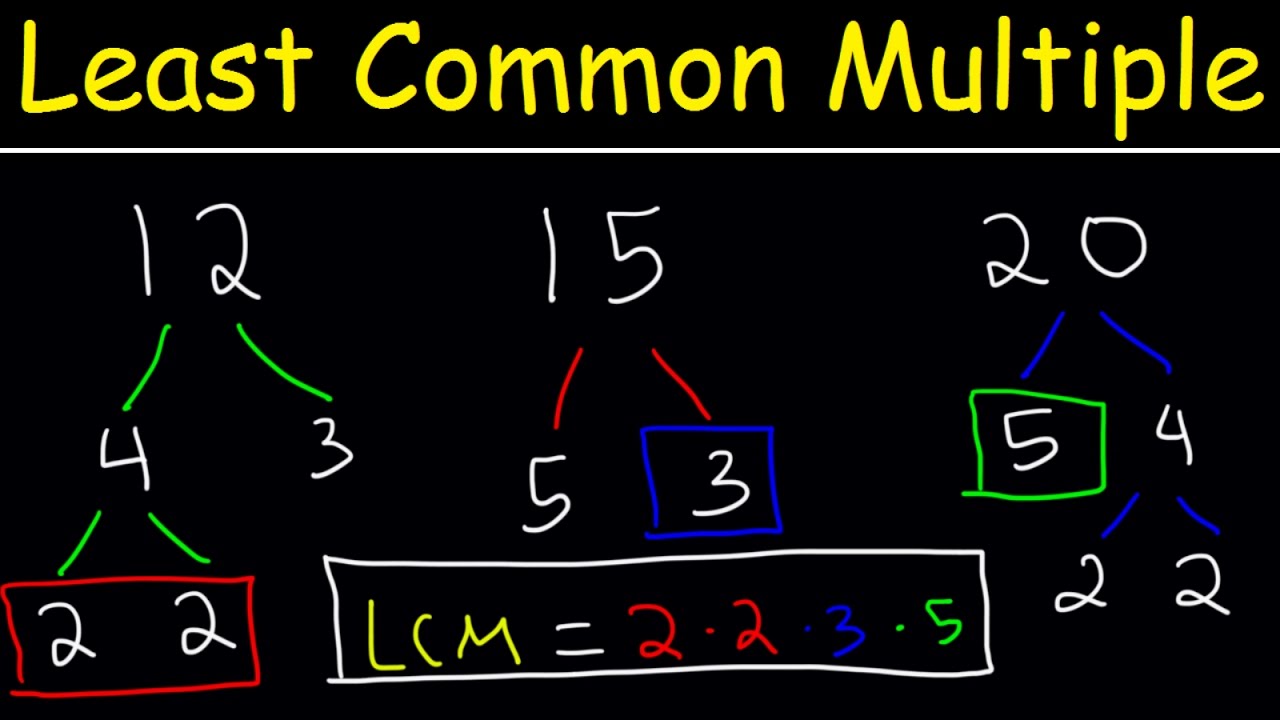
First up, the prime factorization method. This sounds like a villain's evil plan, but it's actually quite helpful. We're gonna break down each number into its prime components.
Think of it like disassembling a LEGO castle. Each number becomes a pile of prime LEGO bricks. Like, 12 becomes 2 x 2 x 3. Fun, right?
Let's say our three victims... I mean, numbers... are 6, 8, and 15. 6 is 2 x 3. 8 is 2 x 2 x 2. And 15 is 3 x 5. Got it?
Now, gather all the primes. Take the highest power of each prime that appears in any of the factorizations. So, we need three 2s (from 8), one 3 (from 6 and 15), and one 5 (from 15).
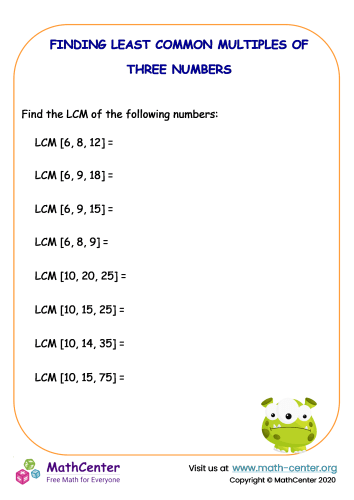
Multiply them all together: 2 x 2 x 2 x 3 x 5 = 120. Voila! The LCM of 6, 8, and 15 is 120. Doesn't it feel good to have conquered something?
The Multiple Listing Service (MLS… Sort Of)
Another method involves listing out multiples. But instead of houses, we're listing multiples of numbers. It's less stressful than house hunting.
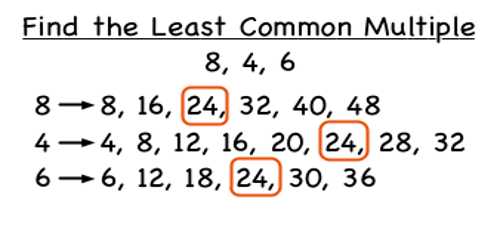
Write out the multiples of each number. Keep going until you find a number that appears in all three lists. Prepare for a potentially long journey.
For 6: 6, 12, 18, 24, 30, 36, 42, 48, 54, 60, 66, 72, 78, 84, 90, 96, 102, 108, 114, 120... For 8: 8, 16, 24, 32, 40, 48, 56, 64, 72, 80, 88, 96, 104, 112, 120... For 15: 15, 30, 45, 60, 75, 90, 105, 120...
See? 120 appears in all three lists. It might take a while. This method is best for smaller numbers. Or if you really enjoy writing numbers. No judgement.
The "Unpopular Opinion" Method: Divide and Conquer (Kind Of)
Here's my totally-not-recommended, slightly-cheating, "unpopular opinion" method. It involves finding the LCM of two numbers first. Then finding the LCM of that result and the third number. Are you ready for this madness?
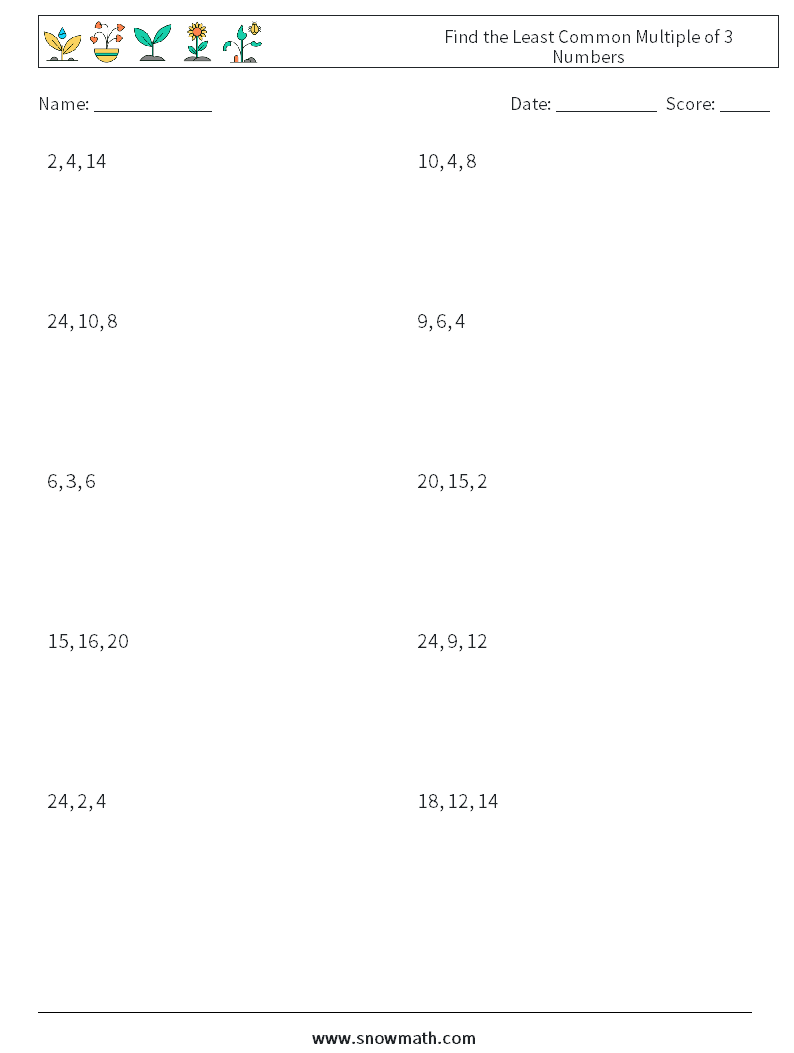
First, find the LCM of 6 and 8. Listing multiples (or using prime factorization), we find it's 24.
Now, find the LCM of 24 and 15. List the multiples: 24: 24, 48, 72, 96, 120... 15: 15, 30, 45, 60, 75, 90, 105, 120...
Again, we get 120! It works! But... it's not always the most efficient route. Especially if those initial LCMs are large.
But hey, sometimes the scenic route is more interesting. Even if it takes longer.
My unpopular opinion? This method is secretly fun. It's like a mini-LCM adventure nestled within a larger LCM quest.
Why Bother With LCMs, Anyway?
Okay, so you've mastered the art of finding the LCM of three numbers. But why bother? What's the point of all this numerical gymnastics?
Fractions, my friend! LCMs are crucial when adding or subtracting fractions with different denominators. They provide the common denominator you need.
Think of baking a cake. You need common units of measurement. Otherwise, it'll be a disaster. LCMs are the common measuring cups of the fraction world.
Also, scheduling! Imagine you have three recurring events. One happens every 6 days, one every 8 days, and one every 15 days. When will they all coincide? The LCM tells you!
LCMs are all around us. We just don't always realize it. They are hidden in the mundane, waiting to be discovered by number sleuths like us.
LCMs and the Real World (Sort Of)
Let's get really abstract. LCMs can even be loosely applied to teamwork. Imagine three team members with different work cycles.
One is productive every 6 hours, another every 8, and the third every 15. When will they all be "in the zone" at the same time?
The LCM (120 hours) gives you a rough idea. It's a humorous, slightly-forced analogy, I admit. But hey, I tried!
Okay, that might be a stretch. But you get the idea. LCMs have practical (and sometimes impractical) applications.
Final Thoughts: Embrace the LCM
Finding the LCM of three numbers might seem daunting. But with a little practice, it becomes second nature.
Prime factorization is your reliable friend. Listing multiples is good for smaller numbers. And my "unpopular opinion" method... well, use it at your own risk (and for fun!).
So, go forth and conquer those LCMs! You've got this! And remember, it's okay to use a calculator. No one's judging.
Just don't tell your math teacher I said that. Seriously.
Now, if you'll excuse me, I'm going to go find the LCM of the number of cookies I want to eat (currently infinite) and the number I'm allowed to eat (sadly, not infinite). Wish me luck.