
How To Find Kilowatts Per Hour

Hey there, energy explorer! Ever looked at your electricity bill and wondered what in the world a "kilowatt" actually is? Or maybe you've heard people toss around "kilowatts per hour" and thought, "Hmm, how do I even find that?" Well, grab a comfy seat, because we're about to demystify it all with zero head-scratching and maximum fun!
First things first, let's clear up a tiny little hiccup in the lingo. While "kilowatts per hour" sounds super logical (like miles per hour, right?), when we talk about electricity consumption, we're usually aiming for something called kilowatt-hours. Think of it this way: kilowatts (kW) are like the speed of your energy usage – how fast your device is guzzling power right now. Kilowatt-hours (kWh) are like the distance you've traveled – the total amount of energy consumed over a period. It's what your electric meter tracks, and it's what you pay for!
So, our mission, should you choose to accept it (and you totally should!), is to figure out how many kilowatt-hours an appliance uses. Don't worry, it's easier than assembling IKEA furniture blindfolded. Let's dive in!
Must Read
Step 1: Find Your Appliance's Watts (W) – The Power Punch!
Your first task is to become an energy detective! Every electrical appliance has a wattage rating. This number tells you how much power it draws when it's chugging along. You can usually find it:
- On a label stuck to the back or bottom of the device.
- In the user manual (remember those?).
- Sometimes, with a quick Google search for "[Appliance Name] wattage."
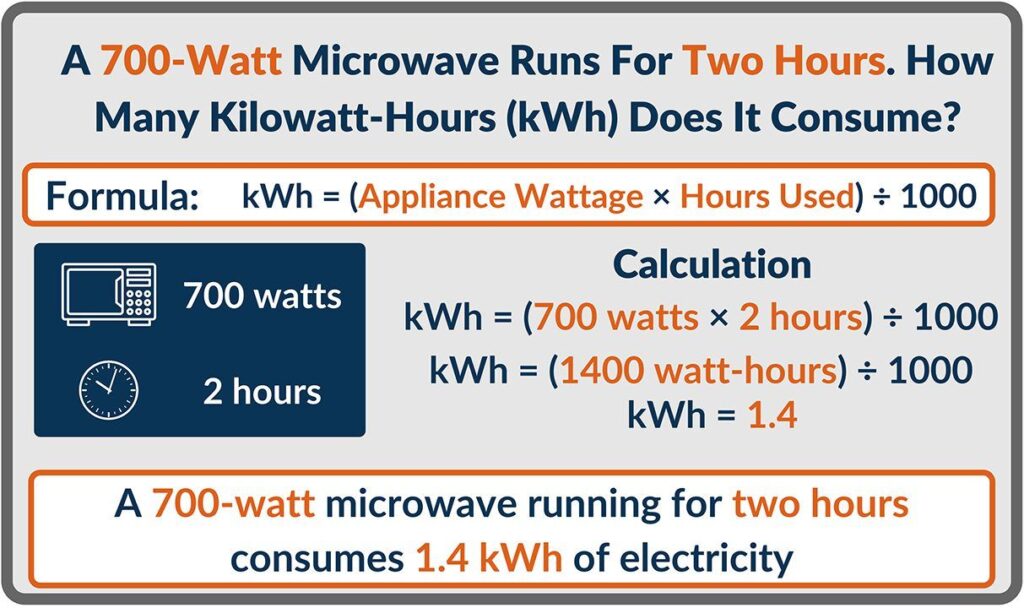
Let's say you're looking at your trusty toaster, and it proudly states 1200 Watts. Excellent work, detective!
Step 2: Convert Watts (W) to Kilowatts (kW) – A Simple Swap!
Now, remember how 1000 grams makes a kilogram? Well, 1000 watts make a kilowatt. It's the exact same principle! To turn your watts into kilowatts, you just divide by 1000. Easy peasy lemon squeezy!
So, our 1200-watt toaster? Divide 1200 by 1000, and ta-da! You get 1.2 kilowatts (kW). See? No advanced calculus required!
Step 3: Figure Out How Many Hours (h) It's On – The Time Factor!
This step is all about how long you actually use the appliance. A toaster might be 1200 watts, but you probably only use it for, what, 5 minutes in the morning for that perfectly golden slice of heaven? Or maybe your gaming PC runs for 4 hours a day?
For our toaster example, let's say you use it for 10 minutes a day. But we need hours, so 10 minutes is 10/60 of an hour, which is about 0.167 hours (h). If you're calculating for a whole month, you'd multiply that by 30 days. For simplicity, let's imagine you're baking a massive batch of toast and it runs for a full 1 hour.
Step 4: Multiply Kilowatts by Hours – The Grand Finale!
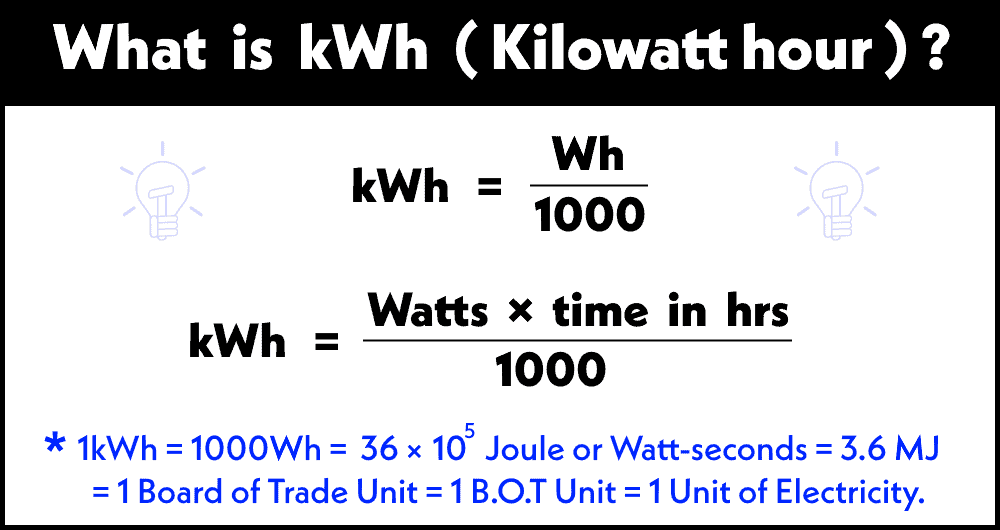
You've got your kilowatts (kW) and you've got your hours (h). Now, all you have to do is multiply them together to get your magical kilowatt-hours (kWh)!

Using our toaster example (let's stick with 1.2 kW and assume it's running for 1 full hour for easy math, okay?):
1.2 kW x 1 h = 1.2 kWh
And there you have it! In this hypothetical scenario, your super-toasting session just munched through 1.2 kilowatt-hours of electricity. If you used it for half an hour, it would be 0.6 kWh. See how simple it is when you break it down?

Why Bother, You Ask? Because Knowledge is Power (Literally)!
Knowing how to calculate kWh isn't just a fun party trick (though it totally could be!). It's a superpower for your wallet and the planet!
- Save Money: Understand which appliances are your biggest energy hogs and decide if you want to use them less or upgrade to more efficient models.
- Be Energy Smart: Make informed choices about your energy consumption.
- Impress Your Friends: Confidently explain what that "kWh" on the bill means!
So, the next time you hear someone say "kilowatts per hour," you can give a knowing wink and politely enlighten them about the wonderful world of kilowatt-hours. You're now an official energy whisperer!
Go forth, calculate, and feel empowered by your newfound understanding of electricity! Your energy bill might just thank you, and you'll definitely be smiling knowing you've mastered a little piece of the energy puzzle. High five!