
How To Disarm Smoke Alarm
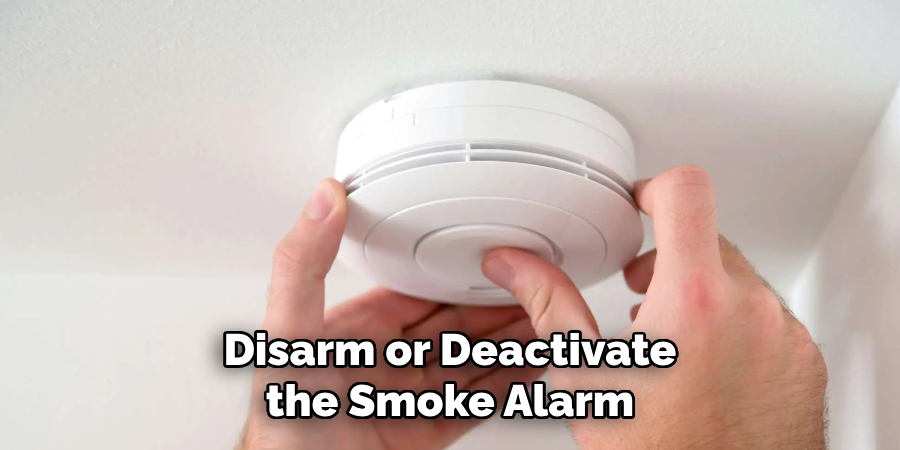
Alright, friend, let's talk about that piercing, soul-crushing siren that turns your peaceful abode into a war zone at 3 AM. No, I'm not talking about your neighbor's dog practicing its opera skills; I'm talking about the smoke alarm. That little round disc of doom that loves to remind you it exists, usually when you're searing a steak or, let's be honest, just looking at your toaster funny.
We've all been there. You're minding your own business, maybe enjoying a quiet evening, when BAM! A high-pitched shriek rips through the air, making you question every life choice that led you to this moment. Your pets scatter, your heart rate skyrockets, and you suddenly gain the ability to jump off the sofa like a ninja. The good news? You're about to become a smoke alarm whisperer. The bad news? You might need a step stool.
First Things First: Is It a Real Emergency?
Before we go all MacGyver on this thing, let's just make sure it's a false alarm, okay? Because if your kitchen actually looks like a scene from a disaster movie, you probably want to be calling 911, not reading this article! So, take a quick peek around. Is there actual smoke? Is something burning? If yes, get out safely and call for help!
Must Read
If not, and it's just doing its annoying "low battery chirp" or "dust party" routine, then congratulations, you're cleared for disarming. Your mission, should you choose to accept it, is to restore peace to your sanctuary.
Step 1: Identify the Culprit (and its Location)
Smoke alarms are like mischievous little sprites; they often have friends. So, if one starts chirping, others might join the choir, especially in interconnected systems. Try to pinpoint the exact one that's causing the ruckus. It might be subtle, but usually, one is louder or has a blinking light indicating it's the diva of the group.
Once identified, take a good look at it. Is it mounted on the ceiling? On the wall? How high up is it? This isn't just for curiosity; it's so you know what kind of ladder or chair you'll need. Safety first, my friend! We don't want you starring in your own slapstick comedy while trying to reach this thing.

Step 2: Reach for the Stars (or the Ceiling) - Safely!
Okay, this is where the fun begins. Grab a sturdy step stool or a small ladder. Ask a friend or family member to spot you if you're feeling wobbly. Do NOT stand on rickety chairs, unstable stacks of books, or anything that resembles a human Jenga tower. We're trying to disarm an alarm, not end up in the ER with a sprained ankle.
Once you're safely elevated and can comfortably reach the alarm, you're ready for the next move.
Step 3: Silence the Beast (The Temporary Fix)
Many modern smoke alarms have a "Hush" or "Test" button. Give that "Hush" button a press! It might silence the alarm for a few minutes, giving you a brief reprieve from the sonic assault. Think of it as hitting the snooze button on an incredibly annoying alarm clock. This is great for those "oops, I burnt the toast again" moments, but it's usually just a temporary pause.

If it's just chirping (low battery), this button might not stop it. But it's worth a shot! If it doesn't work, don't despair, we have bigger plans.
Step 4: Twist and Shout (Mostly Twist)
Most smoke alarms are attached to a mounting bracket with a simple twist-off mechanism. Gently but firmly grab the alarm unit and try twisting it counter-clockwise. It should unclip or unlock from the bracket with a satisfying little click. It's usually about a quarter turn.
Don't be afraid to give it a confident twist. These aren't delicate flowers; they're built to stay put, but they're also designed to be removable for maintenance. Once it's off the bracket, you can bring it down to eye level. Ah, sweet victory!
Step 5: The Grand Disconnection - Power Down!
Now, this is where you actually disarm it. There are two main types:
/SmokeDetector-e17afe58f9c147068db44d0eb85fa1d3.jpg)
-
Battery-Powered Alarms: This is the easiest! Flip the alarm over, and you'll usually find a compartment for a 9-volt battery (the rectangular one) or a few AA/AAA batteries. Simply open the compartment and remove the battery (or batteries). Sometimes they're stubborn, so you might need a small screwdriver to pop the cover open. Pull out that power source, and BAM! Silence. It's like pulling the plug on a noisy party pooper. Mission accomplished!
-
Hardwired Alarms (with Battery Backup): These are connected directly to your home's electrical system, and they usually have a backup battery. If yours is hardwired, you'll see a bundle of wires plugged into the back of the alarm unit. Carefully disconnect this wiring harness. It usually has a clip or a squeeze mechanism. Once the wiring harness is unplugged, THEN you can remove the backup battery, just like with the battery-powered units. A word of caution: if you're ever unsure about messing with anything electrical, it's always best to call in a professional. But for simply unplugging the low-voltage connector, it's usually straightforward.
And there you have it! The silence is deafening, in the best possible way. Enjoy the peace and quiet you've so bravely earned.
The "Why" and How to Prevent Future Alarms (Besides Better Cooking)
Now that you've got it disarmed, take a moment to understand why it went off. Was it just old batteries? If so, replace them with fresh ones! Don't just pop the old ones back in, unless you enjoy this whole song and dance. Was it dusty? Give it a good vacuuming with a soft brush attachment or a blast of compressed air. Dust and cobwebs are notorious for setting off false alarms.
Remember to test your smoke alarms monthly (by pressing the "Test" button) and replace the batteries at least once a year, or when they start chirping. And smoke alarms themselves have a shelf life – usually 7-10 years. If yours is getting ancient, it might be time for a full replacement. They're like old cell phones; eventually, they just don't work as reliably.
Putting It Back Together
Once you've replaced batteries or cleaned it, simply reverse the process: connect the wiring (if hardwired), put the battery back in, and then twist the alarm back onto its mounting bracket. Give it a quick test to make sure it's working (a short beep is a good sign!), and then revel in your newfound expertise.
You did it! You faced the beeping demon, stared it down, and emerged victorious. You're not just a homeowner; you're a hero, a technician, a peacekeeper! Now go forth and enjoy the serene quiet of your home, knowing you've mastered one of life's most annoying little challenges. You've earned that perfectly (or imperfectly) cooked meal in peace. High five!