
How To Determine What Size Ceiling Fan You Need

Choosing a ceiling fan! It sounds like something only your grandpa gets excited about, right? Wrong! Think of it as a silent, whirling ballet dancer bringing cool air to your stuffy spaces.
But just like you wouldn't cast a ballerina the size of a linebacker, you need the right sized fan for your room. Let's ditch the measuring tape phobia and figure this out, shall we?
The "Eyeball It" Method (With a Pinch of Science)
Okay, forget complicated formulas. We're going to channel our inner interior designer (or at least someone who's watched enough HGTV). First, assess the room. Is it a cozy nook or a ballroom waiting for its prince?
Must Read
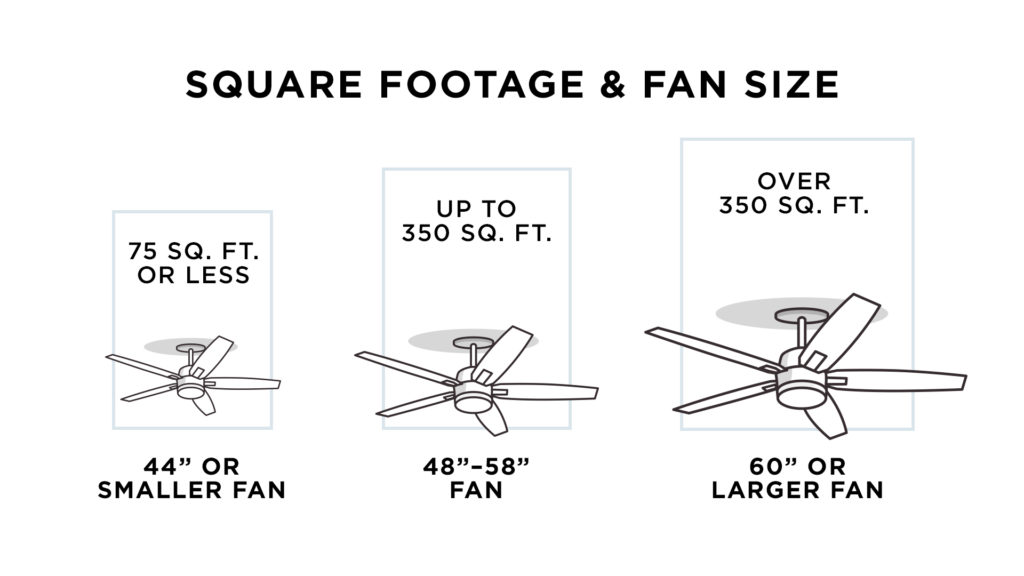
The Tiny Dancer (Up to 75 Square Feet)
Picture this: your powder room, a walk-in closet that's more "walk-around-and-sigh," or maybe a tiny home office where you mostly stare at the wall. For these little spots, a small fan is your best friend. Think 36 inches or less – cute and compact!
Remember that time Aunt Mildred tried to cram a king-sized bed into her guest room? Don't be like Aunt Mildred. Scale is key!
Too big a fan in a small room is like a chihuahua trying to herd cattle. Energetic, yes, but ultimately a bit ridiculous. A small fan keeps the air moving without creating a wind tunnel.
The Mid-Sized Marvel (76-150 Square Feet)
Now we're talking bedrooms, smaller living rooms, or maybe a generously sized kitchen. This is where the 42- to 48-inch fan shines. It's the Goldilocks of ceiling fans: not too big, not too small, just right.
Imagine trying to eat dinner with a helicopter overhead. That’s what happens when the fan is too large. With the correct size, you will enjoy peaceful and enjoyable dinner.

My friend, Dave, learned this the hard way. He insisted on a massive fan for his tiny kitchen, claiming it would "cure world hunger." It didn't. It just blew his spaghetti everywhere.
The Big Kahuna (151-300 Square Feet)
Living rooms, master bedrooms, or any space where you can comfortably do the Macarena – these are the domains of the 52- to 56-inch fan. This is where airflow really starts to matter. It's about circulating air, not just making a breeze.
These fans aren't just for show. They can actually help lower your energy bills by circulating warm air in the winter and cool air in the summer. It's like having a tiny, helpful weather god living in your ceiling.
My grandparents had one of these in their living room. It was so powerful, it once blew a toupee off Uncle Barry's head during Thanksgiving dinner. Good times.
The Mega-Fan (300+ Square Feet)
We're talking great rooms, finished basements, or spaces large enough to host a square dance. This is where the 60-inch or larger fan reigns supreme. These fans are serious business.
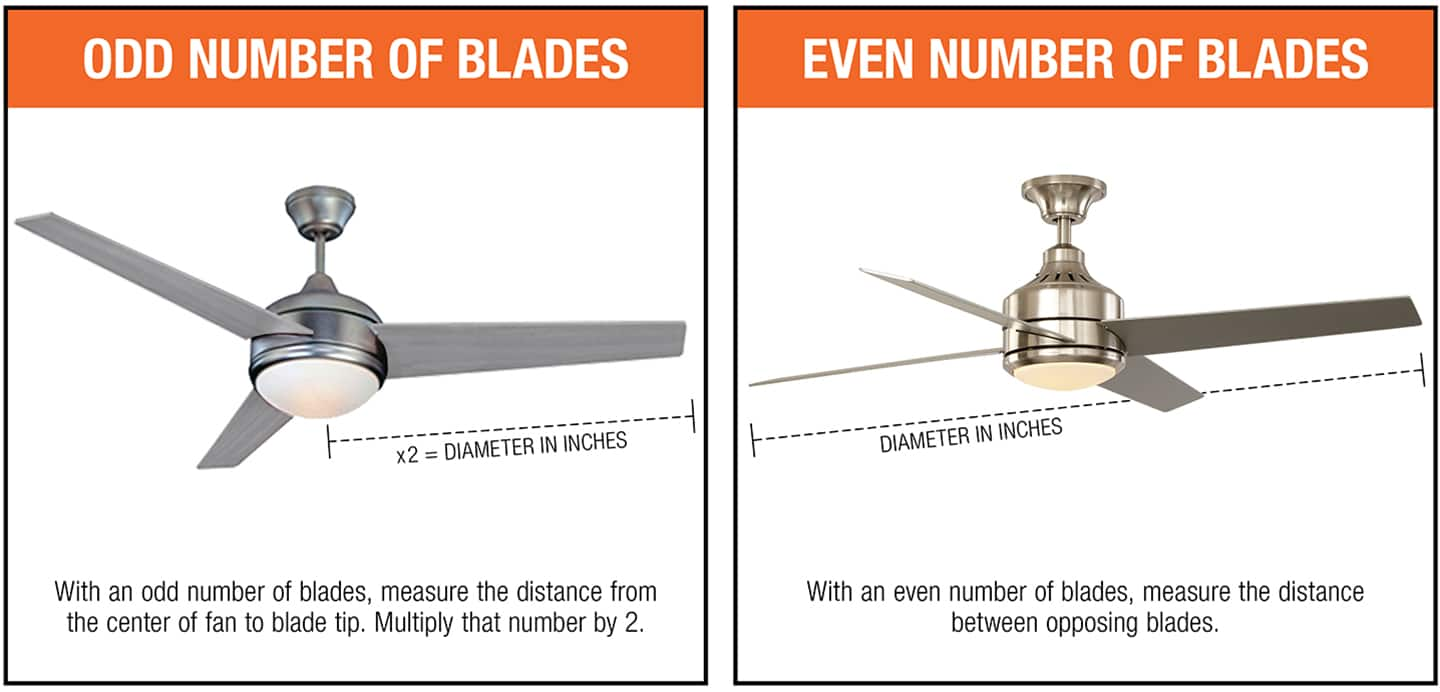
Think of it as the air traffic controller of your home, ensuring smooth air flow even in the most sprawling of spaces. It will ensure that every corner of your home is air conditioned.
Installing one of these is a two-person job, unless you have the strength of Hercules. Trust me, I tried it alone once. I ended up with a strained back and a very lopsided fan.
Beyond Square Footage: The "Feel" Factor
Okay, numbers are great, but sometimes you just have to go with your gut. Consider the ceiling height. Low ceilings? A flush-mount fan is your best bet. High ceilings? Bring on the downrod!
A downrod is that pole that extends the fan from the ceiling. It brings the fan closer to the people in the room. It makes the fan more effective when ceilings are high.
My college roommate once tried to install a super long downrod on a low ceiling. The fan blades were practically at eye level. It was less "breezy comfort" and more "potential head injury."
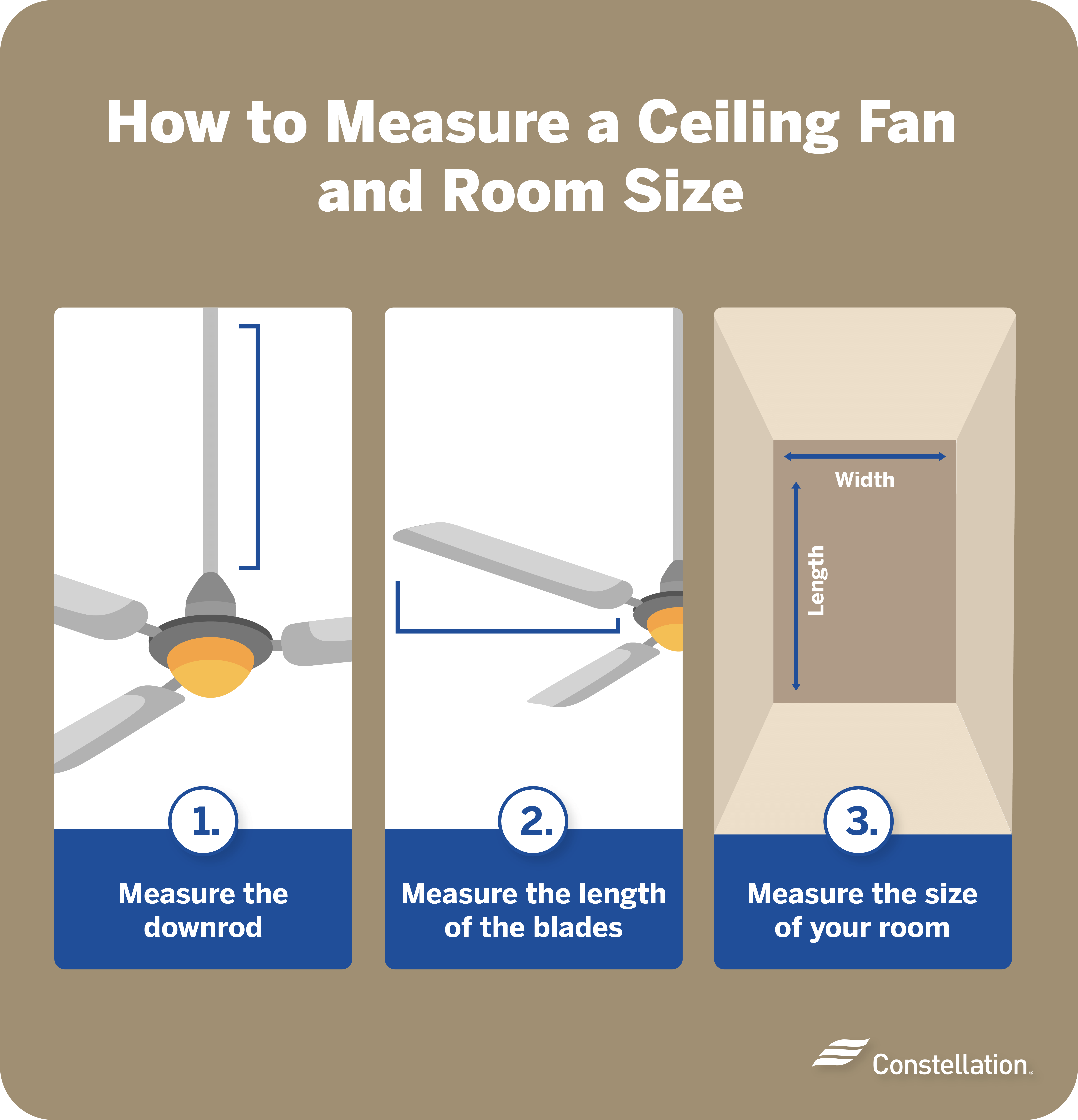
Think about the furniture in the room. Don't choose a fan so large that it dwarfs everything else. Aim for balance and harmony.
It's like accessorizing an outfit. You wouldn't wear a giant hat with a tiny dress, would you? The fan should complement the room, not overwhelm it.
Consider the style of your home. Is it modern and minimalist, or cozy and traditional? Choose a fan that fits the aesthetic.
A Victorian-style fan in a modern loft would look as out of place as a disco ball at a funeral. There are thousands of fans with various styles.
The "Ask a Professional (and Maybe Your Crazy Aunt)" Method
Feeling overwhelmed? Don't be afraid to consult an electrician or a lighting specialist. They can assess your space and recommend the perfect fan size.
They have fancy tools and years of experience. They'll do all the hard work like install the fan for you. They'll also know all the local codes and regulations.
And, of course, there's always your crazy aunt. She might not know anything about ceiling fans, but she probably has strong opinions about everything. Her input is invaluable... or at least entertaining.
Ultimately, choosing a ceiling fan is a personal decision. It's about finding the right balance of form and function. Pick the fan that makes you the happiest and most comfortable.
Just remember, it's not just a fan, it's a statement. A symbol of your commitment to cool, comfortable living. So go forth and find your perfect whirling dervish!
And if all else fails, just blame Aunt Mildred.