How To Determine How Many Solar Panels I Need
Thinking about slapping some solar panels on your roof? Awesome! It's like giving your home a little superpower – the ability to generate its own clean energy! Figuring out exactly how many panels you need might seem daunting, but trust me, it's more like a fun puzzle than a complicated equation. Let's break it down in a way that's easy to understand, no matter your level of DIY expertise.
Why bother calculating the right number? Well, for beginners, getting it right means avoiding the frustration of undersized systems that barely dent your energy bill. For families, it's about maximizing savings and potentially even becoming energy independent. And for the hobbyist, it's the satisfaction of building a truly efficient and sustainable setup. No matter your motivation, properly sizing your solar panel system ensures you get the best return on your investment and the maximum environmental impact.
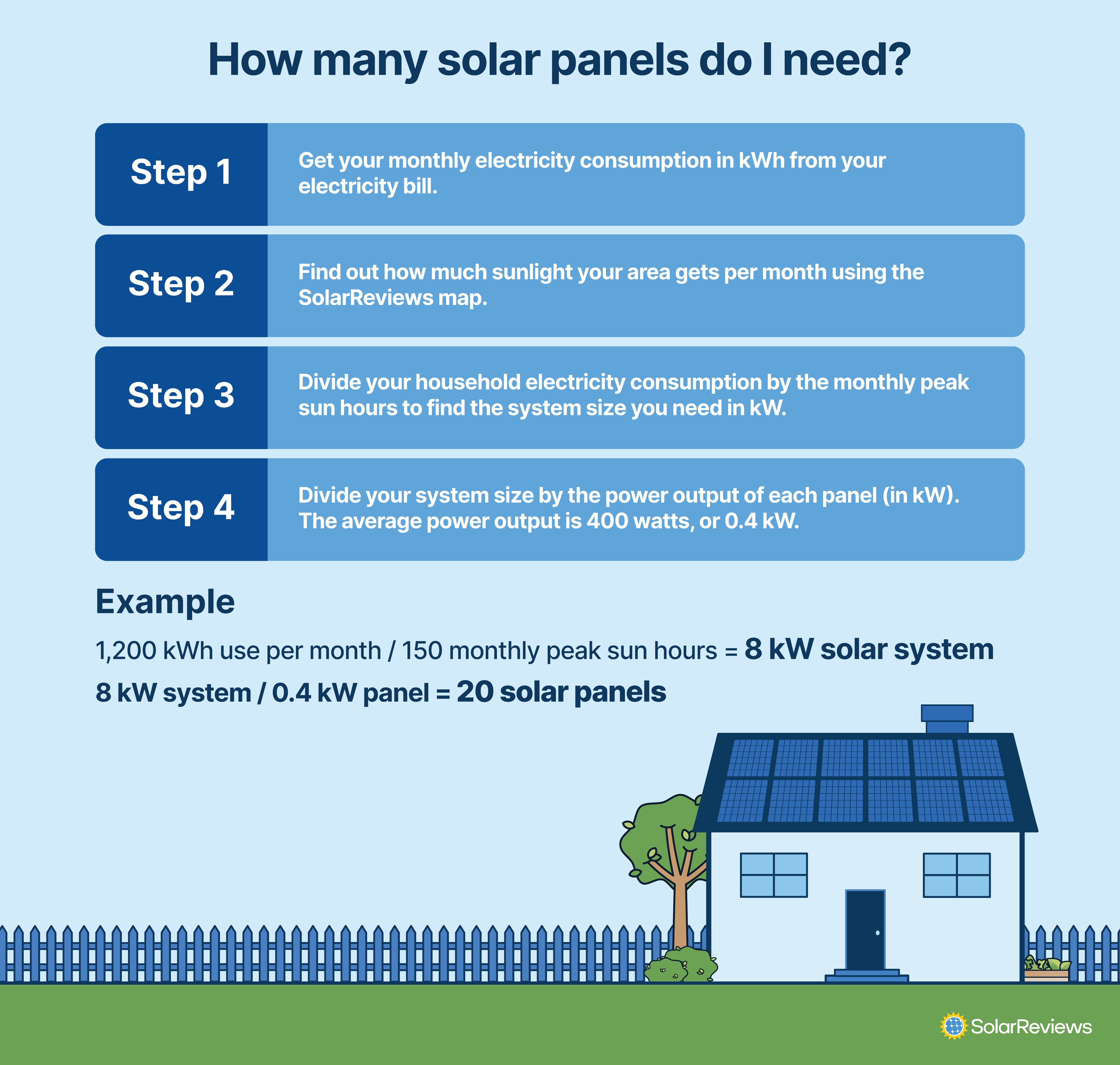
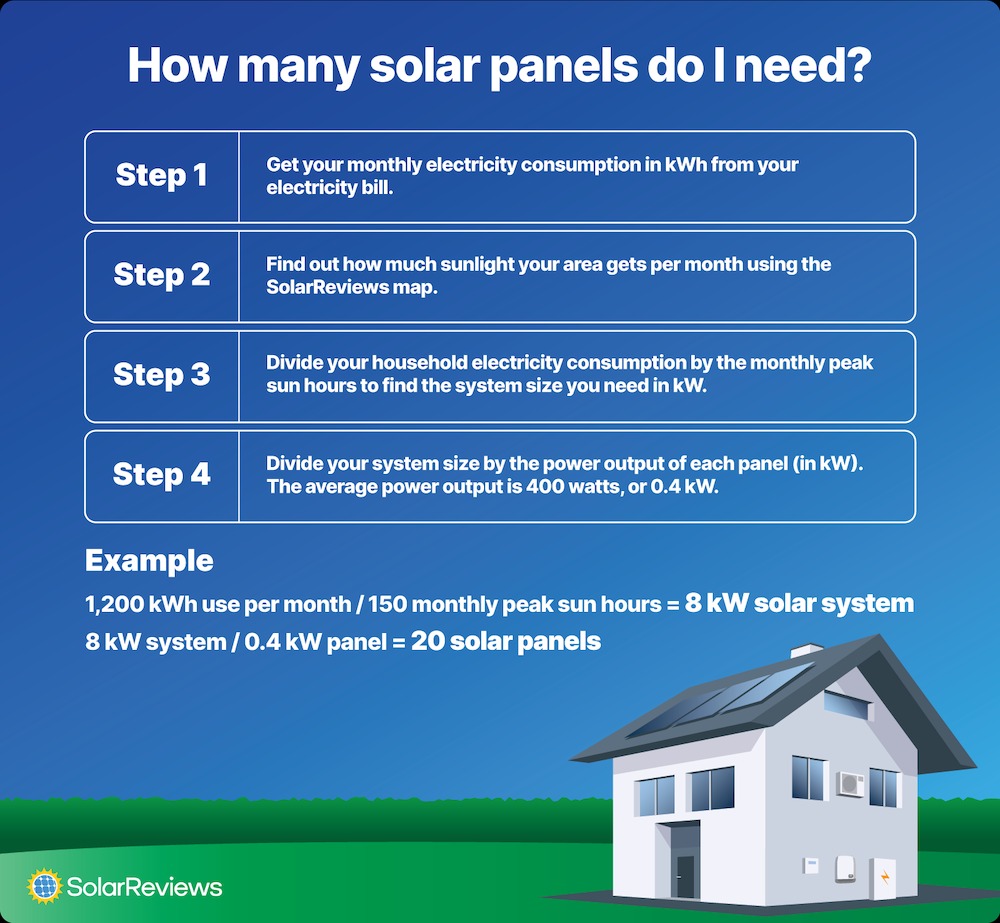
So, how do we do it? The first step is understanding your energy consumption. Take a look at your past electricity bills – most utilities provide a monthly or annual summary of kilowatt-hours (kWh) used. This is your baseline. Aim to offset a significant portion of this consumption with solar power. Remember, you don't have to cover 100%; even reducing your reliance on the grid can result in substantial savings.
Must Read
Next, consider sunlight hours. The amount of sunlight your roof receives significantly impacts solar panel output. A sunny location like Arizona will obviously generate more power than a cloudy area like Seattle. Online tools and solar installers can help you determine the average daily sun hours in your location. This is crucial for accurate calculations.

Now, let's talk about panel wattage. Solar panels come in different sizes and power ratings, typically ranging from 300 to 400 watts or more. Once you know your average daily kWh consumption and the average daily sun hours in your area, you can use a simple formula to estimate the number of panels needed. It looks something like this: (Daily kWh needed / (Sun hours x Panel wattage)) = Number of panels. Don't worry about getting the calculation perfect yourself; many online solar calculators can do this for you.
Here's an example: Let's say your household uses 15 kWh per day, and you get 5 sun hours daily in your location. Using 350-watt panels, the calculation would be: (15 kWh / (5 hours x 0.35 kW)) = Approximately 8.57 panels. You'd round up to 9 panels.

Simple tips for getting started:
- Gather your electricity bills for the past year.
- Research solar panel installers in your area and request quotes. They can often provide free consultations and sizing estimates.
- Use online solar calculators to get a rough idea of the system size you need.
- Consider the orientation and angle of your roof. South-facing roofs generally receive the most sunlight.
Installing solar panels is a fantastic way to reduce your carbon footprint, save money, and increase your home's value. While the initial calculation might seem a bit complex, it's a rewarding process that ultimately empowers you to harness the sun's energy. So, dive in, do your research, and enjoy the process of creating a cleaner, greener future for yourself and the planet. You might just surprise yourself with how much you enjoy it!