How To Determine Charge Of Transition Metals

Okay, let's talk about transition metals. You know, those guys chilling in the middle of the periodic table, often rocking vibrant colors? Figuring out their charges can seem like trying to guess what your cat actually wants at 3 AM. Is it food? Attention? World domination? It's a mystery! But don’t worry, we can crack this code together.
Think of ionic compounds as little dramas playing out. You've got a positively charged character (the cation) and a negatively charged character (the anion). They're drawn to each other like moths to a porch light, forming a bond. For simple ions, like sodium (Na+) or chloride (Cl-), the charge is pretty straightforward – they're basically drama-free actors. But transition metals? They're the method actors of the ionic world. They can have multiple personalities, meaning they can have multiple charges!
The Balancing Act: Why Charge Matters
Imagine you're building a Lego structure. If you don't have the right number and arrangement of bricks, your tower is gonna topple faster than you can say "earthquake." Ionic compounds are the same. They need to be electrically neutral – the positive charges need to balance out the negative charges. This is the key to figuring out transition metal charges.
Must Read
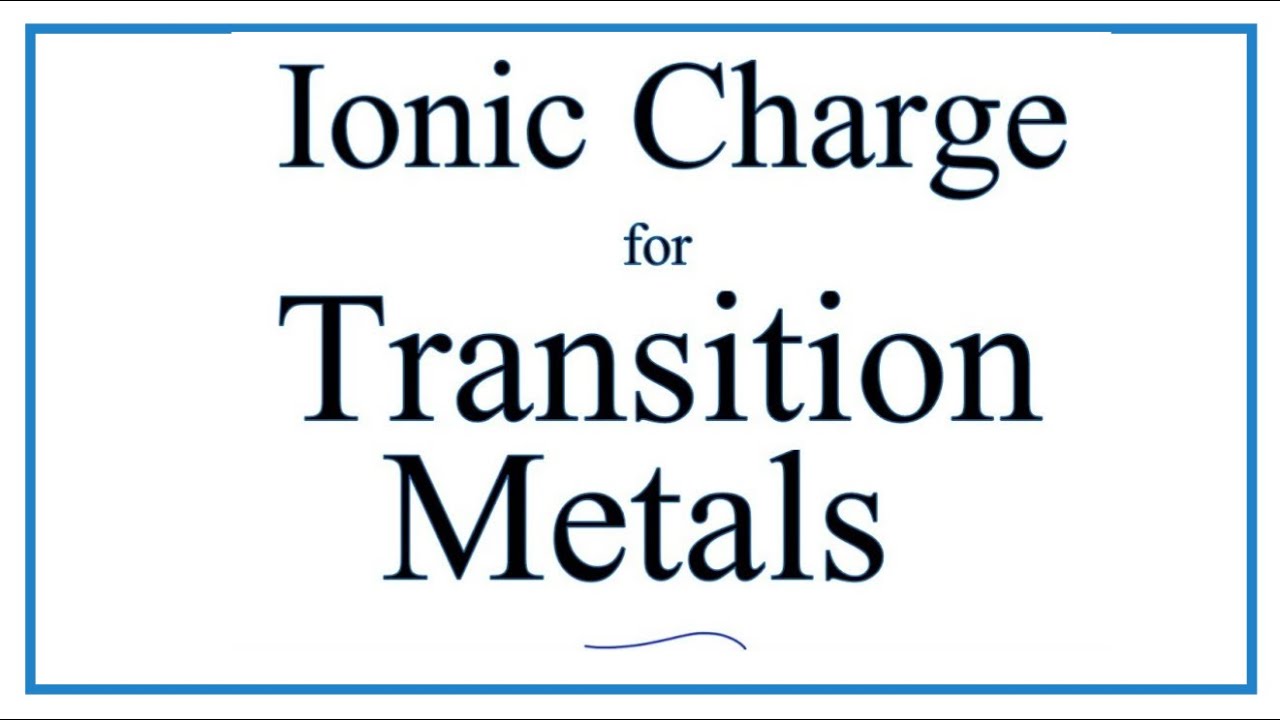
Let's say you see the formula FeCl3. This is iron chloride. We know chlorine (Cl) always has a -1 charge (it's a reliable character, always playing the same role!). And there are three of them, so that's a total negative charge of -3.
Since the whole compound needs to be neutral, that means the iron (Fe) has to have a +3 charge to cancel it out. Boom! We just figured out that in this compound, iron is rocking its +3 personality. We'd call it iron(III) chloride.
Detective Work: Using Known Anions
This "balancing act" method is your best friend. You’ll almost always have an anion (the negative ion) with a well-known charge. These are your reliable informants in this chemical detective story.
Some common anions with consistent charges include:
- Chloride (Cl-): Always -1
- Oxide (O2-): Always -2
- Sulfide (S2-): Always -2
- Nitride (N3-): Always -3
Remember these! They're like knowing the password to the speakeasy of chemistry. Once you know the anion's charge, you can deduce the transition metal's charge using the neutrality principle.

Roman Numerals: Telling the Personalities Apart
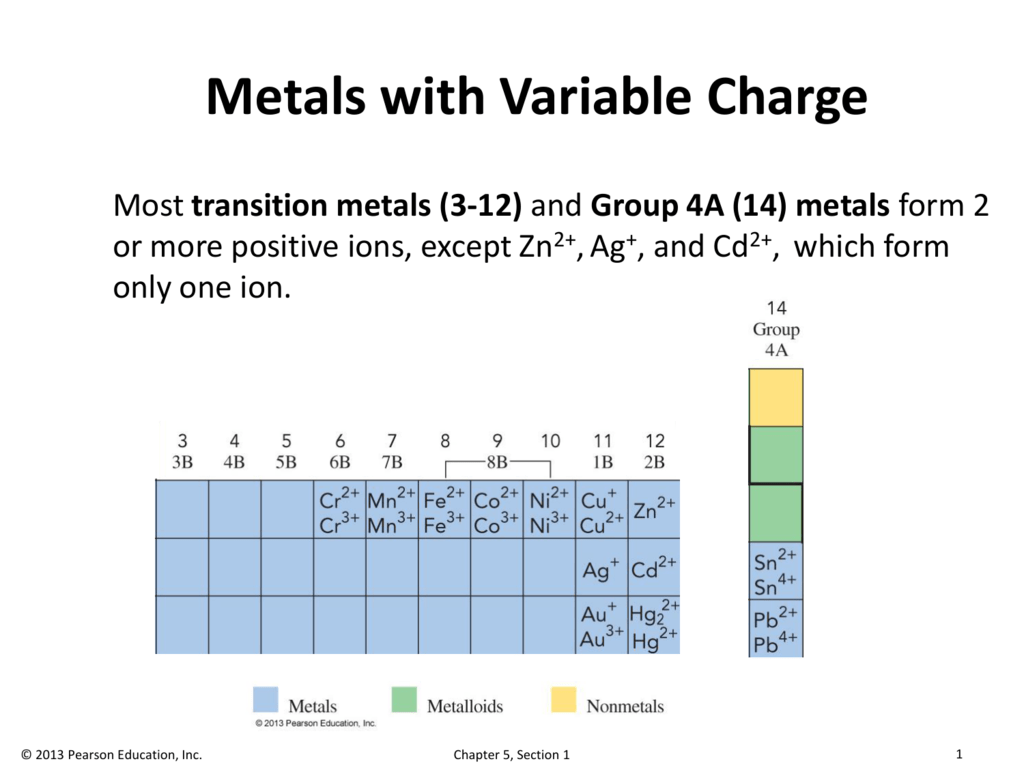
Because transition metals can have multiple charges, we use Roman numerals in the name to indicate which charge the metal is sporting in a particular compound. Like if your friend has two very distinct personas (party animal vs. study buddy), you might refer to them as "Party Persona Friend" or "Study Persona Friend" to avoid confusion.
So, if you see copper(I) oxide (Cu2O), it means the copper has a +1 charge. If you see copper(II) oxide (CuO), it means the copper has a +2 charge. The Roman numeral tells you exactly which charge the copper is using.
Practice Makes Perfect (Or at Least Less Confusing)
Let's try another one: MnO2 (manganese dioxide). Oxygen (O) has a -2 charge, and there are two of them, for a total of -4. Therefore, manganese (Mn) must have a +4 charge to balance it out. So, we call it manganese(IV) oxide.
It might seem a bit daunting at first, but with a little practice, figuring out transition metal charges becomes almost second nature. Just remember the balancing act, trust your reliable anions, and don't be afraid to use those Roman numerals. You’ve got this! Think of it as a fun puzzle, not a scary chemistry monster. And hey, if all else fails, just blame the cat. They're good at taking the heat.
So keep calm, carry on, and happy charging!