How To Check Fillet Weld Size
Ah, welds. Those magical, sparkly lines that hold our world together. From your garden gate to the mighty bridge, welds are everywhere. But have you truly looked at one? Especially a fillet weld? That's the cozy, triangular kind, snuggled into a corner. We see them, we trust them, but how do you know if they're... you know... the right size? It's a question that keeps precisely zero people up at night. Except maybe us, just for fun. And trust us, the answer is way more delightful than you think. You might even find yourself agreeing with our slightly unpopular take on this.
The Grand Mystery of Fillet Weld Size
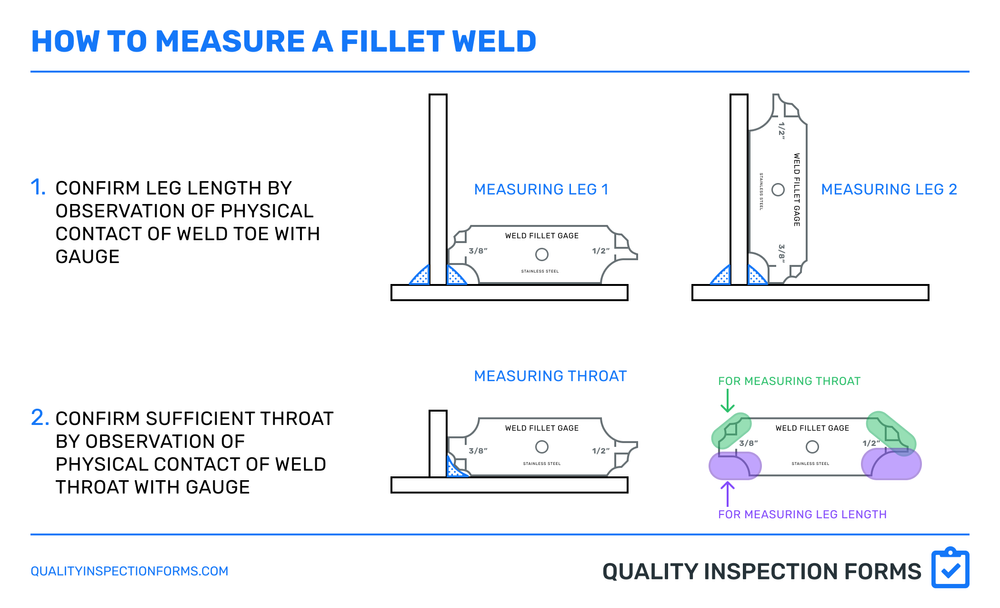
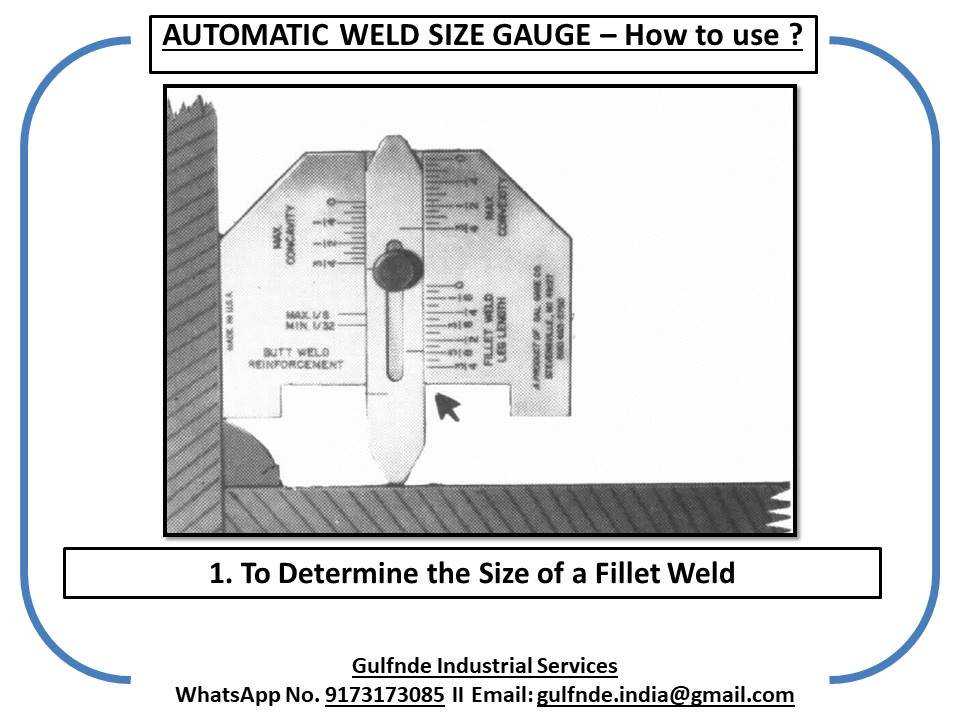
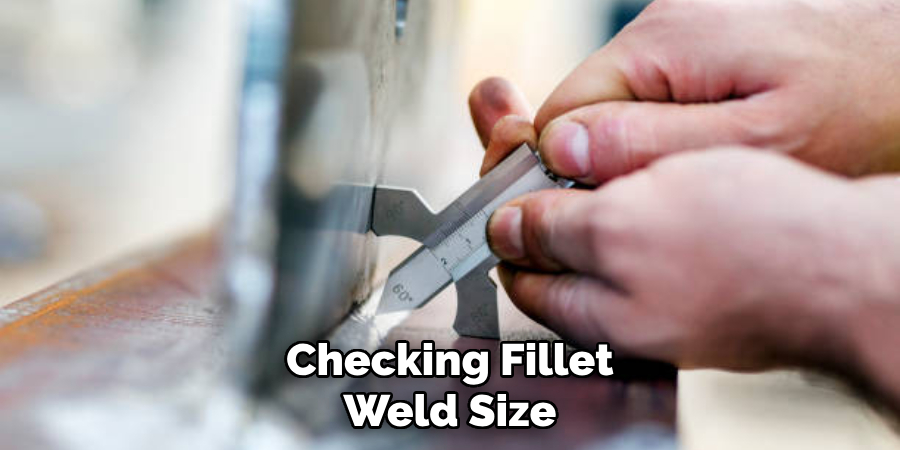
For ages, humans have pondered life's big questions. "Why are we here?" "What's for dinner?" And, of course, "Is that fillet weld chunky enough?" Okay, maybe not that last one. But engineers, bless their hearts, have devised incredibly precise ways to measure these things. They have fancy tools. Gauges with numbers and little pointy bits. They'll tell you about leg length and throat thickness. They'll talk about fractions of an inch or millimeters with a serious face. It's all very official, and frankly, a bit much for most of us. We're after real-world methods, respecting your common sense and finely tuned eyeball. Here's where our unpopular opinion shines.
The "Unpopular Opinion" Method: The Squint & Sense Test
Forget the complicated jargon for a moment. Put away your micrometers. Our primary tool for checking a fillet weld size, in the vast majority of everyday scenarios, is wonderfully simple. It's called the Squint & Sense Test. Yes, you read that right. Your eyes are far more powerful than you might imagine. When you look at a weld, does it seem... substantial? Does it look like it could hold its own in a minor wrestling match with a small badger? If it looks like a skinny line ready to snap in a breeze, it's too small. If it looks like it could anchor a small boat, it's likely fine. This isn't about being perfectly precise to three decimal places. It's about a holistic, gut feeling. And honestly, it works surprisingly well for most things that aren't launching into space.
Must Read
"If it looks strong, feels strong, and isn't falling apart, congratulations! You've successfully checked your fillet weld."
The "Comparing to a Familiar Object" Method
Let's get even more delightfully unscientific. How big should a fillet weld be? Well, it depends on what it's holding. But for a rough, mental calibration, try this: think about a common household item. Is the weld about the size of a piece of spaghetti? (Uh oh, probably too small.) Is it closer to the thickness of a typical coffee mug handle? Now we're talking! That's usually a pretty decent chunk of material. Or perhaps the width of your pinky finger? A good, sturdy pinky finger, not a delicate one. You see? No fancy tools. Just good old-fashioned comparison. Your brain is a fantastic measurement device with familiar anchors. We're just having fun with structural integrity.
The "Gentle Poke and Prod" Method (Caution Advised!)
Now, this one comes with a very important caveat: only do this if it's safe and cool! Never, ever touch a hot weld. But once it's cooled down, a gentle poke with a gloved finger (or even a safe tool like a pen cap) can tell you a lot. Does it feel solid? Does it feel like it's properly fused into both pieces of metal? Is it smooth and even, or does it have weird gaps and bumps? A well-made fillet weld should feel robust, part of the structure, not an afterthought. If it feels flimsy or crumbly, your Squint & Sense Test was spot on.

When Precision Actually Matters (Briefly!)
Okay, okay. We admit it. There are times when highly accurate measurement of fillet welds is absolutely critical. If you're constructing a skyscraper, designing a nuclear reactor, or building a roller coaster that's going to flip people upside down at high speeds, please, for the love of all that is holy, use the proper weld gauges. Consult the engineers. Follow the blueprints to the letter. But for most of us—checking a barbecue stand, a shelf bracket, or a lawnmower weld—the Squint & Sense Test (perhaps with a coffee mug handle comparison) is perfectly adequate. It's about being observant, not a certified inspector for every item. Embrace simplicity! Give your eyeballs a promotion: "Official Weld Size Inspector for Everyday Items." You've earned it.
So there you have it. The secret to checking fillet weld size. It's less about arcane knowledge and more about common sense, a good pair of eyes, and confidence in your own judgment. Go forth and observe the welds of the world! You might find yourself nodding, realizing simplest methods are often best. And perhaps our "unpopular opinion" isn't so unpopular after all. Happy weld-watching!