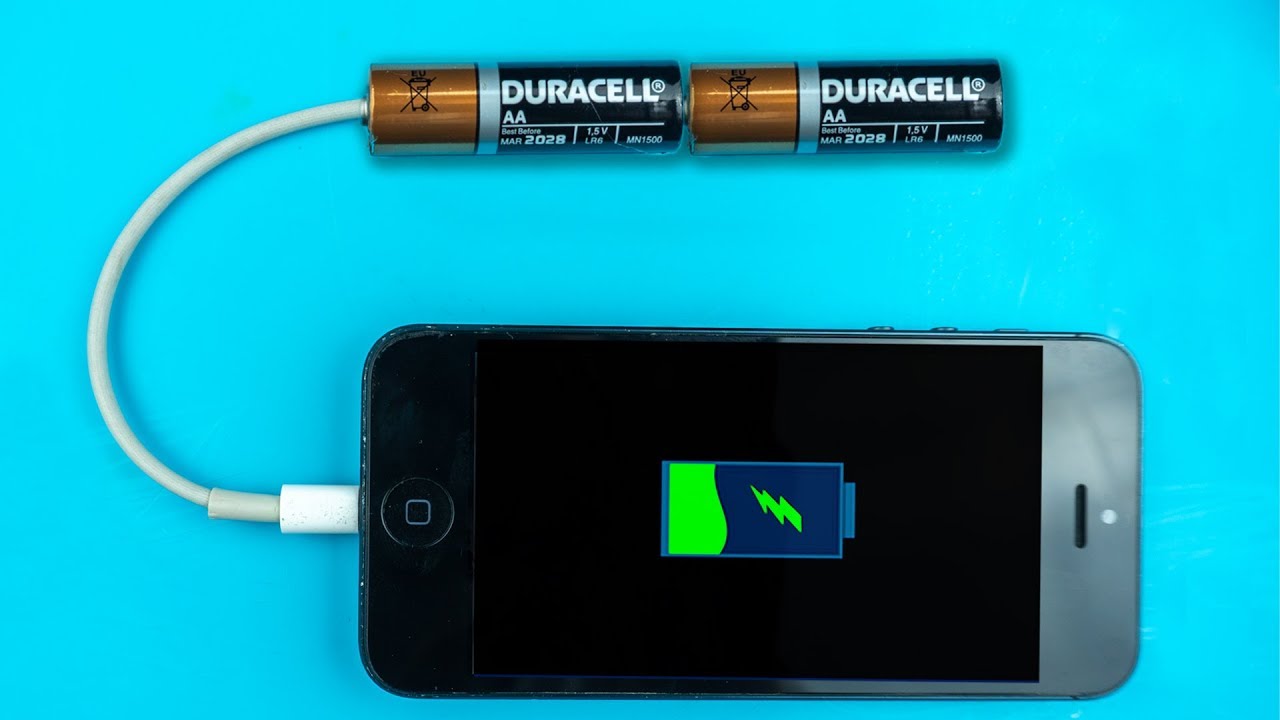
How To Charge A Cell Phone Without A Charger

Let's face it: in today's world, our cell phones are practically extensions of ourselves. We use them for everything – communication, entertainment, navigation, and even as tiny portable computers. But what happens when that dreaded "low battery" icon flashes, and your charger is nowhere in sight? Don't panic! While plugging into the wall is the most convenient method, there's a whole world of DIY phone charging techniques out there, offering a surprisingly engaging and resourceful experience. Think of it as a MacGyver moment, a chance to flex your creativity and learn a little bit about basic electronics.
This isn't just a survival skill for the forgetful; it can be incredibly beneficial for artists, hobbyists, and anyone who enjoys learning by doing. For artists, it's a fantastic way to understand the fundamentals of electricity and circuit building, which can inform their work with kinetic art or light installations. Hobbyists might see it as a stepping stone into more complex electronics projects, like building their own power banks or solar chargers. And for casual learners, it's simply a fun and practical way to gain a deeper appreciation for how technology works. Imagine the satisfaction of powering your phone with nothing but a lemon and some pennies! It's a hands-on lesson in chemistry and resourcefulness.
So, what are some examples? The classic "lemon battery" involves inserting copper and zinc (often galvanized nails) into a lemon to create a chemical reaction that generates a small electrical current. While it won't give you a full charge in minutes, it's a compelling demonstration of how electricity can be created. Another option, requiring a bit more technical skill, is building a hand-crank generator. This involves winding wire around a magnet and using mechanical energy to generate electricity. Think of the old-fashioned emergency radios that you crank to power them. You can even explore using a solar panel, even a small one, to trickle-charge your phone directly in sunlight. Variations involve using multiple lemons in series to increase voltage, or experimenting with different types of metal and electrolytes to see how the current output changes.
Must Read
Ready to try this at home? Here are a few tips. First, safety first! Never work with household electricity outlets unless you're extremely experienced and knowledgeable. The lemon battery and hand-crank generators are safer options for beginners. Second, remember that these DIY charging methods are generally for emergency situations or for experimentation. They're not designed to be as efficient or fast as a standard wall charger. Third, do your research. Plenty of tutorials and videos are available online to guide you through the process. Fourth, gather your materials. For the lemon battery, you'll need lemons, copper wire or pennies (cleaned), galvanized nails, and alligator clips. For a hand-crank generator, you'll need wire, magnets, a crank handle, and a diode. Finally, be patient! It may take some trial and error to get things working.
Ultimately, charging your phone without a charger isn't just about getting your battery back up; it's about the process of discovery. It's about the satisfaction of solving a problem using your ingenuity and resourcefulness. It's about understanding the science behind the technology we often take for granted. And, let's be honest, it's just plain fun to feel like a tech wizard for a day. So, the next time you're caught without a charger, don't despair. See it as an opportunity to unleash your inner inventor and embark on a little electronic adventure!