
How To Calculate Watt Hours Of An Appliance
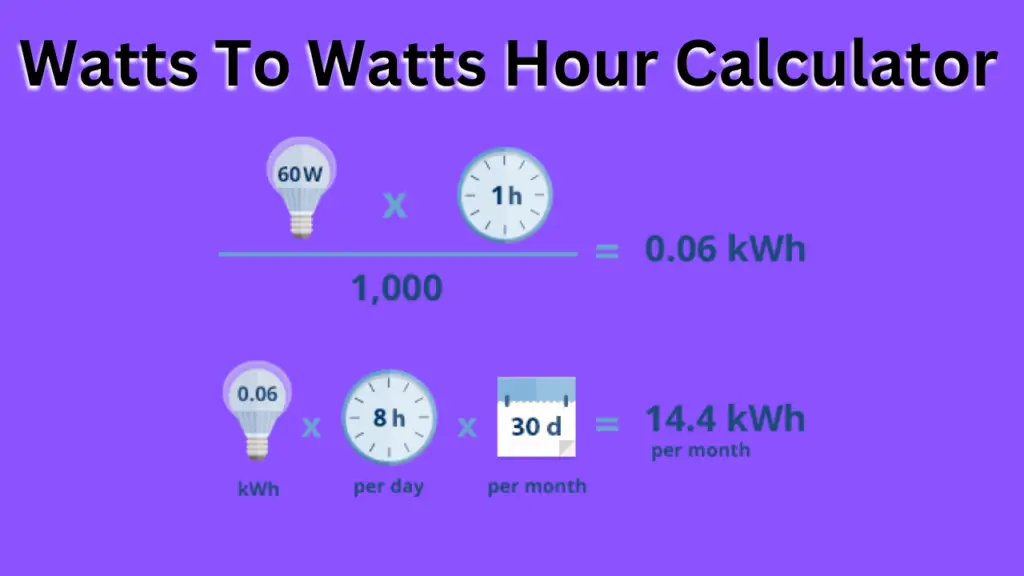
Alright folks, gather 'round! Ever felt like your electricity bill is some kind of mysterious beast, gobbling up your hard-earned cash with a sinister grin? Well, fear not! Today, we're going to tame that beast, or at least understand its appetite, by learning how to calculate the Watt Hours of your appliances. It's easier than you think, I promise! No need for a PhD in electrical engineering here – just some basic math skills (we're talking elementary school level) and a dash of curiosity.
The Watt's Up with Watts?
First things first, let's talk about watts. Think of watts as the "energy appetite" of an appliance at any given moment. A ravenous refrigerator? It'll have a higher wattage! A dainty little phone charger? Not so much. This information is usually plastered somewhere on the appliance itself, often on a sticker or plate near the plug or on the back. Look for a "W" or the word "watts". Sometimes it's cleverly hidden, like it's playing hide-and-seek with you! But don't worry, you'll find it eventually. Manufacturers LOVE to brag about how energy-efficient their gadgets are...or quietly hope you won't notice they're not!
Finding the Wattage (The Great Appliance Hunt!)
Okay, let's say you're on a mission. The mission: find the wattage of your favorite blender. Scour the bottom, the sides, the power cord, the manual – anywhere! If you're still drawing a blank, a quick Google search with the model number will usually do the trick. Type in something like "Ninja Blender Model ABC123 wattage" and BAM! Information overload! You're practically an electrical detective now.
Must Read
But what if, gasp, the wattage is nowhere to be found? Don't despair! Sometimes, the appliance only lists its Volts (V) and Amps (A). Not a problem! We can still crack this code! Just use this super-secret (not really) formula:
Watts = Volts x Amps
Let's say your vintage toaster oven proudly displays "120V" and "5A". Multiply those together: 120 x 5 = 600 watts! Ta-da! You've unearthed the toaster's energy secret. Now, let's move on to the real magic...
Watt Hours: Your Appliance's Energy Diet
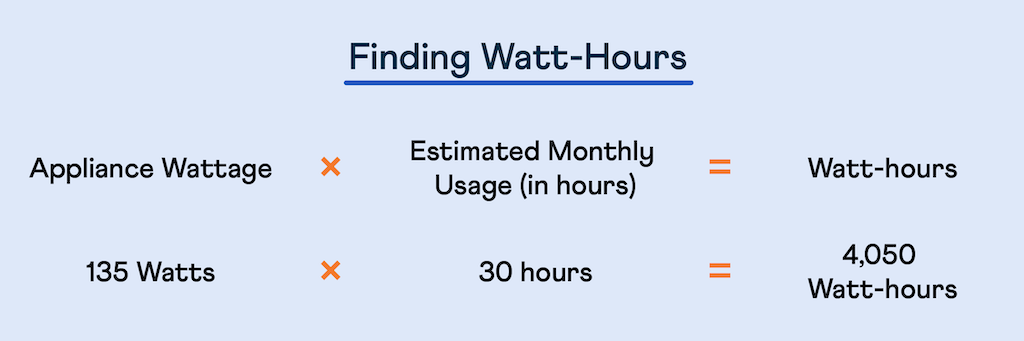
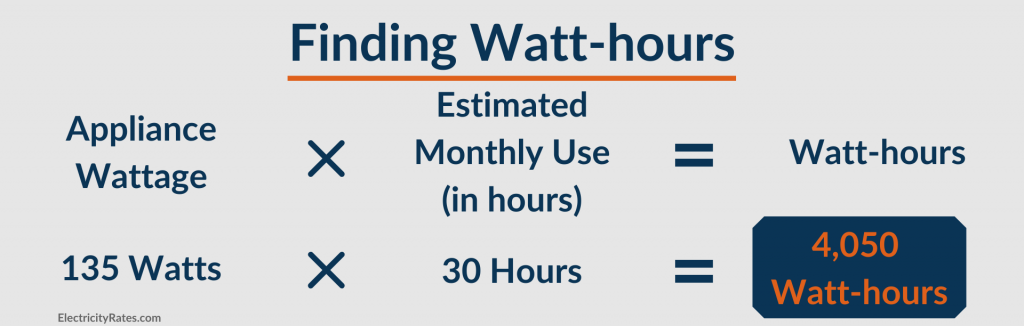
Now that we know the appliance's wattage, let's calculate those Watt Hours (Wh). Watt Hours tell you how much energy an appliance uses in one hour. This is the key to understanding your electricity bill and knowing which energy vampires are sucking the life out of your wallet. The formula is ridiculously simple:
Watt Hours = Watts x Hours
Let's say your 600-watt toaster oven is working overtime, toasting bread for a whole hour. That's 600 watts x 1 hour = 600 Watt Hours. Easy peasy!

Kilowatt Hours: The Big Picture
But wait! Electricity companies usually charge you by the Kilowatt Hour (kWh), which is just 1000 Watt Hours. So, to convert Watt Hours to Kilowatt Hours, divide by 1000.
Kilowatt Hours = Watt Hours / 1000
Our toaster oven example: 600 Watt Hours / 1000 = 0.6 kWh. So, running that toaster for an hour costs you the same as using 0.6kWh. Now, just multiply that by the cost of electricity per kWh, (which is on your bill, look for something like $0.15/kWh) and you can see how much each usage costs!
Putting it All Together: A Real-Life Example (The Hair Dryer Saga!)
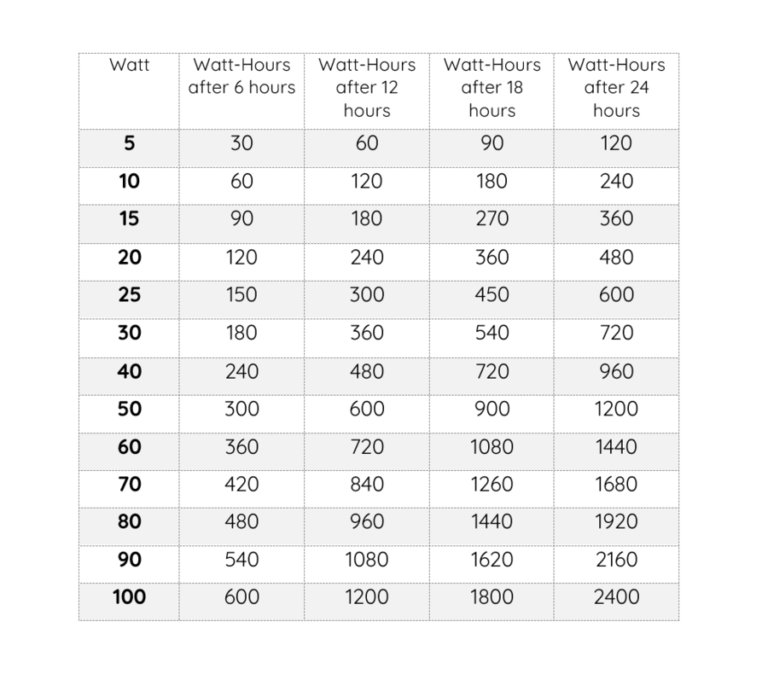
Let's imagine your hairdryer is a power-hungry beast, rated at 1800 watts. You use it for 15 minutes every morning to achieve that perfect, windswept look (because let's face it, bedhead isn't always chic). First, convert those minutes to hours: 15 minutes / 60 minutes per hour = 0.25 hours.
Now, calculate the Watt Hours: 1800 watts x 0.25 hours = 450 Watt Hours.
Convert to Kilowatt Hours: 450 Watt Hours / 1000 = 0.45 kWh.
See? Not so scary, right? Now you can estimate how much that gorgeous hairdo is costing you each month! Just multiply that daily usage by the number of days in the month and your electricity rate, and you will know!
Go Forth and Conquer!
Armed with this newfound knowledge, you can now embark on a thrilling adventure of energy auditing! Calculate the Watt Hours (and Kilowatt Hours) of all your appliances, uncover those hidden energy hogs, and take control of your electricity bill! Who knows, you might even discover that your vintage lava lamp is the true culprit behind your high energy costs. Happy calculating!