
How To Calculate The Gas Bill

Ah, the gas bill. That monthly missive. It arrives in your mailbox, often nestled between junk mail and more cheerful solicitations.
You open it. You brace yourself. It’s not just a simple request for money, is it? Oh no. It's a cryptic scroll, a text demanding a PhD in advanced energy economics just to comprehend it fully.
The Great Gas Bill Mystery: A Modern Quest
Many of us, brave souls that we are, have attempted to calculate our gas bill from scratch. We grab our trusty calculators, furrow our brows, and bravely stare down columns of bewildering numbers.
Must Read
The quest begins with a hopeful heart. We seek to understand the very fabric of our utility charges. It feels like a noble pursuit, doesn't it?
We believe if we just crunch the numbers, the secret formula will reveal itself. But alas, it’s rarely that simple. The gas bill often laughs in the face of our simplistic arithmetic.
Step 1: The Elusive Unit of Measurement
The first hurdle: your gas usage isn't in easy units. Forget apples or oranges. Instead, you might see something wonderfully ambiguous like Therms. Or perhaps the equally mysterious CCF, for one hundred cubic feet.
What exactly is a Therm, you might ask? Is it a small, fuzzy creature? A unit of warmth? The technical answer is a measure of heat energy. But quantifying it remains profoundly confusing for most.
Converting raw volume of natural gas into these magical Therms involves a special conversion factor. This factor isn't static, either. Oh no. It often changes month by month, based on the gas's specific energy content.
"Trying to calculate gas usage is like attempting to measure the exact 'sparkle' in a diamond. You know it's there, but precise quantification is for specialists."
Suddenly, you're not just paying for gas; you're paying for its enthusiasm to burn. This fluctuating factor is a major roadblock to any amateur gas bill calculation.
Step 2: The Mystical Rates and the Layers of Charges
Once you’ve wrestled with the concept of an ever-changing energy unit, prepare for the rates. There isn’t just one flat rate, of course. That would be far too simple, far too ordinary.
You’ll likely encounter different prices for different portions of your usage. This is typically known as a tiered rate structure. Use a little gas, pay one price. Use a lot, and you might slip into a higher, often elevated, price for those extra units.
Then, the charges are neatly compartmentalized. First, your supply charge. This is the cost for the actual gas you consumed, the raw commodity itself.
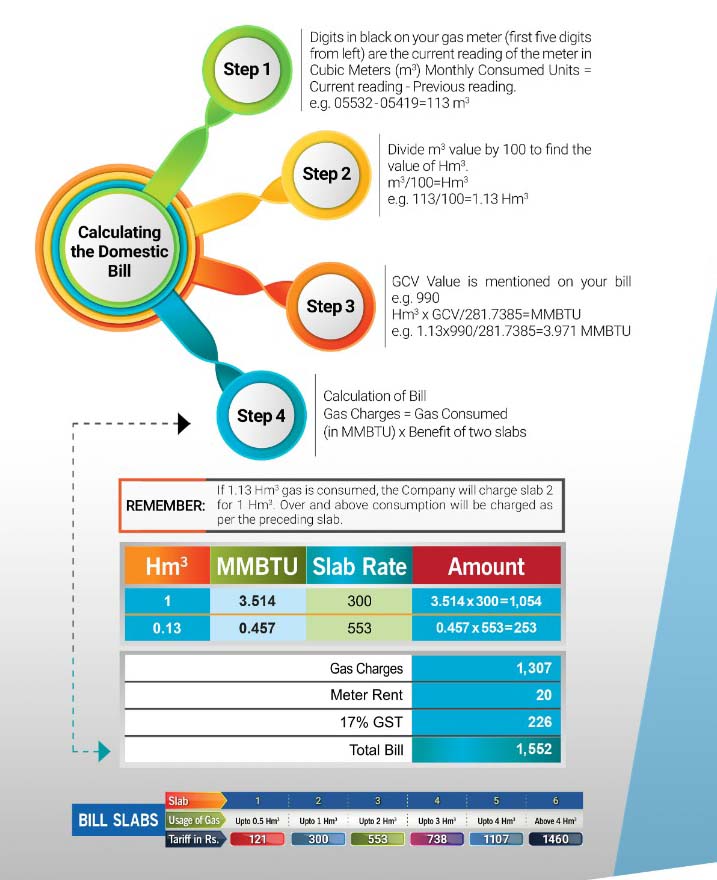
But wait, there's more! You also have a separate delivery charge, sometimes called a transportation charge. This pays for the entire network of pipes and the teams who ensure gas reaches your cozy home safely.
It's a bit like paying for your favorite pizza, and then paying a completely separate fee for the car that brought it. Both are essential, but distinct on the bill.
Many companies also include a fixed monthly customer charge. This isn't based on your usage at all. It's simply for the privilege of being connected to the gas grid. Think of it as a standing cover charge for your home's heating.
These distinct categories prevent a simple "total units multiplied by one rate" calculation. Each section has its own rules and pricing schema.
Step 3: The Interrogating Taxes, Regulatory Fees, and Other Mysterious Add-Ons
Just when you think you’ve finally got a firm grip, along come the taxes. And the fees. Oh, the seemingly endless parade of fees!
You might spot environmental fees, designed to fund initiatives. Then there are regulatory fees, supporting oversight commissions. And don't forget franchise fees, often paid to the local municipality.
Each one is a tiny little extra percentage or a fixed amount. They accumulate, like sprinkles on an already intricately designed sundae. Individually small, but cumulatively, they nudge the total higher.
These aren't arbitrary numbers; they often fund important community services. However, trying to track each one down and factor it into your grand, manual calculation? That's a quest for the truly brave, or perhaps, the blissfully bored.
"Your gas bill is not just a bill; it's a micro-economy unto itself, complete with its own tariffs, taxes, and treaties."
The sheer number of line items, each with its own tiny numerical contribution, makes a comprehensive personal recalculation an almost Herculean task.

Step 4: The Riddle of the Meter Reading – Actual vs. Estimated
Another delightful variable: was your meter actually read this month? Or was your usage simply estimated?
An estimated reading means the gas company took an educated guess. This guess is usually based on your historical usage. Sometimes they're spot on, sometimes they're… well, optimistic about your energy use.
If you receive an estimated bill, the next month's actual reading will adjust for any discrepancies. If they overestimated, you'll get a credit. If they underestimated, you'll owe a bit more. It's a delicate dance of approximation, adding monthly suspense.
This estimation factor can cause monthly totals to fluctuate, further muddling any attempts at precise self-calculation.
The Unpopular Opinion: You Probably Can't (And Don't Need To)
Here’s the unpopular opinion, a quiet whisper many of us harbor: trying to perfectly recalculate your gas bill from scratch is often an exercise in delightful futility. It’s a noble effort, but rarely a fruitful one.
The precise conversion factors, the exact minor rate changes, the multitude of tiny fees, the intricate nuances – they are all precisely calculated by powerful, complex computer systems. Systems that probably reside in climate-controlled server rooms, giggling at our attempts.
Your gas company employs entire departments of skilled professionals and sophisticated software just to get these numbers right. And usually, they do. They have algorithms and spreadsheets that would make a regular human's head spin like a top.
So, our "unpopular" take? You don't need to perfectly replicate their work. You don't need to become a gas bill savant, mastering every decimal point and tariff code.
Instead, embrace the glorious mystery! View it as a monthly puzzle, meticulously solved by professionals. Your paramount job is to understand your usage, not necessarily to replicate the precise calculus that leads to the final number.
It’s okay to acknowledge that some things are best left to the experts. Your peace of mind is worth more than trying to prove a gas company wrong by a fraction of a cent.
What You Can Do: Become a Savvy Usage Detective
While mastering the gas bill's algebraic equations might be a fool's errand, becoming a savvy usage detective is incredibly empowering. This is where your true power lies: focusing on what you can actually control.
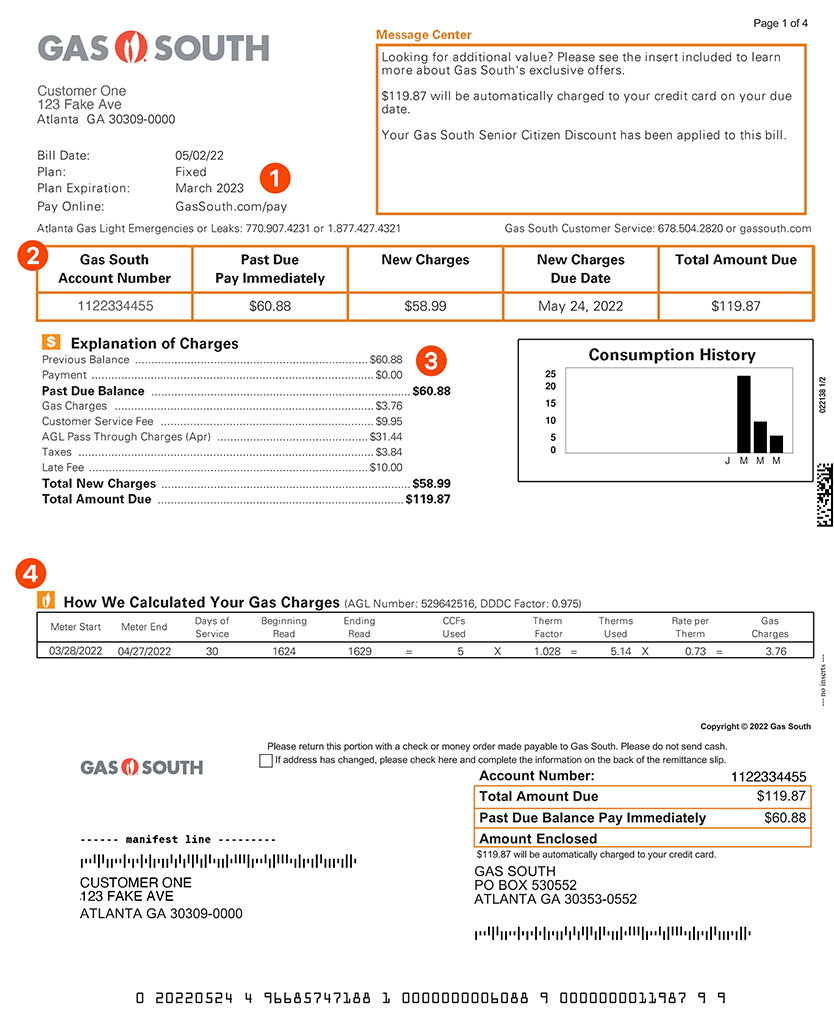
Look intently at the "usage" part of your bill. This is your actual consumption. Is it significantly higher than last month? Or notably higher than last year at this time? This is the real key to understanding your costs.
A sudden, unexplained jump in usage? That's your cue to investigate! Did you leave a window ajar? Was the furnace working overtime? Perhaps you started a new, energy-intensive hobby?
Always compare your current bill to previous ones. Most utility websites offer excellent historical usage data. This crucial comparison lets you spot trends and anomalies with remarkable ease, without needing complex math.
Look for the visual aids. Almost all modern gas bills feature a handy graph or chart. This visual representation of your usage over time is often the most insightful part of the entire document.
"Don't get bogged down in the how they calculate; focus instead on how much gas you're actually using, and why."
Understanding your usage patterns allows you to identify wasteful habits or potential issues with appliances. This is far more practical than trying to recalculate every penny.
Playful Tips for a Happier, Lower Gas Bill
Since cracking the utility company's code might be an insurmountable mountain, let's pivot to softening the financial blow. Here are some playful, practical ways to make your gas bill less intimidating.
Befriend your thermostat: During colder months, try lowering your thermostat just a degree or two. You might barely notice the difference, but your wallet will give you a silent, appreciative nod.
Become a draft ninja: Think of your house as a giant, cozy sieve. All those little cracks? They're letting expensive warmth escape. Weatherstripping and caulk are your stealthy best friends. They'll trap heat inside.
Shorten those serenades (showers): A quick, invigorating shower not only saves gas but also helps you build character and punctuality. Hum a power ballad, but keep it brief!
Embrace stylish layers: Wear a cozy sweater, comfy socks, or even a warm hat indoors. It's a fashion statement, it’s practical, and it makes you look like you have your life together. Triple win!
Give your furnace a spa day: A happy furnace is an efficient furnace. Get it checked and tuned up annually by a professional. Regular maintenance ensures it runs optimally, burning gas efficiently.
Mind your cooking: Use lids on pots to trap heat. Minimize opening the oven door unnecessarily. Every peek lets out a blast of hot, expensive air. Consider smaller appliances for smaller meals.
The End of the Calculation Quest: A New Beginning
So, after all this playful exploration, how do you truly calculate your gas bill? The wonderfully unpopular, yet undeniably practical, truth is this: you often don't. You read it. You understand your usage. And crucially, you influence your future bills through smart, mindful energy habits.
Let the utility company’s powerful computers and dedicated departments handle the mind-bending math. Your empowered role is to be a smart consumer, a vigilant usage monitor, and perhaps, a master of cozy indoor sweaters.
The gas bill, in all its complex glory, remains a glorious enigma. But now, at least, you can smile knowingly at its complexities. You're in on the secret: it's not truly meant for you to calculate every last decimal, but rather to inspire you to conserve and be aware.
Go forth and conquer your energy consumption, dear reader, not the arcane arithmetic! Your peace of mind and your wallet will thank you for this delightful shift in perspective.