
How To Calculate Cubic Feet Refrigerators

Alright, let's talk refrigerators! Specifically, let's talk about something that sounds incredibly dull but is actually a secret superpower: calculating cubic feet. I know, I know, your eyes might be glazing over already. But hear me out! This isn't just about numbers; it's about empowerment, about making smart decisions, and honestly, about adding a little bit of unexpected fun to your adulting toolkit. Who knew a fridge could spark joy, right?
Think about it: have you ever stood in a gleaming appliance store, staring at a majestic, stainless steel behemoth, wondering, "Will this actually fit in my kitchen?" Or maybe, "Is 25 cubic feet enough for my family's mountain of leftovers and bulk groceries?" These are the questions that keep us up at night... okay, maybe just me. But the point is, knowing how to calculate cubic feet gives you the answers, puts you in control, and frankly, makes you look like a total genius. No more guessing games!
Why Does Cubic Feet Even Matter?
It’s simple: a refrigerator is a significant investment, both in terms of cost and the space it occupies in your home. Too small, and you're playing Jenga with your groceries. Too big, and it swallows up your kitchen, making it feel cramped and awkward. Plus, if it doesn't fit through the door or into the designated alcove, you're looking at a logistical nightmare that nobody wants. Trust me on this one.
Must Read
Understanding cubic feet means you can:
- Find the Perfect Fit: Both for your kitchen space and your family's actual storage needs.
- Optimize Storage: Maximize every inch without feeling overwhelmed.
- Be a Savvy Shopper: Compare models intelligently, knowing exactly what you’re getting for your money.
- Impress Your Friends: Imagine casually dropping some knowledge bombs about fridge volume at your next dinner party. You'll be the hero!
The Not-So-Scary Math: Your Superpower Formula!
Ready for the big secret? It’s not calculus, it’s not rocket science. It’s high school geometry, and it’s gloriously simple. To find the cubic feet of anything that’s roughly rectangular (like, you know, a refrigerator!), you just need three measurements:
Length × Width × Height = Volume in Cubic Feet

That’s it! The trick, however, is making sure all your measurements are in feet. Most measuring tapes give you inches, right? Don't sweat it; converting is super easy.
Your Step-by-Step Guide to Fridge Mastery:
Step 1: Grab Your Measuring Tape and a Pen!
Go on, I'll wait. This is hands-on! If you’re measuring an existing fridge to understand its size, or the space where a new one will go, precision is key.
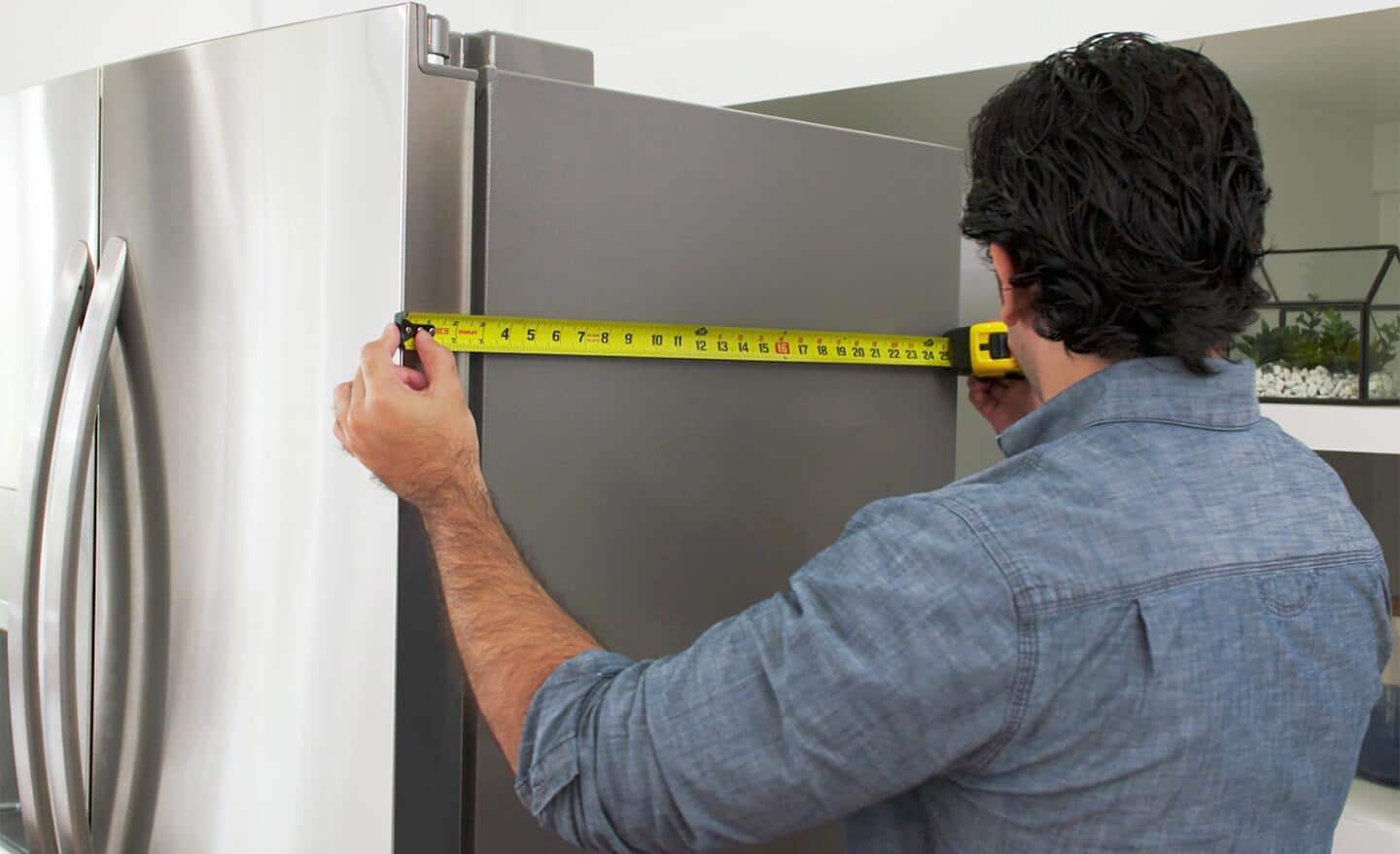
Step 2: Measure the Dimensions (in Inches)
For calculating the space your refrigerator will occupy, measure its exterior width, depth (how far it sticks out from the wall), and height.
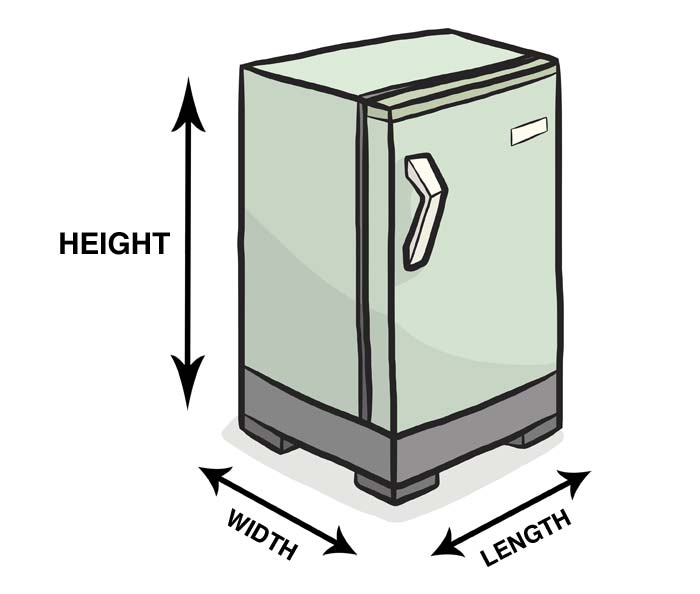
- Width: Measure across the front of the fridge. Let's say it's 36 inches.
- Depth: Measure from the very front (including handles, if applicable) to the back. Let's say it's 32 inches.
- Height: Measure from the floor to the very top. Let's say it's 70 inches.
Got your numbers? Excellent!
Step 3: Convert Inches to Feet
There are 12 inches in a foot. So, to convert any inch measurement to feet, you just divide by 12.
- Width: 36 inches ÷ 12 = 3 feet
- Depth: 32 inches ÷ 12 = 2.67 feet (approximately)
- Height: 70 inches ÷ 12 = 5.83 feet (approximately)
See? Not so bad, right? A calculator is your friend here for those decimal points!
Step 4: Multiply for Cubic Feet!
Now for the grand finale! Multiply your three measurements in feet together:
3 feet (Width) × 2.67 feet (Depth) × 5.83 feet (Height) = Approximately 46.75 Cubic Feet
So, a refrigerator with those external dimensions would occupy roughly 46.75 cubic feet of space in your kitchen. This is incredibly useful for planning placement!

Now, for the internal storage capacity of a refrigerator, manufacturers measure the usable space inside, which accounts for shelves, drawers, and internal mechanisms. While you could measure the inside and do a similar calculation, the number they provide is often more refined for actual usable space. But understanding this basic calculation means you grasp the fundamental concept behind those "20 cubic feet" or "25 cubic feet" figures you see on spec sheets. You're no longer just looking at a number; you understand what it means!
Be the Master of Your Domain!
Isn't that empowering? You just decoded a common appliance specification and gained a practical skill! From now on, when you're fridge shopping, you won't just be looking at color and features; you'll be calculating, comparing, and confidently making the best choice for your home. You'll avoid buying a fridge that's too big for your doorway or too small for your party platters.
This little calculation isn't just about refrigerators, either. It's about understanding volume in general. It's a stepping stone to understanding how to measure for moving boxes, how much soil you need for a garden bed, or even the capacity of a swimming pool!
Life is full of these small, seemingly intimidating challenges that, once broken down, reveal themselves to be simple and incredibly useful. So go on, measure something else in your home! Learn a new skill! Embrace that curious spark! You've just discovered how easy it is to become a little more knowledgeable, a little more capable, and a lot more in control of your world. What else are you ready to conquer?