
How To Calculate Amps From Voltage And Watts
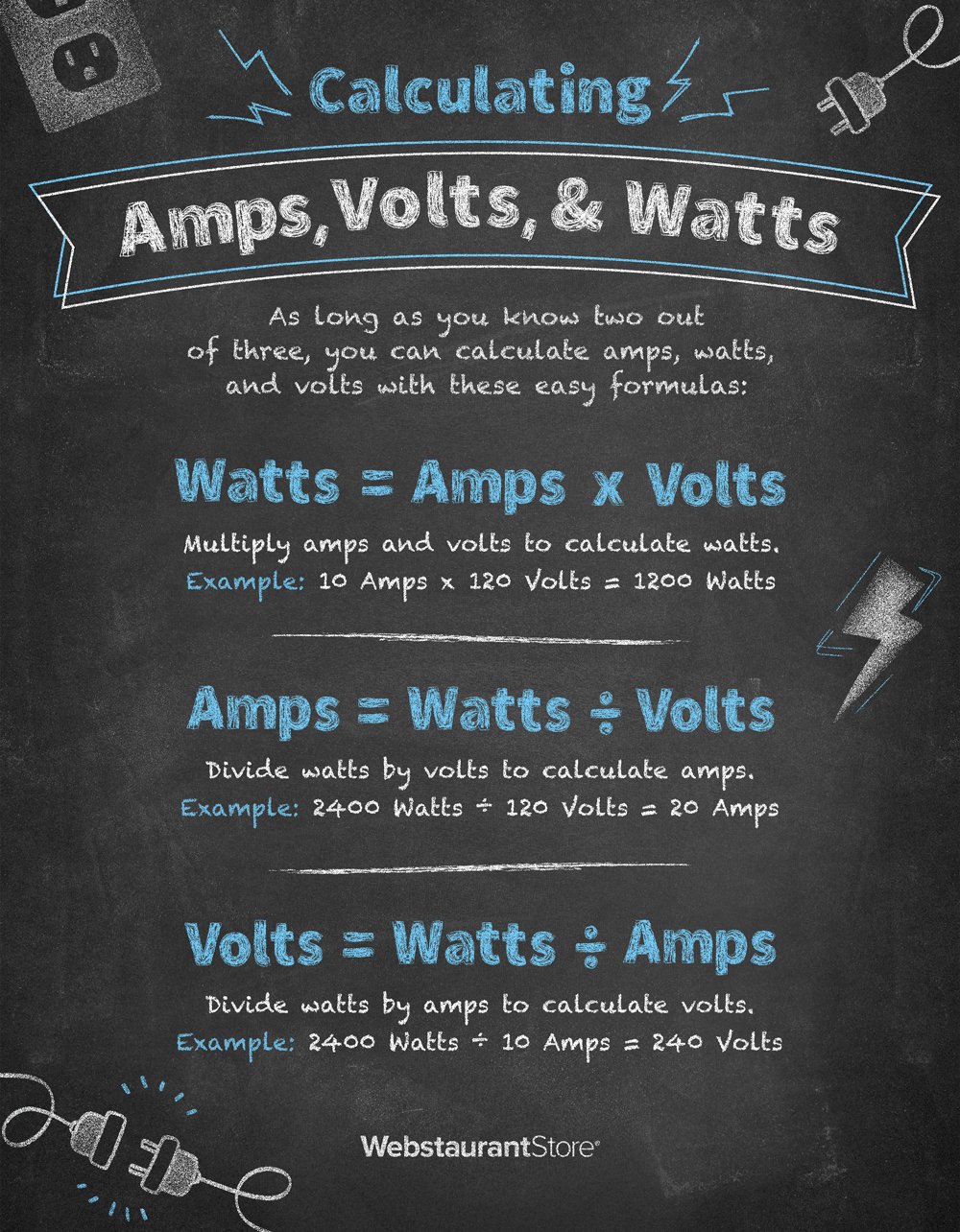
Ever wondered about the mysterious dance between volts, watts, and amps? It's not as scary as it sounds, promise! Think of it like a quirky trio in an electricity band. They all play a vital part in keeping the lights on and your gadgets humming. Let's decode this electric harmony, shall we?
The Watt's Up? Understanding the Basics
First, the watt (W). It measures power. Think of it as the total energy being used. It’s like how much gas your car guzzles down the highway. A higher wattage means more energy consumed. Simple, right?
Next up, voltage (V). Voltage is electrical potential. It’s the force pushing the electrons through the wires. Imagine it like water pressure in a pipe.
Must Read
And finally, our star of the show: amps (A). Amps measure current. This is the rate of flow of those electrons. Picture it as the amount of water flowing through the pipe.
The Magic Formula: Watts = Volts x Amps
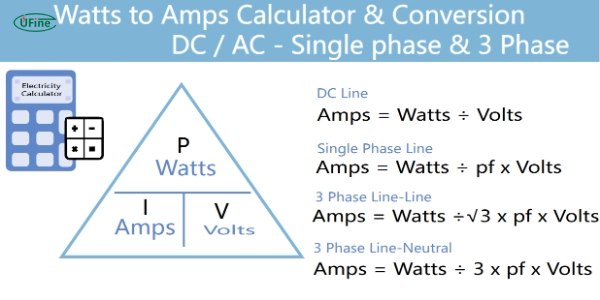
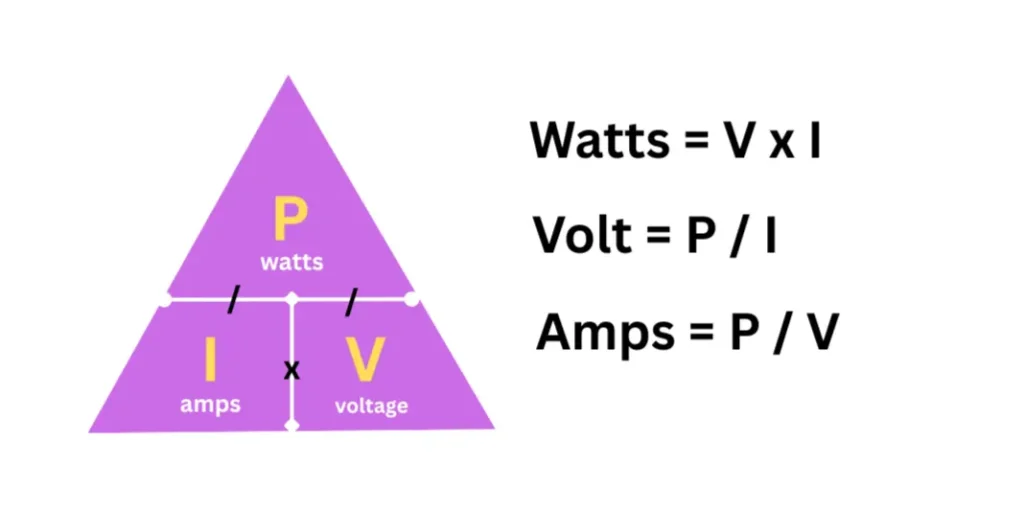
Ready for some electrifying math? It's just one tiny formula: Watts (W) = Volts (V) x Amps (A). BOOM! That’s it! This is the key to unlocking the amp calculation universe. Memorize it. Tattoo it. Okay, maybe don’t tattoo it. But definitely remember it!
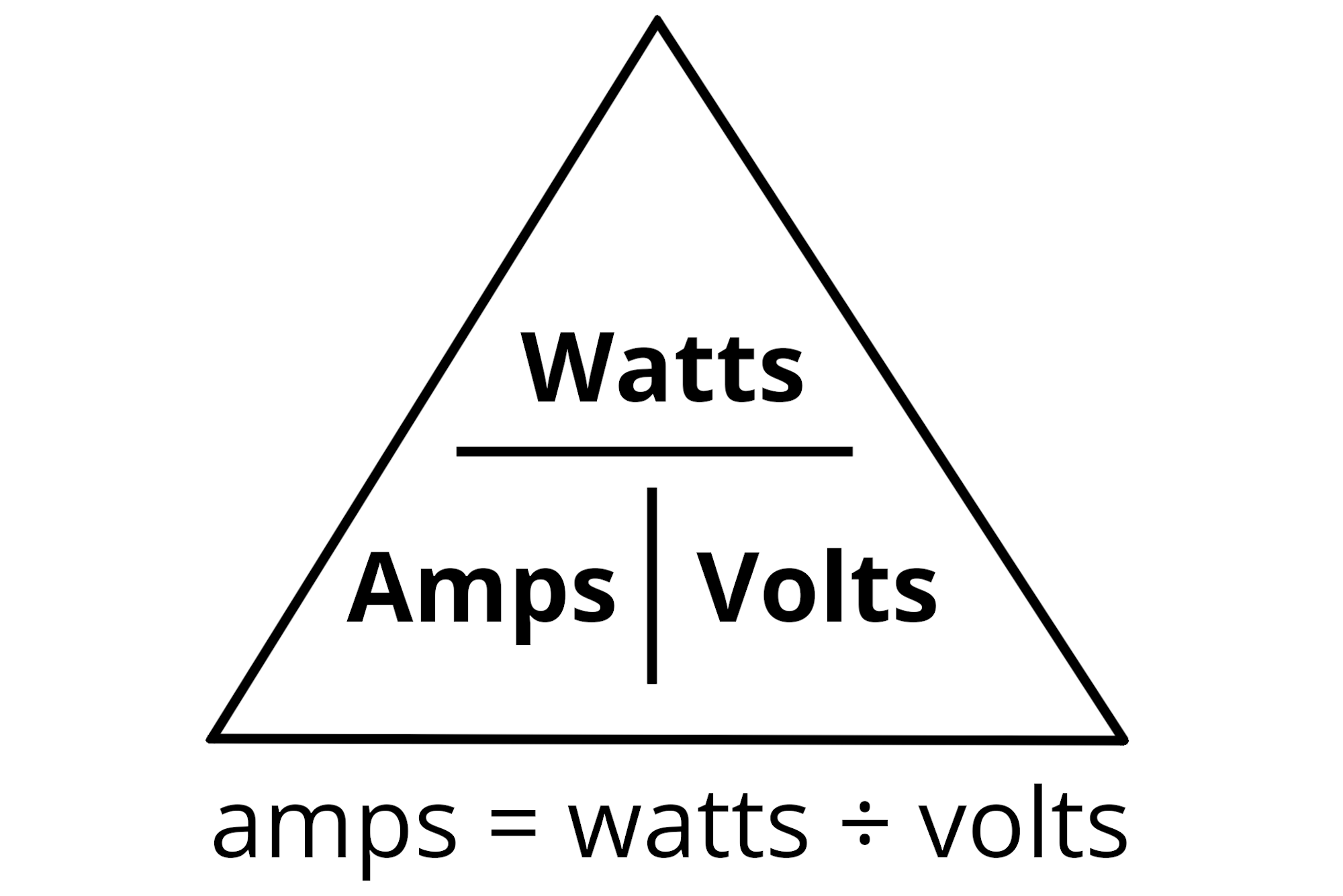
Want to find amps? Just rearrange the formula! It becomes: Amps (A) = Watts (W) / Volts (V). See? Easy peasy lemon squeezy! It's like solving a tiny electric riddle.
Let's Get Practical: Real-World Examples
Okay, enough theory. Let's see this in action. Say you have a light bulb rated at 60 watts. Your wall outlet provides 120 volts. How many amps does that light bulb draw?
Apply the formula: Amps = Watts / Volts. So, Amps = 60 / 120 = 0.5 amps. Voila! Your light bulb needs half an amp to shine brightly. Celebrate with a little dance.
Another example: A space heater says it's 1500 watts. Still using that 120-volt outlet, how many amps are we talking?

Amps = 1500 / 120 = 12.5 amps. Now, that's a power-hungry heater! Make sure your circuit can handle it before you plug it in. We don’t want any tripped breakers or, worse, electrical fires! Safety first, friends.
Why Should You Care About Amps, Anyway?
Great question! Knowing amps is super useful. You can avoid overloading circuits. Ever plug in too many things and suddenly everything goes dark? That's a tripped breaker caused by exceeding the amp limit of the circuit.
Understanding amps also helps you choose the right extension cords. Using a wimpy extension cord with a high-amp device can be a fire hazard. Seriously, don't skimp on safety! It's not worth it.
Plus, it's just plain cool to understand how things work. You can impress your friends at parties. Imagine casually dropping, "Oh, that blender? It probably draws around 8 amps." You'll be the life of the party (maybe!).
Amps and Breakers: A Dynamic Duo
Your circuit breaker is your electrical guardian angel. It's designed to protect your wiring from overheating. Each breaker has an amp rating (usually 15 or 20 amps in a typical home circuit).
If you plug in too many devices that collectively draw more amps than the breaker's rating, the breaker will trip. It's like a safety valve. Think of it as the breaker yelling, "Whoa! Too much! I'm shutting things down!"
Overloading circuits is a serious fire hazard. Respect the amp limits. A little knowledge goes a long way in preventing electrical disasters.
A Quirky Fact About Amps
Did you know that the unit "ampere" is named after André-Marie Ampère? He was a brilliant French physicist and mathematician who basically laid the foundation for electromagnetism. So, next time you calculate amps, give a little nod to André. He deserves it!
Final Thoughts: Embrace the Electric Knowledge!
Calculating amps from voltage and watts isn't rocket science. It's a simple formula that empowers you to understand your electrical system better. Use this knowledge wisely. Stay safe. And go forth and conquer the world of electricity! Now go impress everyone with your newfound electric prowess.
Remember, when in doubt, consult a qualified electrician. Electricity is cool, but it demands respect! Happy calculating!