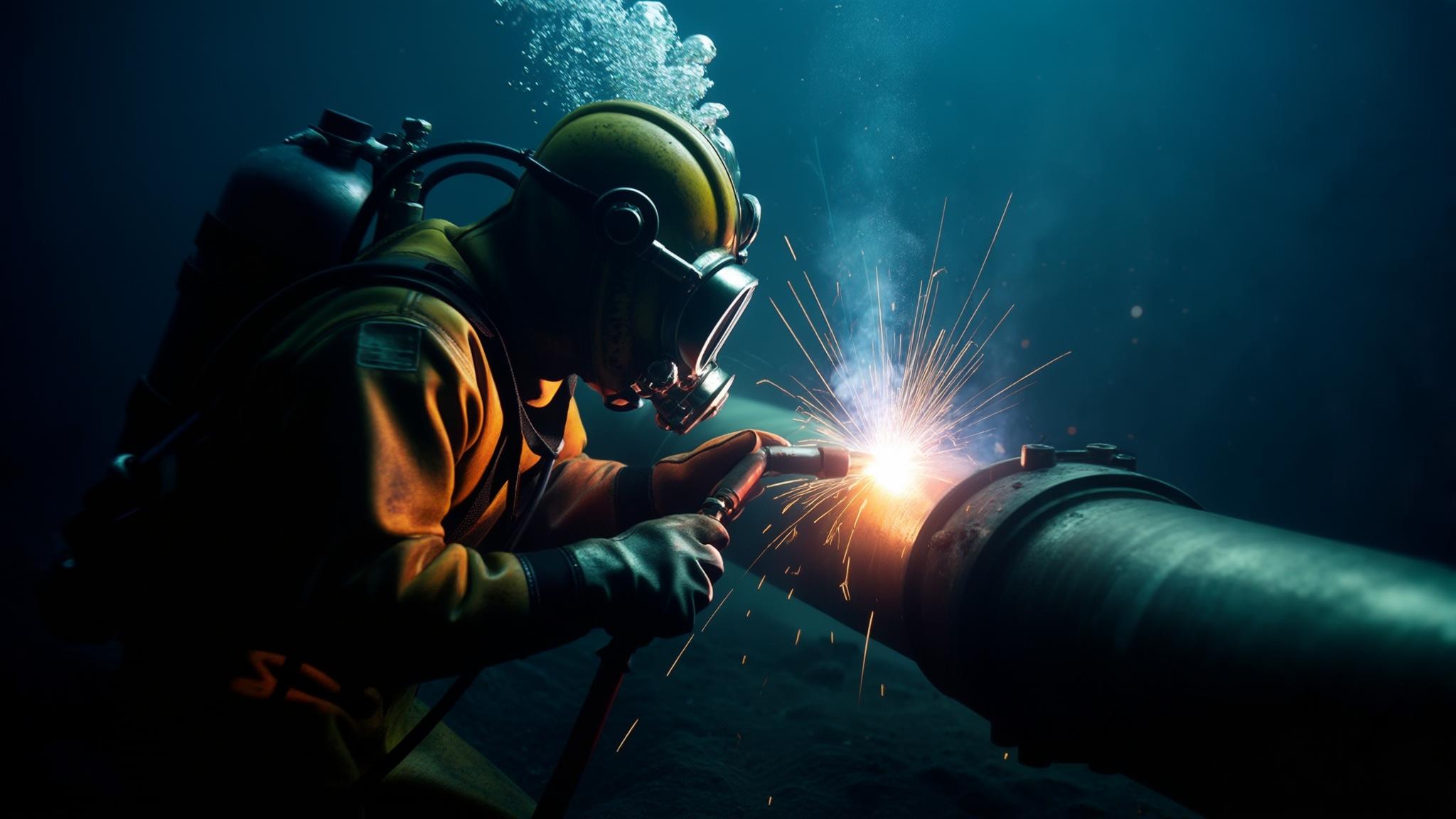
How To Become A Deep Sea Welder

Ever stared at your leaky kitchen faucet, hopelessly turning a wrench, and thought, "Man, I wish I could fix this... underwater?" Okay, maybe not that exact thought. But if the idea of combining the precision of a surgeon, the daring of an astronaut, and the grit of a construction worker, all while battling the ocean's chill, makes your ears perk up, then pull up a chair. We're talking about becoming a deep-sea welder – the ultimate underwater DIY hero.
So, What Exactly Is a Deep-Sea Welder?
Imagine your average welder, sparking away in a workshop. Now, take that image, add a scuba tank, a wetsuit, and a whole lot of water pressure. Boom! You've got an underwater welder. These folks are the unsung heroes who repair oil rigs, pipelines, ships, and all sorts of critical infrastructure that decides to have a tantrum hundreds of feet below the surface. They're basically the ocean's mechanics, but instead of dealing with greasy engines, they're dealing with... well, fish. And a whole lot of darkness.
It’s Not Just About Holding Your Breath (Though That Helps!)
If your idea of a deep dive is finding the last chip at the bottom of the bag, you might need a little more training. Becoming a deep-sea welder isn't just about being good at swimming or even just good at welding. It's like trying to bake a gourmet cake while simultaneously solving a Rubik's Cube and reciting the alphabet backward. It requires a unique blend of skills that would make your high school gym teacher proud and your shop teacher beam.
Must Read
First Up: Be a Welding Whisperer
You can't just slap two pieces of metal together and call it a day. Underwater welding is an art form. We're talking about precision work that needs to withstand immense pressure and the corrosive power of saltwater. So, you need to be an expert welder on dry land first. Think of it like learning to drive a car perfectly before attempting to parallel park a monster truck in a hurricane. You need to master various techniques, materials, and positions. Your welds need to be flawless, because a leak deep underwater is a lot more serious than a leaky garden hose.
Next: Embrace Your Inner Merman (or Mermaid)
This isn't your casual weekend snorkel trip. You'll need commercial diving certifications. This means learning everything from basic scuba to saturation diving, where you live in a pressurized environment for days or weeks. You'll become intimately familiar with decompression tables, breathing mixtures, and the kind of gear that makes a regular wetsuit look like pajamas. It's about being able to work calmly and effectively when the only sounds are your own breathing and the occasional curious dolphin.

Then: The Brains Behind the Brawn
It’s not just about muscles and dexterity. Deep-sea welding demands a sharp mind. You're often working in zero visibility, relying on touch and communication with your surface team. Problem-solving skills are paramount. Imagine trying to fix a delicate circuit board with mittens on, in the dark, while a barracuda eyeballs your toolkit. You'll need to troubleshoot equipment, understand blueprints, and make critical decisions under pressure – literally.
How Do You Get There? It's Not a Hobby, It's a Calling.
You won't find "Underwater Welding 101" at your local community college. This path requires specialized training at accredited commercial diving schools. These programs are intense, combining classroom theory with countless hours in the water, perfecting both your diving and welding skills. It's like boot camp, but with more bubbles and less shouting (usually). You'll gain the necessary certifications and build a foundational understanding of hyperbaric physics, safety protocols, and the unique challenges of the underwater world.

The Deep-End Dive: What’s Life Like?
It's definitely not a 9-to-5 desk job. You could be deployed to an oil rig in the middle of nowhere, working long shifts in challenging conditions. The hours are tough, the locations are remote, and your "office" is often cold, dark, and full of things with fins. But the camaraderie with your dive team is legendary, and the pay can be pretty spectacular once you gain experience. Plus, you get some killer bragging rights at parties. "What did you do today?" "Oh, I just fixed a gigantic crack in a pipeline 300 feet below the waves, while a giant squid watched." No biggie.
It's a job for the adventurous, the meticulous, and the incredibly resilient. If you’re ready to trade your office chair for a dive helmet and your keyboard for a welding torch, and you don’t mind a few fish as your coworkers, then perhaps the deep blue sea is calling your name. Just remember to pack your sense of humor; you're gonna need it when you're trying to signal "pass the wrench" while battling a strong current.