How Strong Is The Average Crystalline Lens

Ever stopped to think about the superhero hiding in plain sight, right behind your iris? We’re talking about your crystalline lens, the unsung hero of your vision! It's easy to take for granted, but this tiny structure works tirelessly to keep the world in focus. So, how strong is this lens, really? Understanding its power is not just fascinating; it's key to appreciating and protecting your eyesight. Let's dive in!
What's the Purpose, Anyway?
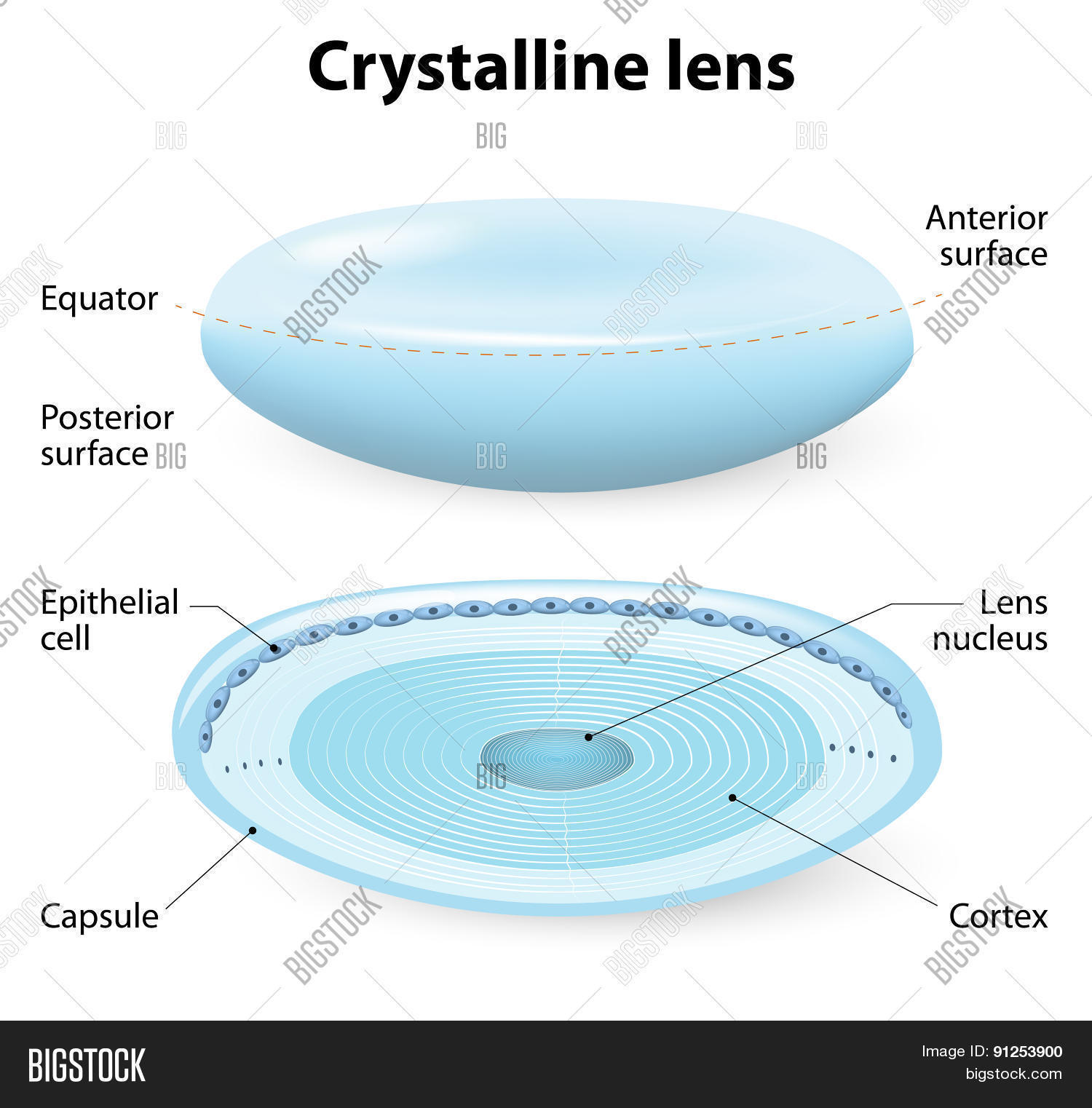
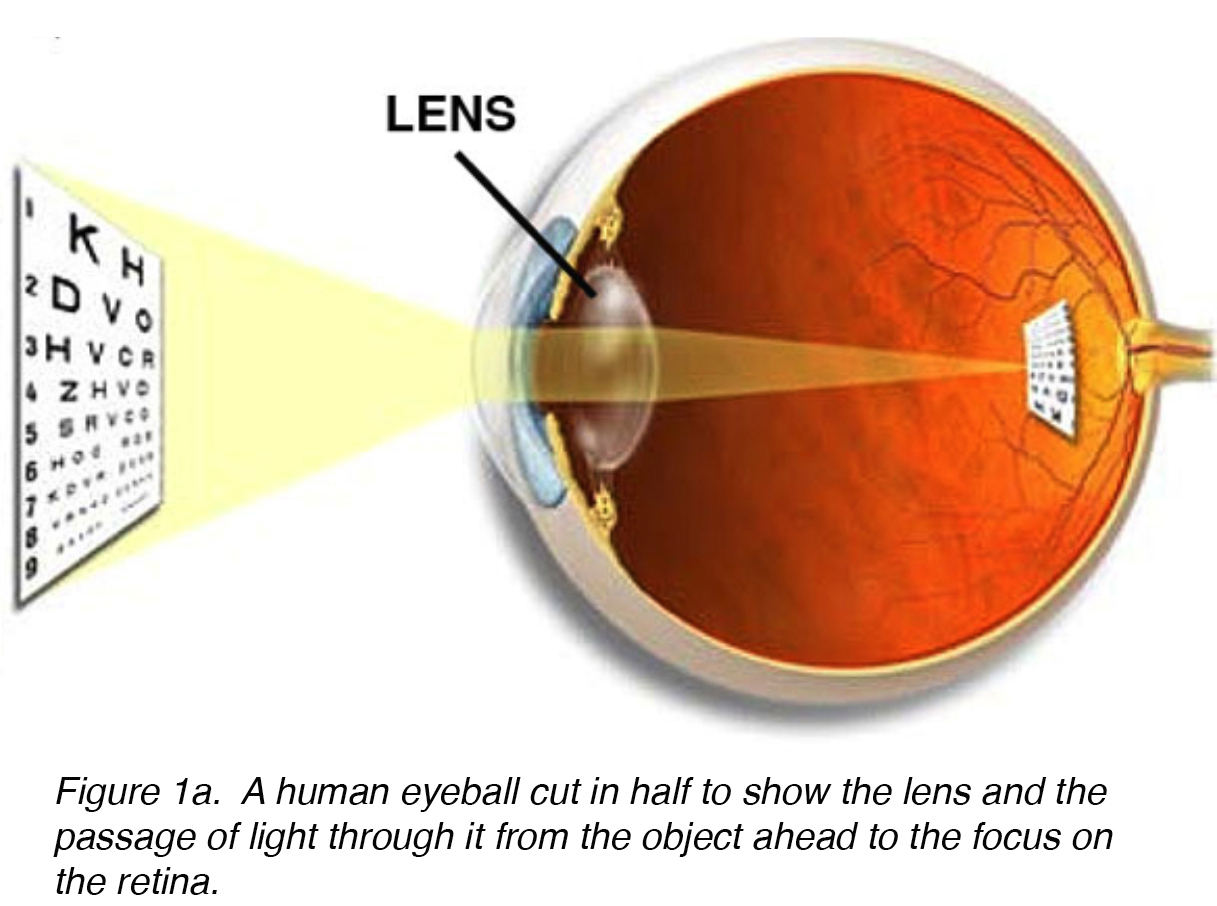
The crystalline lens is your eye's personal zoom lens. Think of it like the focusing ring on a camera. Its primary job is to bend light rays so they land perfectly on your retina, the light-sensitive tissue at the back of your eye. This bending, or refraction, allows you to see objects clearly, whether they're up close or far away. Without a healthy, functional lens, the world would be a blurry mess!
Must Read
The Superpower of Accommodation
The lens's true strength lies in its ability to change shape. This process is called accommodation. When you look at something close, tiny muscles around the lens contract, making it thicker and more curved to increase its focusing power. When you look at something far away, these muscles relax, flattening the lens. This dynamic adjustment allows you to effortlessly switch between focusing on your phone and looking at a distant mountain. It's an incredibly precise and rapid adaptation that we perform constantly, often without even realizing it.

So, How "Strong" Is It? A Diopter Deep Dive
Instead of measuring its strength in pounds or kilograms, we measure the lens's focusing power in diopters. A diopter is a unit of measurement that indicates the refractive, or light-bending, power of a lens. A typical young adult lens can accommodate around 15-20 diopters. That's a significant amount of focusing power! This allows young eyes to focus on objects as close as a few inches away. As we age, the lens loses its elasticity, making it harder to change shape. This is why many people develop presbyopia, or age-related farsightedness, and need reading glasses. Their lens simply can't accommodate as powerfully as it once did.
Protecting Your Lens: Maintaining its "Strength"
While we can't physically bench-press our crystalline lens to make it stronger, we can take steps to protect its health and preserve its focusing ability. Regular eye exams are crucial for detecting any problems early. A healthy diet rich in antioxidants, along with protection from excessive UV exposure (wear those sunglasses!), can also contribute to long-term lens health. Avoiding smoking is another important factor, as smoking can accelerate the aging process of the lens.
In conclusion, the crystalline lens is a remarkable and powerful structure that deserves our appreciation and care. By understanding its purpose and taking steps to protect its health, we can keep our world in sharp focus for years to come!