
How Solar Energy Is Converted Into Electricity
Hey there, future solar superstar! Ever wondered how those shiny solar panels on rooftops magically turn sunlight into the electricity that powers your Netflix binges? It’s actually pretty cool, and I promise, it's way less complicated than quantum physics (thank goodness!). Let's dive in!
The Sun: Our Gigantic, Friendly Fusion Reactor
First things first, we need the star of the show: the Sun! This massive ball of hot gas is constantly blasting energy out into space, and a tiny fraction of it reaches us here on Earth. Think of it as the Sun showering us with endless good vibes (and photons, which are basically tiny packets of light energy!).
Now, you might be thinking, "Okay, sunshine, got it. But how does that become electricity?" Patience, my friend! We're getting there. Think of it like making lemonade. You have lemons (sunlight), and we need to squeeze the juice (convert it) into something useful (electricity).
Must Read
Enter the Solar Panel: The Magic Box
This is where the solar panel, also known as a photovoltaic (PV) panel, comes into play. “Photovoltaic” sounds super sci-fi, right? It just means “light-electricity.” These panels are made up of many smaller units called solar cells. Think of them like tiny energy collectors, all working together like a well-oiled, sunlight-powered machine.
These solar cells are primarily made of silicon, a semiconductor material. Don't worry, no need to remember that for trivia night. Just know that silicon is the key ingredient! It's like the flour in a cake. You can't have cake without flour!
The Photon Shuffle: A Light-Powered Dance Party
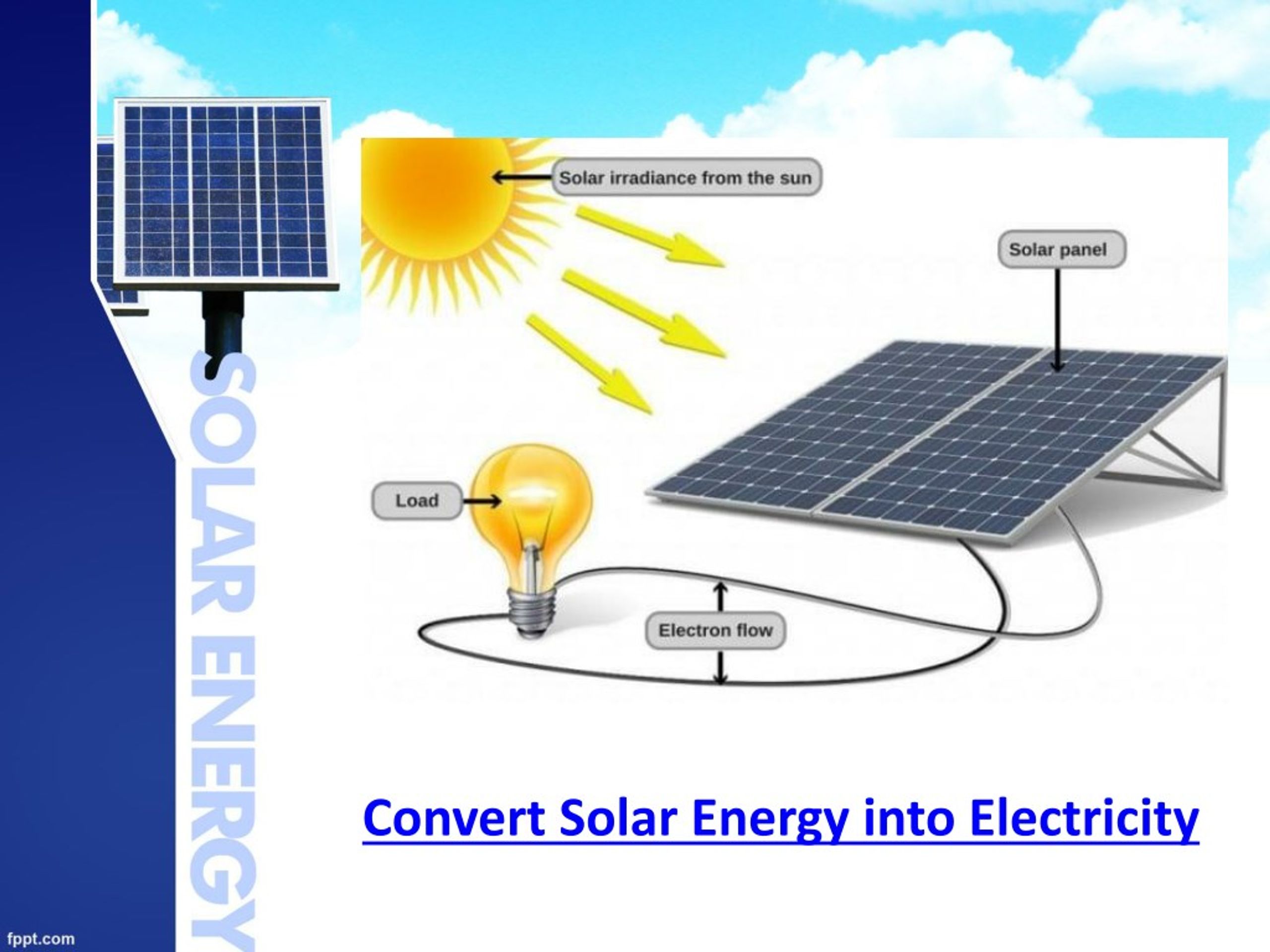
Okay, things are about to get a little bit technical, but I promise to keep it simple! When sunlight (those delightful photons) hits the solar cell, it knocks electrons loose from the silicon atoms. Electrons are tiny, negatively charged particles that are normally happy staying put. But when photons hit them, they get a sudden burst of energy and start moving!
It's like throwing a pebble into a calm pond. The pebble (photon) creates ripples (electrons moving). These moving electrons create an electric current, which is the flow of electricity! Huzzah!
The magic happens because of the way the silicon is treated. One layer of the silicon is treated to have extra electrons (a negative charge), and the other layer is treated to have fewer electrons (a positive charge). This creates an electric field inside the solar cell, which encourages the electrons to flow in one direction. It's like a tiny, invisible slide that guides the electrons along.
Think of it like this: Imagine a crowded dance floor. The photons are the music, getting everyone energized. The electrons are the dancers, finally moving and grooving! The electric field is like the bouncer, politely but firmly guiding the dancers in a specific direction so they don't just bump into each other.
From Solar Panel to Your Outlets: The Grand Journey
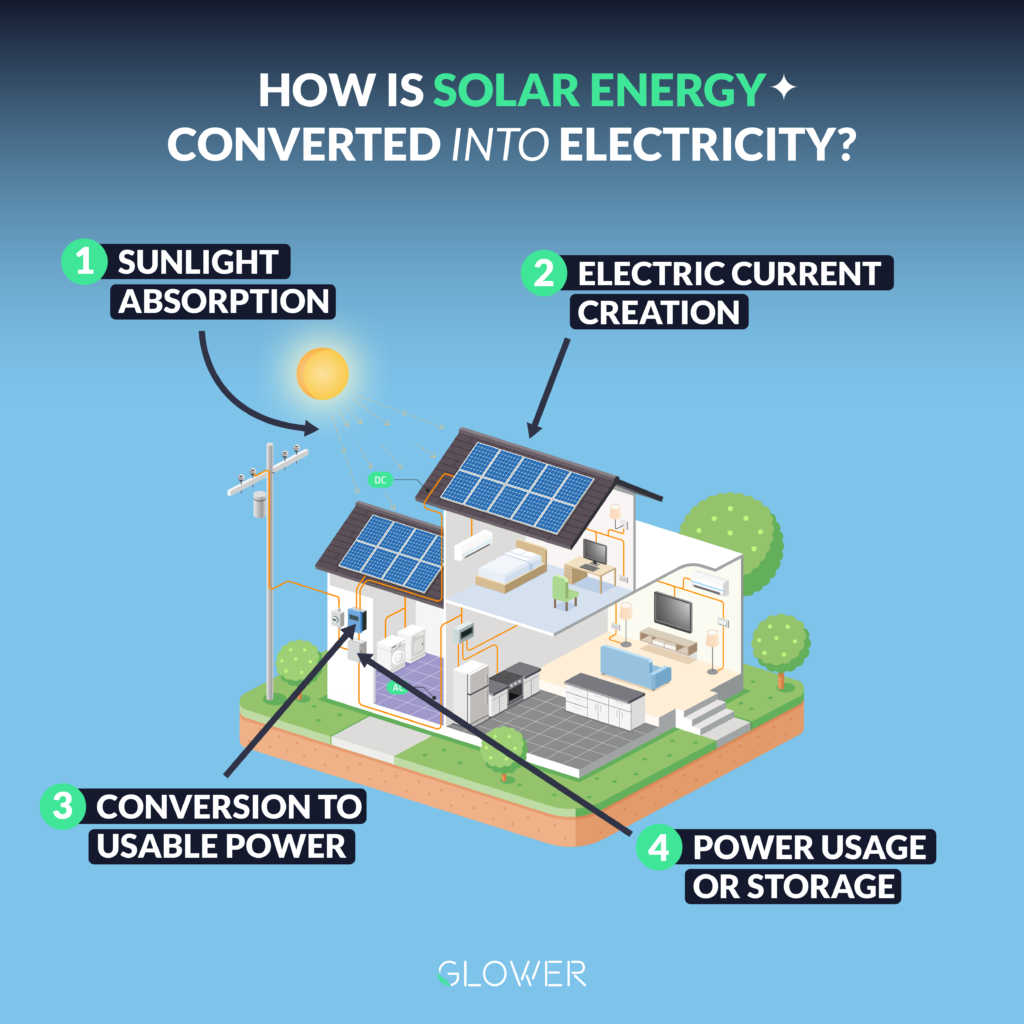
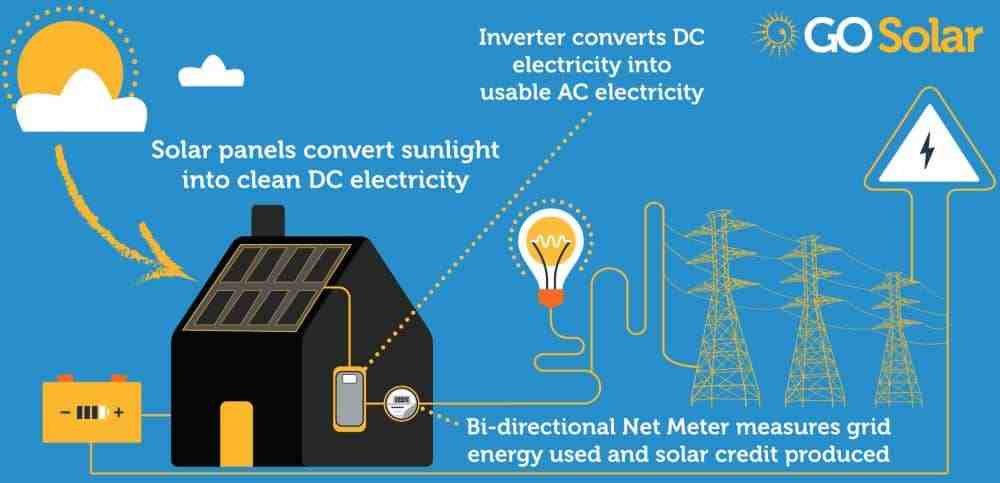
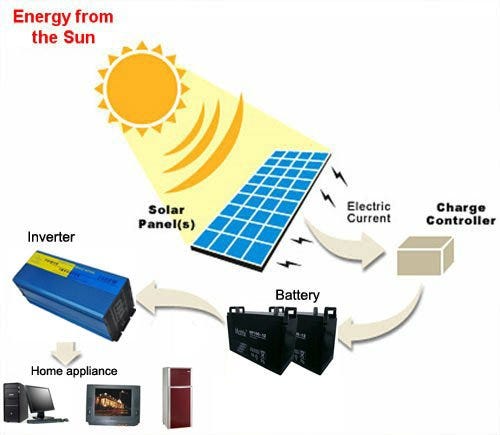
So, we've got this electric current flowing in the solar panel. But that's not enough to power your toaster oven just yet. The current is Direct Current (DC), like what batteries produce. Our homes use Alternating Current (AC). To make the conversion, we need an inverter. Think of the inverter as a translator, taking the DC language and converting it into AC language.

The inverter then sends the AC electricity to your home's electrical panel, ready to power your lights, appliances, and all your other gadgets. Any excess electricity that you don't use can even be sent back to the grid, earning you credits on your electricity bill! How cool is that?
In a Nutshell: Sunlight In, Electricity Out!
Let's recap: Sunlight hits the solar panel, photons knock electrons loose, electrons flow through the silicon, creating a DC current. The inverter converts DC to AC, and bam, electricity is powering your home! It’s like a superhero origin story, but instead of a radioactive spider, it's the Sun doing the work!
The beauty of solar energy is that it's clean, renewable, and sustainable. By harnessing the power of the sun, we're reducing our reliance on fossil fuels and helping to protect our planet for future generations. Plus, who doesn't love the idea of getting power from the sun? It feels so futuristic and awesome!
So, there you have it! The secrets of solar energy revealed. Next time you see a solar panel, you'll know exactly what's going on inside, and you can impress your friends with your newfound knowledge. Go forth and spread the sunshine (energy) gospel!
Isn’t it amazing? The power of the sun, captured and transformed into the juice that keeps our modern world humming. It's like having a tiny, personal star factory on your roof! And the best part? You're contributing to a cleaner, brighter future. Now that’s something to smile about!