
How Should My Ceiling Fan Turn In The Summer

Have you ever stared up at your ceiling fan, a whirlwind of blades taunting you with promises of coolness, only to feel... nothing? It's like when you wave frantically at a friend across a crowded room, and they just keep walking. Crushing, isn’t it?
The Great Fan Direction Debate
We've all been there. You adjust the thermostat, gulp down iced tea, and still, that sticky summer heat clings to you like an unwanted houseguest. Then you remember! The ceiling fan! But... which way should it be spinning?
Turns out, this simple question has sparked more debates than pineapple on pizza (a truly divisive issue, let me tell you). But fear not, dear reader, for I am here to shed light – and a refreshing breeze – on this age-old mystery.
Must Read
Summer's Secret Weapon: Counter-Clockwise!
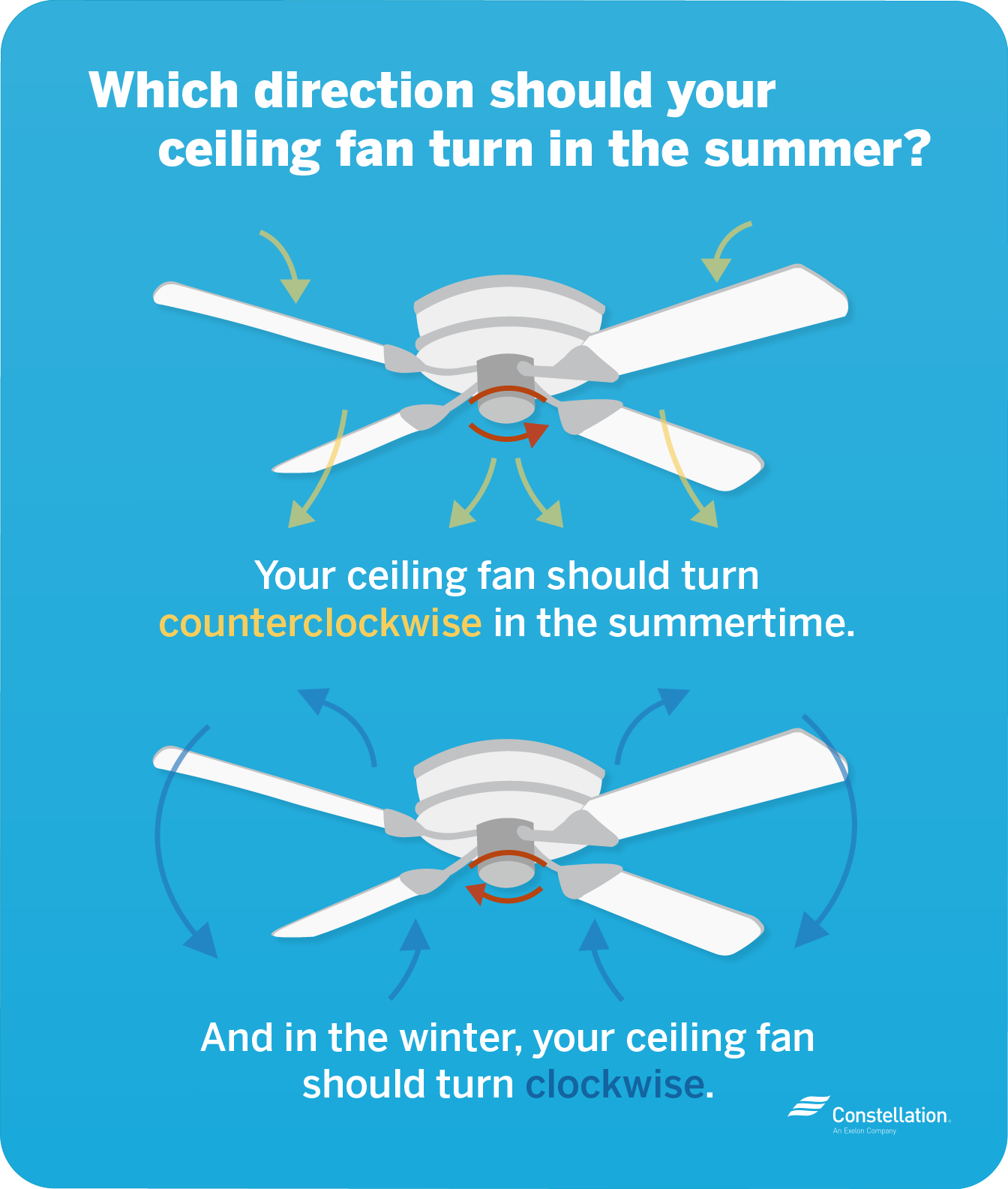
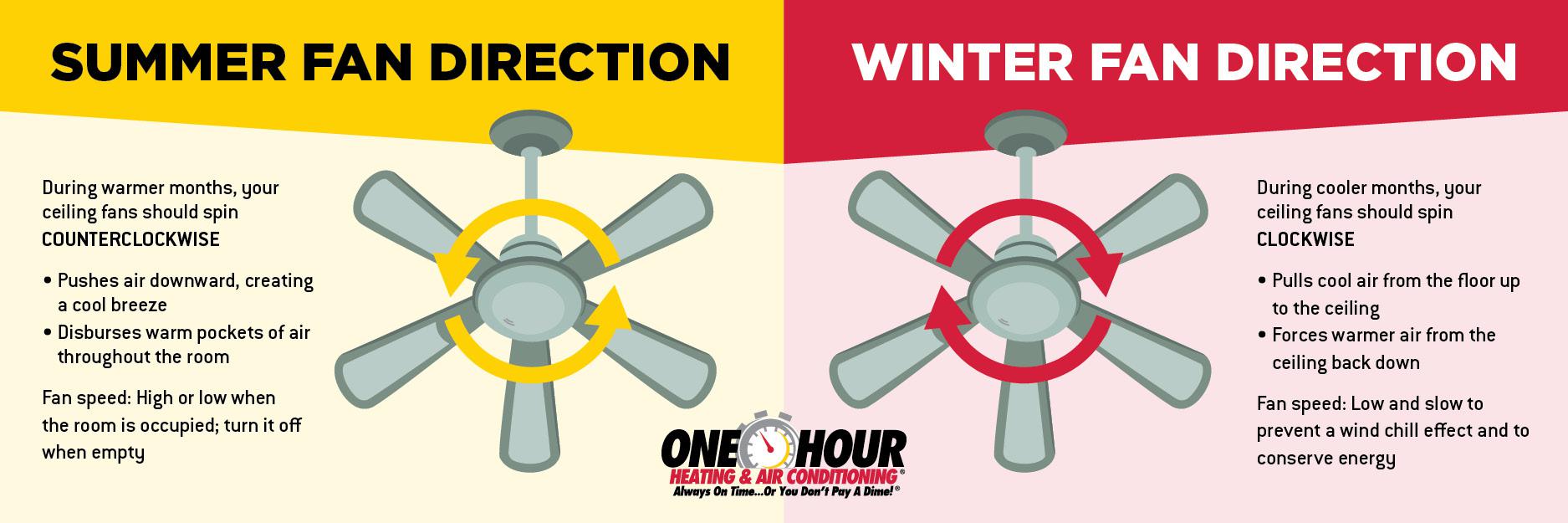
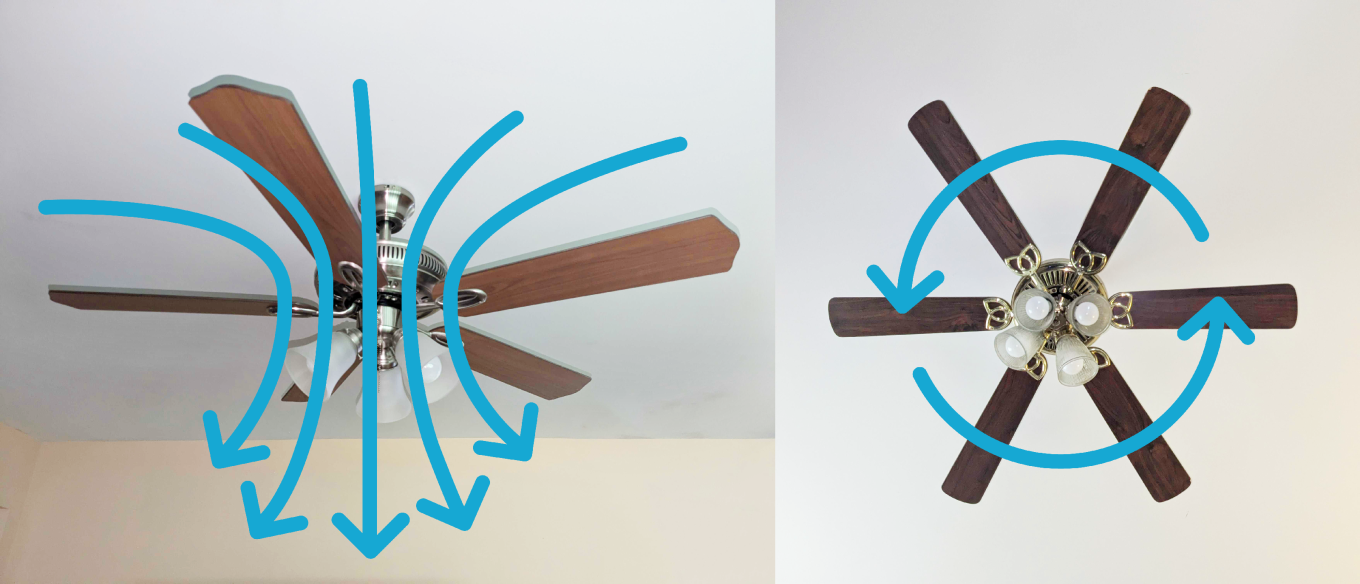
Alright, drumroll please… In the summer, your ceiling fan should be rotating counter-clockwise. Yes, that's right, the opposite of what you might think (or maybe exactly what you think – no judgment here!).
Think of it this way: you want the fan to push air down creating a delightful wind-chill effect that makes you feel cooler. It's like having your own personal air conditioner, without the hefty electricity bill (mostly).
Imagine you're at a rock concert, and the crowd starts surfing. You want to be pushed down towards the stage, closer to the action (and maybe a stray guitar pick!). That's your counter-clockwise fan, giving you the refreshing push you crave.
But wait, there's more! It's not just about feeling cooler; it's also about energy efficiency. By circulating the air, your fan helps your air conditioner work less hard, saving you money on your electricity bill. It's like getting a high-five from your wallet!

Now, some might argue that they can't "feel" a difference. To those skeptics, I say: trust the science! Or, you know, just stand directly under the fan and see if your hair starts blowing around. That usually does the trick.
It's a gentle caress of air on your skin. It's a subtle suggestion that, yes, even in the sweltering heat, things are going to be okay. It's the silent promise of a slightly less sweaty summer.
The Switcheroo: Finding the Reverse Switch
Okay, so you know which way the fan should turn, but how do you actually make it turn that way? This is where things can get a little tricky. Most ceiling fans have a tiny little switch somewhere on the motor housing. It's usually labeled "reverse" or has arrows indicating the direction of rotation.
This switch is often cleverly hidden, like a mischievous elf playing hide-and-seek. You might need a stepladder, a flashlight, and a healthy dose of patience to find it. Think of it as a mini-adventure! A quest for coolness!
Once you locate the elusive switch, simply flip it to the opposite position. Then, turn on the fan and watch closely to see which way the blades are spinning. If they're going counter-clockwise, congratulations! You've successfully mastered the art of ceiling fan direction.
If they're still going the wrong way, don't panic! Double-check the switch and make sure it's fully engaged. Sometimes, these switches can be a bit finicky. It’s like trying to convince a toddler to eat their vegetables – persistence is key!
If all else fails, consult the owner's manual (if you still have it) or search online for instructions specific to your ceiling fan model. The internet is a vast and wonderful place, full of information about everything from astrophysics to the proper way to fold a fitted sheet (another great mystery of the universe).
And remember, safety first! Always turn off the fan before attempting to adjust the switch. You don't want to lose a finger in your quest for coolness. That would be a real buzzkill (pun intended!).
A Humorous Aside: The "My Fan is Broken" Syndrome
Let's be honest, sometimes we blame our ceiling fans for our discomfort when, in reality, the problem lies elsewhere. We're dehydrated, wearing wool sweaters in July, or simply expecting too much from a simple appliance.
I remember one summer, I was convinced my ceiling fan was broken. It just wasn't blowing enough air! I called a repairman, who promptly informed me that the fan was working perfectly fine. The problem? I had accidentally closed all the windows in the house, creating a stifling, airless environment.
Lesson learned: make sure there's actually air for the fan to circulate! It's like trying to bake a cake without any ingredients. You need to give the fan something to work with!
Beyond the Basics: Fan Speed and Other Considerations
Once you've got the direction sorted out, it's time to think about fan speed. In general, you'll want to use a higher speed during the hottest part of the day and a lower speed when it's cooler. Experiment to find what feels most comfortable for you.
You might also consider the size of your room when choosing a ceiling fan. A larger room will require a larger fan with more powerful blades. It's like picking the right size shoes – you wouldn't wear a toddler's sneakers to run a marathon!
And finally, don't forget about aesthetics! Ceiling fans come in a wide variety of styles and finishes, so you can choose one that complements your décor. It's like adding a piece of jewelry to your room – a little something to make it shine.
I would like to add that a clean ceiling fan is very important. When the blade is covered by dust, it will effect the wind flow in the room.
The Heartwarming Conclusion: A Little Breeze, a Lot of Comfort
In the end, the direction of your ceiling fan might seem like a small thing, but it can make a big difference in your comfort during the summer months. It's about creating a more pleasant and livable space, a refuge from the heat and humidity.
It's about more than just feeling cooler. It's about feeling relaxed, refreshed, and ready to enjoy all that summer has to offer. It's about creating a little oasis of comfort in your own home.
So, take a moment to check your ceiling fan. Make sure it's spinning in the right direction. And then, sit back, relax, and enjoy the breeze. You deserve it!
I would like to add that ceiling fan is such a great invention!