
How Much Wattage Does A Washing Machine Use
Hey there, laundry enthusiast! Ever wondered just how much juice your washing machine is slurping up every time you tackle that mountain of dirty clothes? You're not alone! It’s a question that pops up more often than a missing sock in the dryer. So, let's dive into the wonderful world of wattage and washing machines, shall we?
Think of your washing machine like a thirsty little monster… but a monster that keeps your clothes smelling fresh and clean. But unlike a real monster, you can (relatively) easily understand its appetite. The amount of power it consumes is measured in watts.
The Wattage Lowdown: What to Expect
Okay, so the big question: how many watts are we talking? Well, it's not a one-size-fits-all answer. It depends on a few factors. Think of it like ordering a pizza – toppings matter! In this case, the "toppings" are things like the type of machine and the cycle you're running.
Must Read
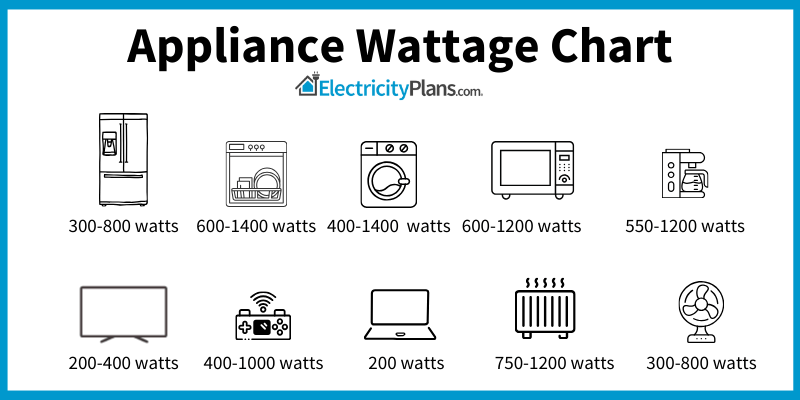
Generally, a standard top-loading washing machine uses somewhere between 300 and 800 watts. Front-loading machines, known for their efficiency (and sometimes their slightly higher price tag), typically use less – around 200 to 500 watts. Why the difference? Front loaders tend to be more energy-efficient due to their design and how they use water.
But wait, there's more! That wattage number is usually the peak wattage – the amount of power it draws during the most energy-intensive parts of the cycle, like when the motor is spinning the drum like crazy. Most of the time, it's using much less.

Factors That Affect Wattage Consumption
Ready to become a wattage detective? Here are some clues to consider:
- Type of Washing Machine: As we mentioned, front loaders generally sip energy more delicately than top loaders.
- Cycle Selection: A hot water wash will use significantly more energy than a cold water wash. That’s because heating water requires a lot of power. Think of it as turning on a small water heater inside your washing machine!
- Load Size: Overloading your machine will make it work harder and, therefore, use more energy. Plus, your clothes won't get as clean! (And nobody wants half-washed socks, right?)
- Age of the Machine: Older models tend to be less energy-efficient than newer, high-efficiency machines. Technology marches on!
So, a small, cold water wash in a modern, energy-efficient front loader? That's going to be your wattage-sipping champion. A large, hot water wash in an older top loader? Buckle up, buttercup, because you're going to be using more power!
How to Estimate Your Washing Machine's Energy Use (Without Getting a Headache)
Alright, let's get practical. Want to figure out roughly how much your washing machine is costing you? Here's a simplified way:
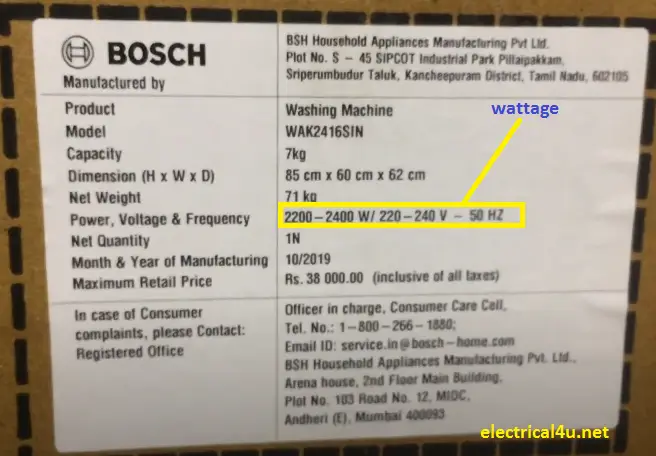
- Find the wattage rating on your washing machine. It's usually on a sticker somewhere on the back or inside the door.
- Estimate how many hours you use your washing machine per week. (Be honest!)
- Multiply the wattage by the number of hours to get watt-hours per week.
- Divide by 1000 to get kilowatt-hours (kWh) per week. This is what your electricity company charges you for.
- Check your electricity bill to see how much you're charged per kWh.
- Multiply the kWh per week by the cost per kWh to get your weekly washing machine cost.
Okay, that sounds like a lot, right? Don’t worry! There are tons of online calculators that will do all the math for you. Just search for "washing machine energy calculator."
Easy Ways to Save Energy (and Money!) on Laundry Day
Want to be a laundry-day eco-warrior? Here are a few simple tips:
- Wash in Cold Water: Seriously, this is the biggest energy saver. Most detergents are designed to work effectively in cold water these days.
- Wash Full Loads: Resist the urge to do small, frequent loads. Wait until you have enough for a full load (but don't overstuff!).
- Use the Right Detergent: Using too much detergent can lead to extra rinsing, which uses more water and energy.
- Consider a High-Efficiency Machine: When it's time to replace your old washer, look for an Energy Star certified model. They're designed to use less water and energy.
- Air Dry Whenever Possible: Give your dryer a break and hang your clothes out to dry. Your clothes (and your wallet) will thank you!
See? Saving energy doesn't have to be a chore! It’s about making small changes that add up to a big difference.
The Uplifting Conclusion: You've Got This!
So, there you have it! You're now armed with the knowledge to understand your washing machine's wattage and how to make smart choices on laundry day. Remember, even small efforts to conserve energy can make a real impact on the environment and your bank account. Now go forth and conquer that laundry pile… responsibly! And remember, even if a sock goes missing, keep smiling. Laundry doesn't have to be a drag. Embrace the freshness, enjoy the process (or at least tolerate it!), and know that you're doing your part. Happy washing!
