
How Much Watt Led Bulb Required For A Room

There's something undeniably magical about a perfectly lit room, isn't there? It’s not just about being able to see; it’s about how a space feels. A well-lit room can be a sanctuary, a vibrant hub, or a focused workspace. It shapes our mood, our productivity, and even our perception of comfort. And at the heart of this everyday enchantment? Our trusty light bulbs, with the LED taking center stage as the modern marvel.
LED bulbs aren't just a trend; they're a revolution. They’ve transformed our daily lives by offering incredible energy efficiency, meaning lighter electricity bills and a smaller carbon footprint. They last for years, sometimes decades, sparing us the constant bulb-changing chore. Beyond the savings, LEDs provide a much wider range of light qualities, from warm, cozy glows to bright, invigorating whites, allowing us to perfectly tailor the ambiance of any room. They’re applied everywhere, from the subtle under-cabinet lighting in your kitchen making meal prep a breeze, to the powerful overheads illuminating your home office, helping you stay sharp and focused.
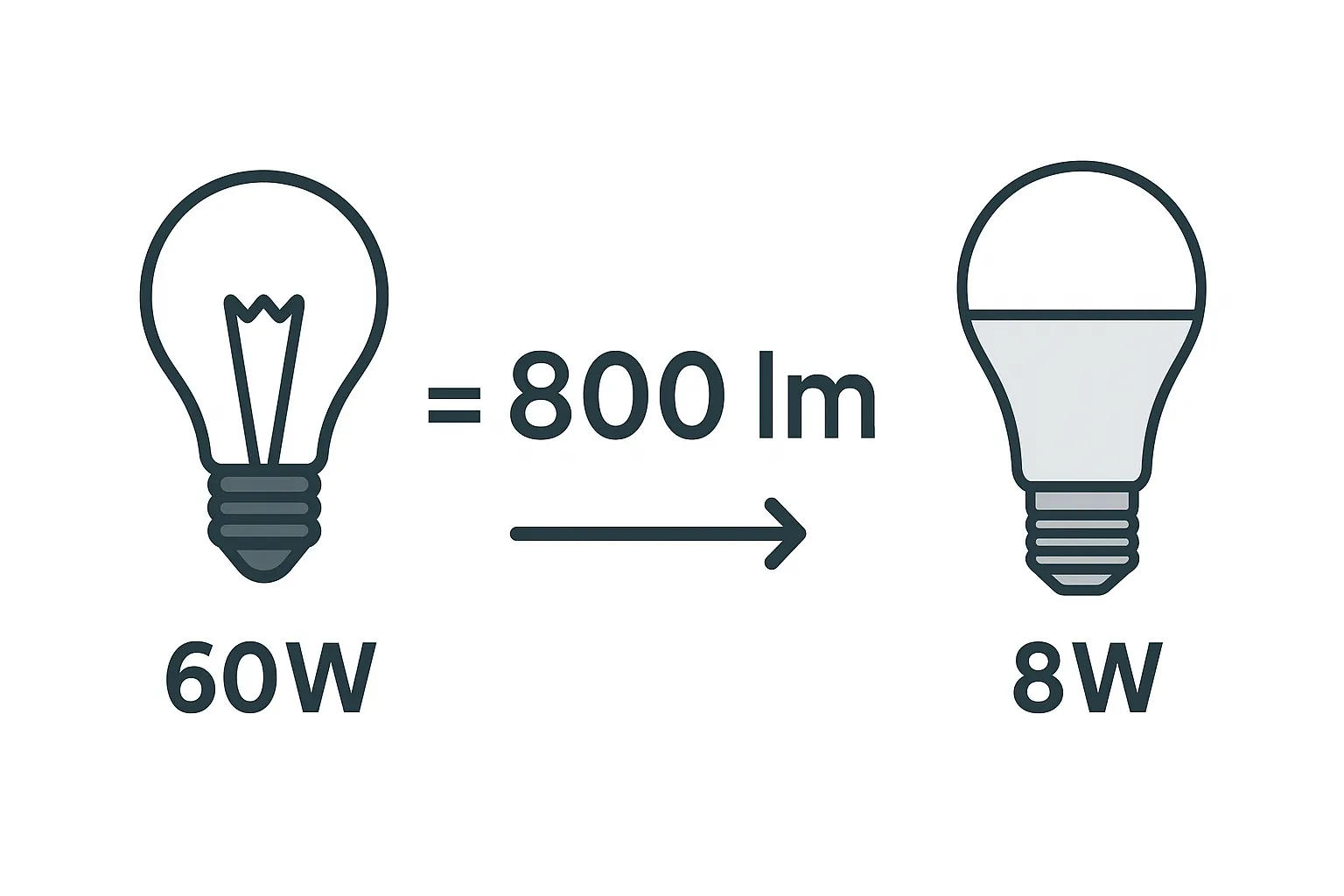
Now, to the burning question: "How many watts do I need for my room?" Here's the big secret: for LED bulbs, it's time to forget about watts! Watts measure energy consumption, not brightness. For traditional incandescent bulbs, more watts usually meant more light. But LEDs are so efficient that an LED consuming 10 watts can be brighter than an old 60-watt incandescent. So, what should you look for? The answer is lumens – the true measure of a bulb's brightness. Think of lumens as the actual amount of light being emitted.
Must Read
To enjoy your space more effectively, start thinking in lumens. While personal preference plays a huge role, here are some practical guidelines for total lumens needed per typical room:
- For a Living Room or Bedroom, aiming for 1,500 to 3,000 total lumens creates a comfortable, inviting atmosphere. You might achieve this with a few strategically placed bulbs.
- For a Kitchen or Home Office, where task lighting is crucial, you'll want more brightness. Think 3,000 to 6,000 total lumens to ensure visibility for cooking, reading, or working.
- Bathrooms often benefit from brighter light around vanity mirrors, so 2,000 to 4,000 lumens overall is a good target.
But brightness isn't the only ingredient in the perfect lighting recipe! To truly illuminate your life, consider these tips:
- Layer Your Light: Don't rely on a single overhead bulb. Combine ambient (general) lighting with task (focused) lighting and accent (decorative) lighting. This creates depth and allows for flexibility.
- Mind the Color Temperature: Measured in Kelvin (K), this determines whether the light is "warm" (yellowish, like 2700K-3000K, great for relaxing) or "cool" (bluish-white, like 4000K-5000K, ideal for concentration).
- Embrace Dimmers: The ultimate flexibility! Dimmable LED bulbs allow you to adjust the brightness to suit any mood or activity, transforming a bright workspace into a cozy den with the flick of a switch.
So, next time you're contemplating a bulb for your room, don't ask "how many watts?" Instead, ask "how many lumens?" and then factor in layering, color temperature, and dimmability. Experiment, have fun, and illuminate your world in a way that truly sparks joy!


