
How Much To Install Generator Transfer Switch

Okay, let's talk about generator transfer switches. Sounds super technical, right? Like something out of a sci-fi movie where you're rerouting power to the Death Star. But honestly, it's more like deciding between ordering pizza or Chinese food when the power goes out. A transfer switch just makes sure your lights (and maybe the TV so you don't miss the big game) stay on when the grid decides to take a nap.
So, you’re staring at your shiny new generator, ready to conquer the next power outage. You've got the fuel, you know how to start it, and you’re feeling like a modern-day MacGyver. But plugging it directly into your wall? Woah there, cowboy (or cowgirl!). That's a recipe for disaster, like trying to parallel park a monster truck in a bicycle lane. That's where the transfer switch swoops in to save the day (and your appliances).
The Great Transfer Switch Price Mystery
Now, the burning question: How much is this little piece of electrical wizardry going to set you back? Well, that's like asking how much it costs to feed a family of squirrels. It depends on a whole bunch of factors.
Must Read
First, there's the transfer switch itself. Think of it as the main ingredient in your "stay powered during an outage" recipe. You can find them ranging from a few hundred bucks for a basic, manually operated model to upwards of a thousand (or even more!) for the fancy automatic ones. The automatic ones are like having a butler that automatically switches over when the power goes out. Pretty swanky, huh?
Then, you have the installation cost. This is where things get a little…interesting. Think of it as the delivery fee for your "stay powered" pizza.

The Installation Rollercoaster
This is where you call in the professionals. Unless you’re secretly an electrician moonlighting as a regular person (and if you are, please come fix my flickering porch light), you’ll want to hire a licensed electrician. Trust me, messing with electricity without the proper knowledge is like trying to perform brain surgery with a butter knife. It's just not a good idea.
The cost of installation depends on a few things:
- Complexity of the job: Is your electrical panel easily accessible, or is it hidden behind a mountain of holiday decorations and old sports equipment? The easier it is to get to, the lower the labor cost.
- Type of transfer switch: Manual switches are generally easier (and therefore cheaper) to install than automatic ones, which often require more complicated wiring.
- Local labor rates: Electricians in bustling metropolitan areas tend to charge more than those in quieter, more rural locations. It's supply and demand, baby!
Generally, you can expect to pay anywhere from $500 to $1500 (or more) for installation. Get a few quotes from different electricians before you commit. It's like shopping around for car insurance; you want to make sure you're getting the best deal.
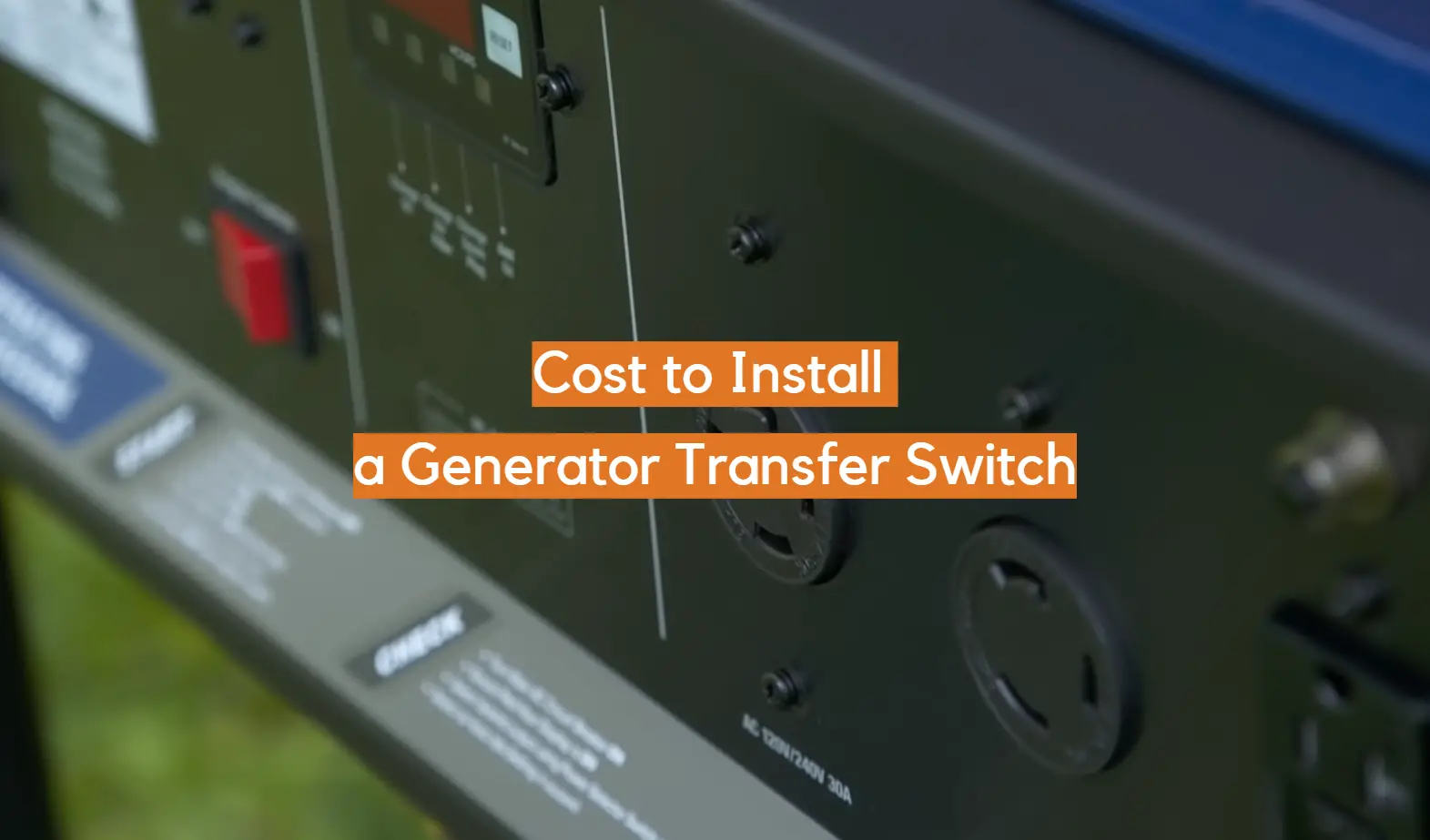
Anecdote time! My neighbor, bless his heart, tried to install a transfer switch himself. He’s a smart guy, but electricity apparently had a different opinion. Let's just say it involved a lot of sparks, a frantic call to the fire department, and a very expensive repair bill. Learn from his mistakes! (He's still living down the "Sparky" nickname).
The Bottom Line (and Some Friendly Advice)
So, adding it all up, you're probably looking at a total cost of $800 to $2500 (or more) to get a generator transfer switch installed. It's an investment, sure, but think of it as an insurance policy against the next power outage. No more spoiled food, no more sitting in the dark playing charades, and no more missing the crucial play of the game.
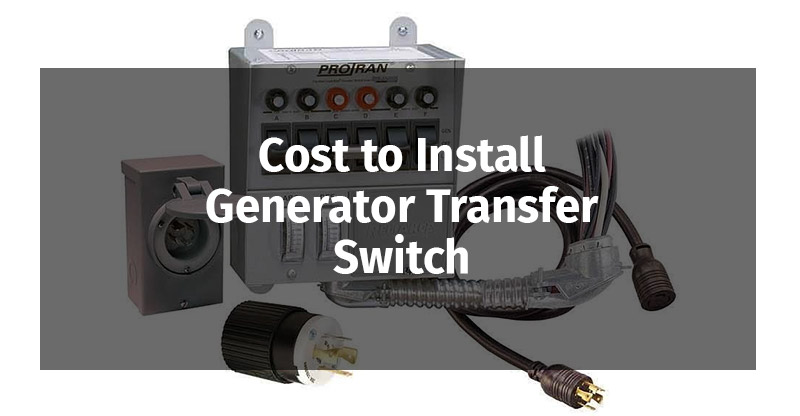
Pro tip: Factor in the cost of any necessary upgrades to your electrical panel. Sometimes, older panels need to be updated to handle the load of a generator. It's like needing to reinforce the foundation of your house before you build a new wing.
And remember, don't cheap out on the electrician! You want someone who knows what they're doing, is licensed and insured, and won't leave you with a potential fire hazard. After all, you want your lights to stay on, not your house to go up in smoke.
Stay safe, stay powered, and may your next power outage be a minor inconvenience rather than a full-blown crisis!
