
How Much Solar Power Do I Need For My Camper
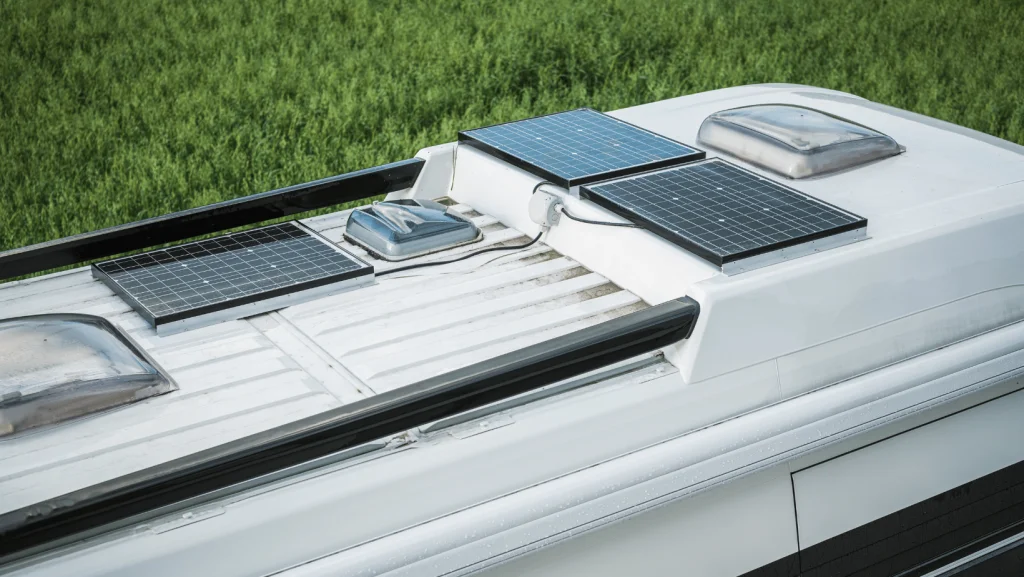
Picture this: you're nestled in a secluded campsite, the kind where the only sounds are birds chirping and the gentle crackle of a campfire. Except… your phone is dead. The mini-fridge is threatening to become a lukewarm incubator for cheese, and the romantic movie night is now just… night. This, my friends, is where the magic of solar power for your camper comes in.
First, A Little Soul-Searching (and Appliance-Auditing)
Before you dive headfirst into a solar panel shopping spree, let's take a moment to consider your camping personality. Are you a minimalist nomad, happy with a headlamp and a good book? Or are you a digital glamping guru, needing a constant Wi-Fi connection and the ability to blend a smoothie at a moment's notice? This difference matters.
Think about your power needs. Grab a notepad and play detective! Write down every electrical device you plan to use in your camper: lights, phone chargers, the water pump, that essential electric kettle for morning tea, even that quirky little fan you swear by.
Must Read
Most appliances have a sticker or label stating their wattage. That number is your golden ticket. If it only lists amps, multiply that by 12 (volts) to get watts. For example, a 5-amp device uses 60 watts.
Watts Happening Each Day?
Estimate how many hours per day you'll use each appliance. Be honest, no cheating! Add up all the wattage for each appliance and multiply by daily usage in hours. Then sum up all totals! This gives you the total watt-hours you'll need each day. Let's call this number "Sparky."
Don't panic at the number you see. It’s probably higher than you expected. It's simply giving you a roadmap for your solar journey.
Sun's Out, Watts Up! (Solar Panel Math, Simplified)
Now for the fun part: figuring out how many solar panels you need to appease Sparky. The amount of sunshine you get depends on your location and the time of year, known as peak sun hours.
Find the average peak sun hours for your usual camping locations. A quick search online for "[your location] peak sun hours" will usually provide you with numbers to use. If you camp in multiple areas, use the lowest average.
Let's say your location gets an average of 5 peak sun hours per day. To figure out the solar panel wattage needed, divide Sparky by the number of peak sun hours. For example, if Sparky is 600 watt-hours, you'd divide that by 5, which is 120. This means you'd need at least 120 watts of solar panels.
Here’s a little secret: solar panels rarely perform at their peak wattage. So, it's wise to overestimate by at least 20%. In the example above, this brings us to 144 watts needed. Round up to the nearest common panel size; you might consider a 150-watt panel.
Battery Backup: Saving Sunshine for a Rainy Day
Solar panels only generate power when the sun is shining. What about those cozy evenings under the stars? That’s where batteries come in. They store the energy collected during the day for later use.

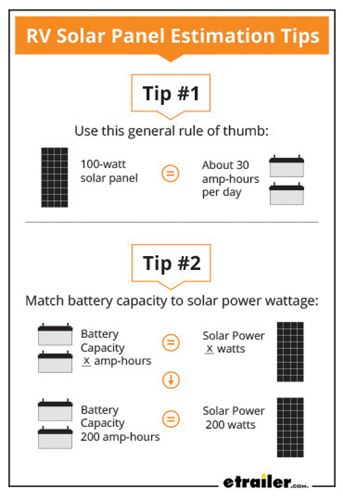
The size of your battery bank depends on how many days you want to be able to camp without sunshine. A good rule of thumb is to have enough battery capacity to last for at least two days. Consider how much of Sparky you want to store. You don't necessarily need to store all of it. If you just want to store enough energy to power a few lights and charge your phone, a smaller battery will work.
Batteries are rated in amp-hours (Ah). To determine the amp-hour capacity needed, divide the daily watt-hour usage (Sparky) by the battery voltage (typically 12V). Then, multiply by the number of days of autonomy you desire, and divide by 0.5 to account for safe battery usage.
For example, if Sparky is 600 and you want two days of autonomy, the calculation looks like this: (600 / 12) * 2 / 0.5 = 200 amp-hours. You'd need a battery bank with at least 200 amp-hours of capacity.
Controller Chaos: Managing the Flow
A solar charge controller is the brain of your solar setup. It regulates the voltage coming from the solar panels to prevent overcharging your batteries. Think of it as a traffic cop, ensuring a smooth and safe flow of electricity.
There are two main types: PWM (Pulse Width Modulation) and MPPT (Maximum Power Point Tracking). MPPT controllers are more efficient, especially in partial shade, but are also more expensive. For smaller systems, PWM controllers are often sufficient.
The size of the controller you need depends on the voltage and amperage of your solar panels. Consult your solar panel's specifications to determine the appropriate controller size. It's better to err on the side of a slightly larger controller than one that's too small.
Installation Inspiration (and Avoiding Disaster)
Installing a solar system can be a rewarding DIY project, but it's essential to proceed with caution. Incorrect wiring can lead to damaged equipment or even fire.
If you're not comfortable working with electricity, hire a qualified electrician or solar installer. It's worth the investment to ensure the job is done safely and correctly. Remember, safety first!
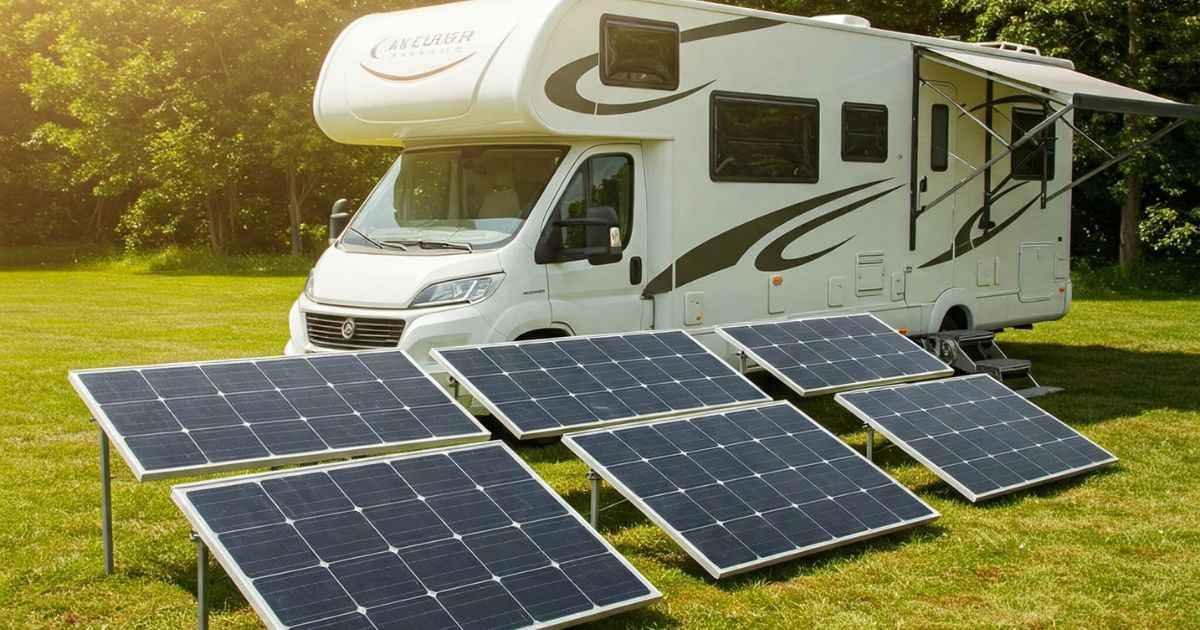
There are also portable solar panel options if you are unable or unwilling to install panels on the roof of your RV. These are generally less efficient than fixed options, but can still allow you to camp off-grid.
Beyond the Numbers: The Joy of Freedom
Calculating wattage and amp-hours can seem daunting, but the reward is well worth the effort. A properly sized solar system gives you the freedom to camp off-grid, far from crowded campgrounds and noisy generators.
Imagine waking up to the sound of birds, brewing a cup of coffee with your solar-powered kettle, and spending the day exploring without worrying about running out of power. That, my friends, is the true beauty of camper solar power.
And who knows, maybe you'll even become the campground hero, offering a charged phone to a fellow camper in need. Just remember to subtly mention your amazing solar setup. After all, you earned it.
So, embrace the sunshine, crunch the numbers, and get ready to embark on your own off-grid adventure. Your camper, and your inner explorer, will thank you.