How Much Power Does A Electric Car Use To Charge

Okay, picture this: It's a Tuesday night, I'm running late (as per usual), and my phone is practically begging for a charge. I plug it in, no biggie, right? Then I glance over at my electric car, sitting patiently in the driveway, also needing its nightly juice-up. Suddenly, it hit me: my phone uses what, like, 5 watts? What about the car? Is it sucking the entire grid dry? That got me thinking... how much power does an electric car actually use to charge?
Turns out, it's not as simple as plugging something in and hoping for the best. It's a bit like asking "How much does dinner cost?" It depends on what you're eating! With electric cars, it depends on a bunch of things. So, let's break it down, shall we?
Factors Affecting Charging Power
First off, the size of the battery matters. (Duh, right? But we gotta cover the basics!). A bigger battery, like the ones in long-range EVs, will obviously require more electricity to fill up than a smaller one. Think of it like a gas tank – the bigger it is, the more fuel it needs.
Must Read
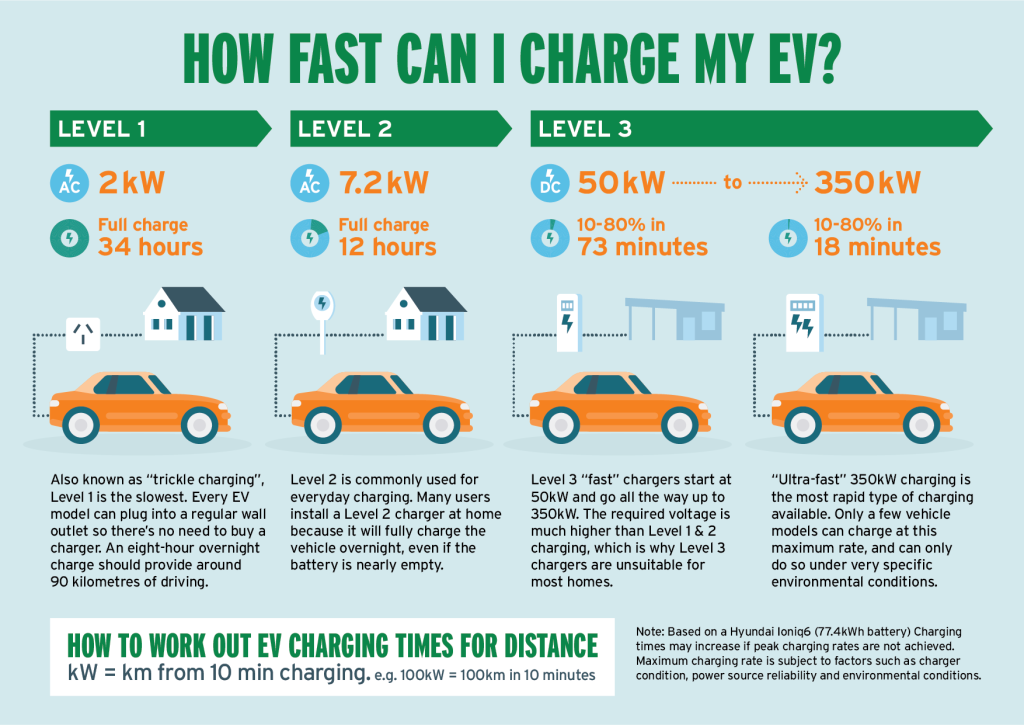
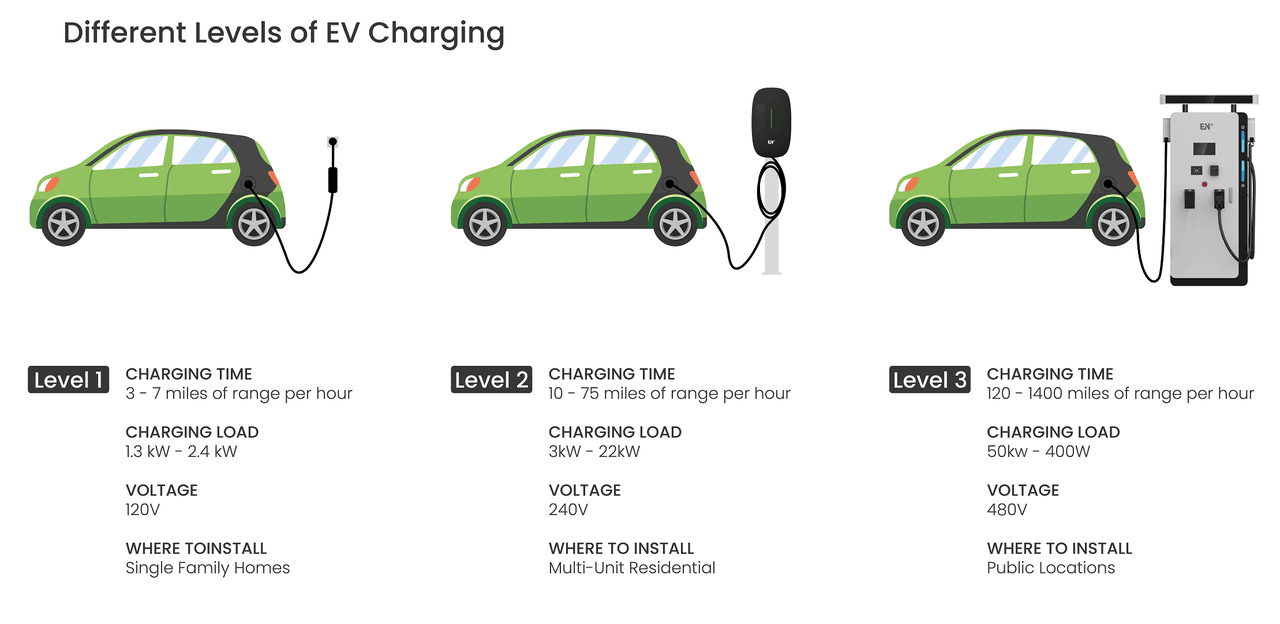
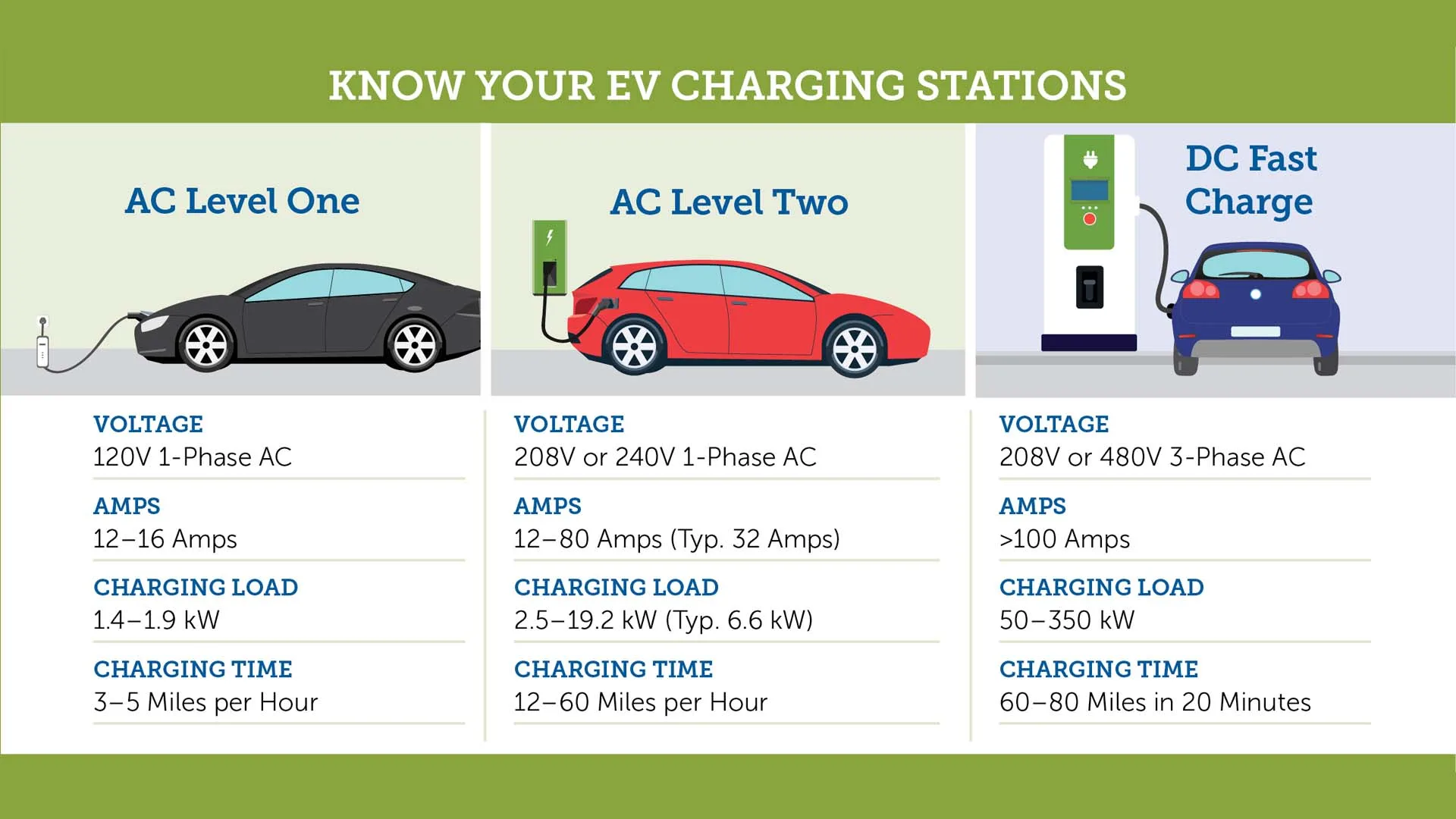
Next up: the charging level. This is where things get a little more interesting. You've got three main levels to consider:
- Level 1 Charging: This is your standard 120V outlet – the same one you use for your toaster or that ancient lamp in the attic. It's super convenient because, well, you already have it! But it's also incredibly slow. We're talking adding maybe 4-5 miles of range per hour. Perfect for topping off, but not ideal for a full charge overnight. (Unless you enjoy waking up to a barely-charged car).
- Level 2 Charging: This is where most home charging happens. Level 2 chargers use a 240V outlet (like the one your dryer uses – don't try plugging your car into your dryer outlet, though! Get a proper charger installed). This is significantly faster, adding around 20-30 miles of range per hour. A full charge overnight is usually no problem with Level 2.
- DC Fast Charging: This is the big leagues! These chargers are usually found at public charging stations and can add hundreds of miles of range in an hour. Perfect for road trips when you need a quick boost. (Just be prepared to pay a premium for the speed!).
So, Level 1 is like sipping your coffee through a tiny straw, Level 2 is like a normal cup, and DC Fast Charging is like chugging a Red Bull. You get the picture.
Then there's the car's charging rate. Every EV has a maximum charging rate it can handle. Even if you plug it into a super-powerful DC Fast Charger, it'll only draw as much power as it's designed to handle. (Kinda like trying to pour a gallon of water into a pint glass – it's gonna overflow!).
Calculating the Cost (and the Power!)
Okay, so how do we figure out how much power we're talking about? Let's do some simple math. (Don't worry, I promise it won't be too painful!).
We measure power in kilowatt-hours (kWh). Think of it as the "unit" of electricity. Your electric bill probably shows your usage in kWh. Let's say your electric car has a 75 kWh battery and it's completely empty (which it almost never is, but for the sake of argument...). To fully charge it, you'd need roughly 75 kWh of electricity.
Now, let's say your electricity costs $0.20 per kWh. (This varies wildly depending on where you live, so check your bill!). Charging that 75 kWh battery would cost you 75 x $0.20 = $15. Not bad, right? Especially compared to filling up a gas tank these days! (Ouch!)
But here's the catch: charging isn't perfectly efficient. Some energy is lost as heat during the charging process. So, you might actually use a bit more than 75 kWh to fully charge the battery. Typically you will lose 10 to 20 percent in the form of heat.

The Bottom Line
So, to answer the original question: An electric car can use anywhere from a few kilowatts to over 100 kilowatts to charge, depending on the battery size, charging level, and the car's charging rate. And the cost? Well, that depends on your electricity rates, but it's generally cheaper than gasoline. (Yay!)
Ultimately, understanding how much power your EV uses to charge empowers you to make informed decisions about charging schedules and potentially save money. Plus, it's just plain interesting to know how these things work, right?
Now if you’ll excuse me, I have a car to charge! And maybe I'll grab a Red Bull too. Gotta keep up with those electrons!