How Much Power Do Nuclear Power Plants Produce
Ever wondered how much juice a nuclear power plant actually generates? It's a fascinating question, especially when you think about how much we rely on electricity every single day! From keeping our phones charged to powering our homes, understanding where all that energy comes from can be both fun and empowering.
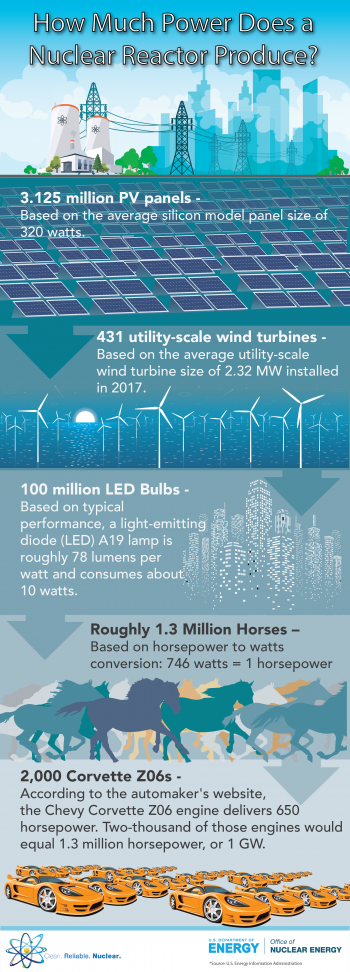
So, how much power are we talking about? Well, a typical nuclear power plant can produce around 1 gigawatt (GW) of electricity. That's a lot! To put it in perspective, 1 GW is enough to power roughly 750,000 homes. Think about your own neighborhood – chances are a single nuclear power plant could keep the lights on for everyone, with plenty to spare!
Why should you care? Here's the breakdown for different folks:
Must Read
- Beginners: Knowing the scale of nuclear power helps you understand its impact on our energy landscape. It's a major player!
- Families: Imagine explaining to your kids where the energy for their video games or favorite shows comes from. It's a cool way to spark their interest in science and technology.
- Hobbyists (DIY enthusiasts, preppers): Understanding power generation can be helpful when planning off-grid living or emergency preparedness strategies. Knowing how much electricity a nuclear plant produces gives you a good baseline for considering alternative energy sources and their limitations.
Now, there are variations in power output. Some newer, more advanced nuclear plants can generate even more than 1 GW. Factors like the reactor design and the plant's efficiency play a role. Also, a large nuclear power station might have multiple reactors, further increasing its total output. For example, the largest nuclear power plant in the world, the Kashiwazaki-Kariwa Nuclear Power Plant in Japan, used to boast a generating capacity of over 8 GW. (Note: it's currently offline.)
It's also important to remember that nuclear power plants don't operate at 100% capacity all the time. They undergo maintenance, refueling, and sometimes need to adjust output to match electricity demand. However, when they are running, they provide a steady and reliable source of power, unlike some renewable energy sources that are dependent on weather conditions like sun or wind. This is referred to as baseload power and is a key benefit of nuclear energy.
Want to learn more? Here are some simple steps to get started:
- Explore online resources: The World Nuclear Association and the U.S. Energy Information Administration (EIA) are excellent sources of information.
- Watch documentaries: There are many documentaries available that explain the basics of nuclear energy in an accessible way.
- Visit a science museum: Many science museums have exhibits on energy production and nuclear power.
Understanding the power output of nuclear plants is more than just a fun fact; it's about understanding the energy that fuels our modern world. By grasping the scale and potential of this technology, you can engage in more informed discussions about our energy future. So, dive in and explore – you might be surprised at what you discover!